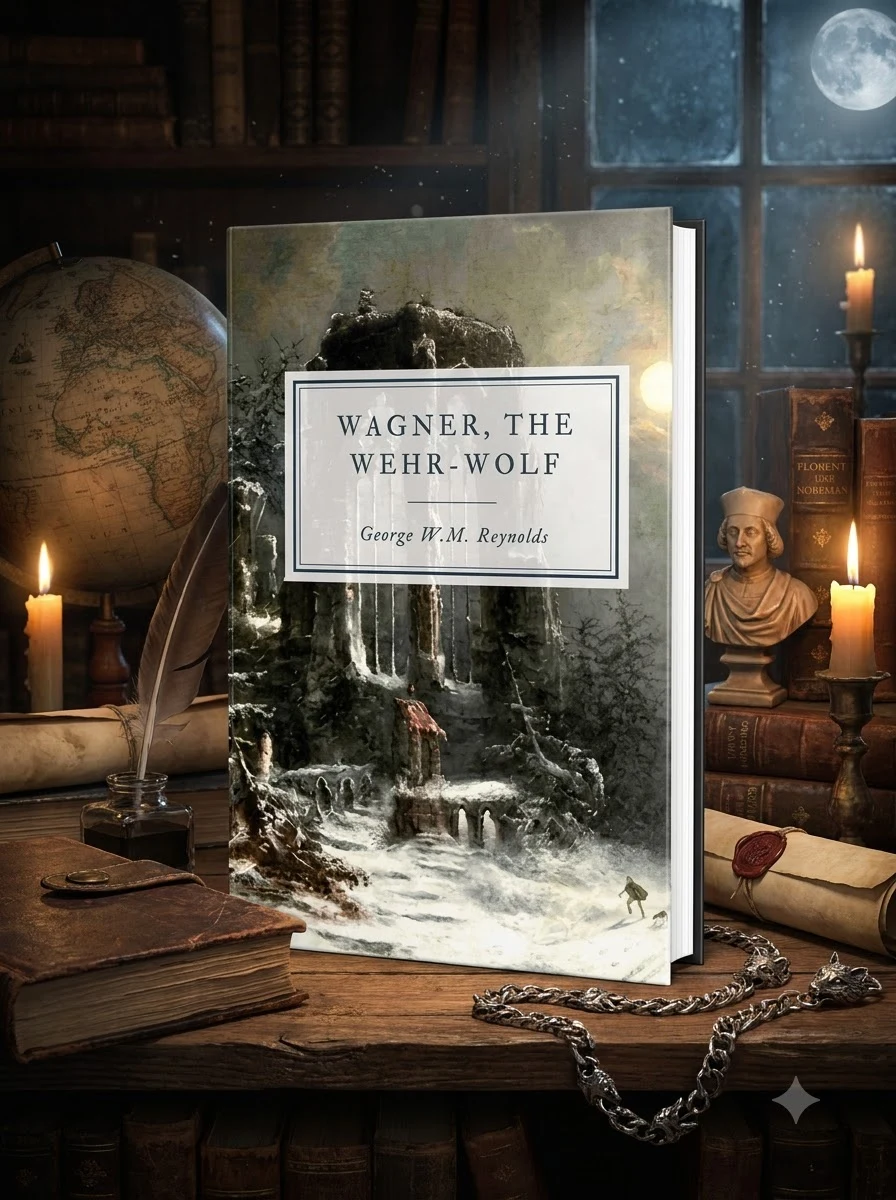
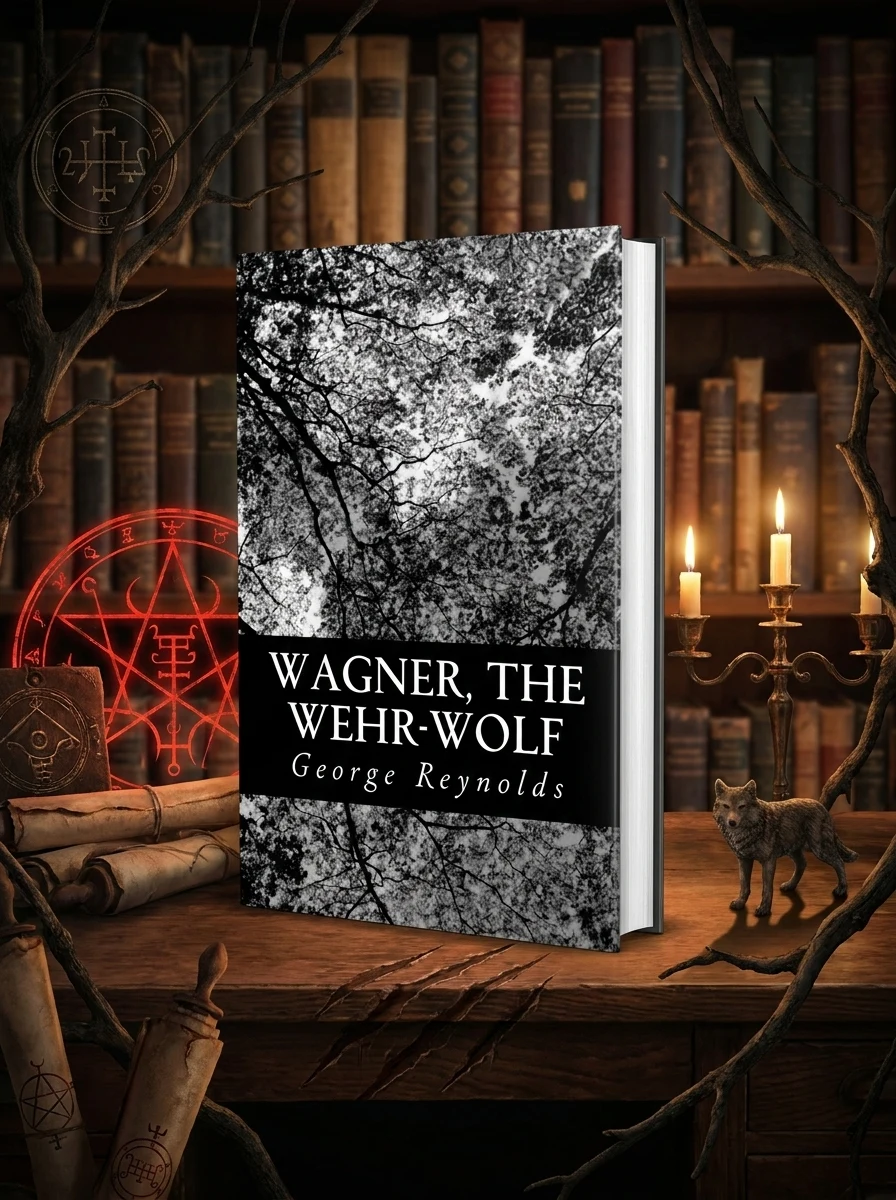
Wagner, the Wehr-Wolf
A gothic tale of Fernand Wagner's transformation after a devil pact in 1500s Florence.
This novel examines the life of Fernand Wagner, whose decision to make a pact with the devil leads to his metamorphosis into a werewolf. Set against the backdrop of early 1500s Florence, the story unfolds through family secrets and mysterious manuscripts that guide the plot. Reynolds, known for his popularity in the nineteenth century, crafts a narrative that blends supernatural horror with gothic conventions. The work retains its original serialized structure, allowing readers to experience the gradual revelation of Wagner's curse. It stands as a piece of historical fiction that reflects the tastes of its time, focusing on the tragic arc of a man who loses his soul.
George W M Reynolds was a contemporary of Dickens and Thackeray, recognized as the most popular writer of his times. This work was originally serialized between November 1846 and July 1847, placing it firmly within the mid-nineteenth century literary landscape.


📝 Description: Wagner, the Wehr-Wolf
💎 Our verdict on Wagner, the Wehr-Wolf
📖 Why choose it
Why this book is worth reading
Readers interested in the roots of classic supernatural horror and gothic conventions will find this novel a compelling entry point into Reynolds' world. Those who appreciate historical fiction set in early modern Europe, specifically Florence, may enjoy the atmospheric backdrop against which Fernand Wagner’s tragic arc unfolds. It is ideal for audiences seeking to understand the evolution of werewolf lore and the cultural tastes of the 1840s. The serialized structure allows for a gradual immersion into the protagonist’s cursed existence, offering a unique perspective on how nineteenth-century popular fiction handled themes of devil pacts and metamorphosis without relying on modern pacing or psychological depth.
⭐ Reader reviews
Reader rating
Reynolds crafts a narrative deeply rooted in gothic tradition, utilizing family secrets and mysterious manuscripts to drive the plot forward. The atmosphere is thick with tension as Wagner struggles between his human nature and monstrous transformation. While it lacks the fast-paced action of modern thrillers, it offers a faithful preservation of mid-nineteenth-century popular fiction. The work excels in exploring the grim consequences of damnation through a serialized lens. It best suits readers who value historical context and classic supernatural horror over contemporary psychological complexity. Those willing to engage with the pacing of its time will find a rich, if tragic, exploration of a soul lost to darkness in the shadowed streets of early 1500s Florence.
📖 Read on the blog
✍️ More books by this author George W M Reynolds



You might also like
See more →

Have a question about this item?
Ask about the edition, condition, delivery or anything else — we reply by email or phone, usually within a day.
