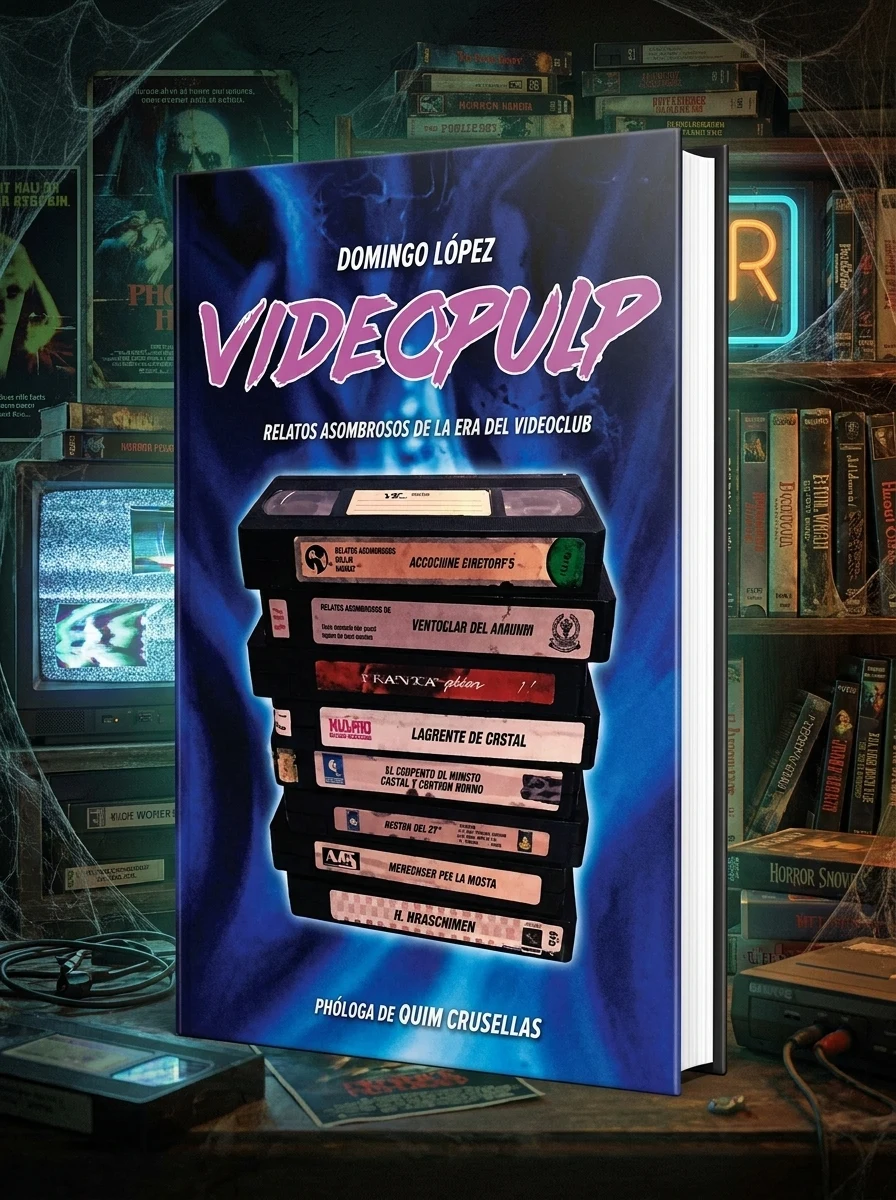
Video Pulp: Relatos asombrosos de la era del videoclub
A collection of horror stories capturing the dread of the video rental era.
Lopez offers a chosen group of stories that look at the worry linked to outdated tech. The writing concentrates on the time when physical tapes ruled entertainment. It shows how loneliness and strangeness arise from the connection between viewers and decaying cassettes. These tales avoid sudden frights, building pressure through the mood of lost movie nightmares. This method connects with people who sense horror in the deterioration of known items. The book provides a special view on how media influences fear.
The book examines the late twentieth-century media culture, specifically focusing on the era of video rental shops. It highlights the transition period where physical media was central to entertainment before digital formats took over. This context provides a backdrop for stories that explore the anxiety and isolation inherent in that specific technological moment.


📝 Description: Video Pulp: Relatos asombrosos de la era del videoclub
💎 Our verdict on Video Pulp: Relatos asombrosos de la era del videoclub
📖 Why choose it
Why this book is worth reading
Readers who find horror in the deterioration of familiar objects and the loneliness of technological obsolescence will appreciate this collection. It offers a unique perspective on how media influences fear, focusing on mood-driven tension rather than sudden shocks. Those who enjoy narratives centered on the spooky atmosphere of video stores or the eerie connection between viewers and decaying cassettes will find value here. The book is ideal for enthusiasts of analog fear and lost cinematic nightmares, providing a slow-burning unease that lingers long after reading.
⭐ Reader reviews
Reader rating
Domingo Lopez’s collection successfully taps into the raw terror associated with physical media formats, creating an odd space between ordinary life and supernatural horror. By shunning quick scares in favor of lasting unease caused by deteriorating old formats, the book establishes a distinct rhythmic pressure. It suits readers seeking mood-driven horror who wish to dig into the shadowy sides of entertainment history. The gradual build of tension effectively highlights the burden of outdated technology, making it a compelling choice for those who sense horror in the decay of known items rather than contemporary digital environments.
You might also like
See more →







Have a question about this item?
Ask about the edition, condition, delivery or anything else — we reply by email or phone, usually within a day.
