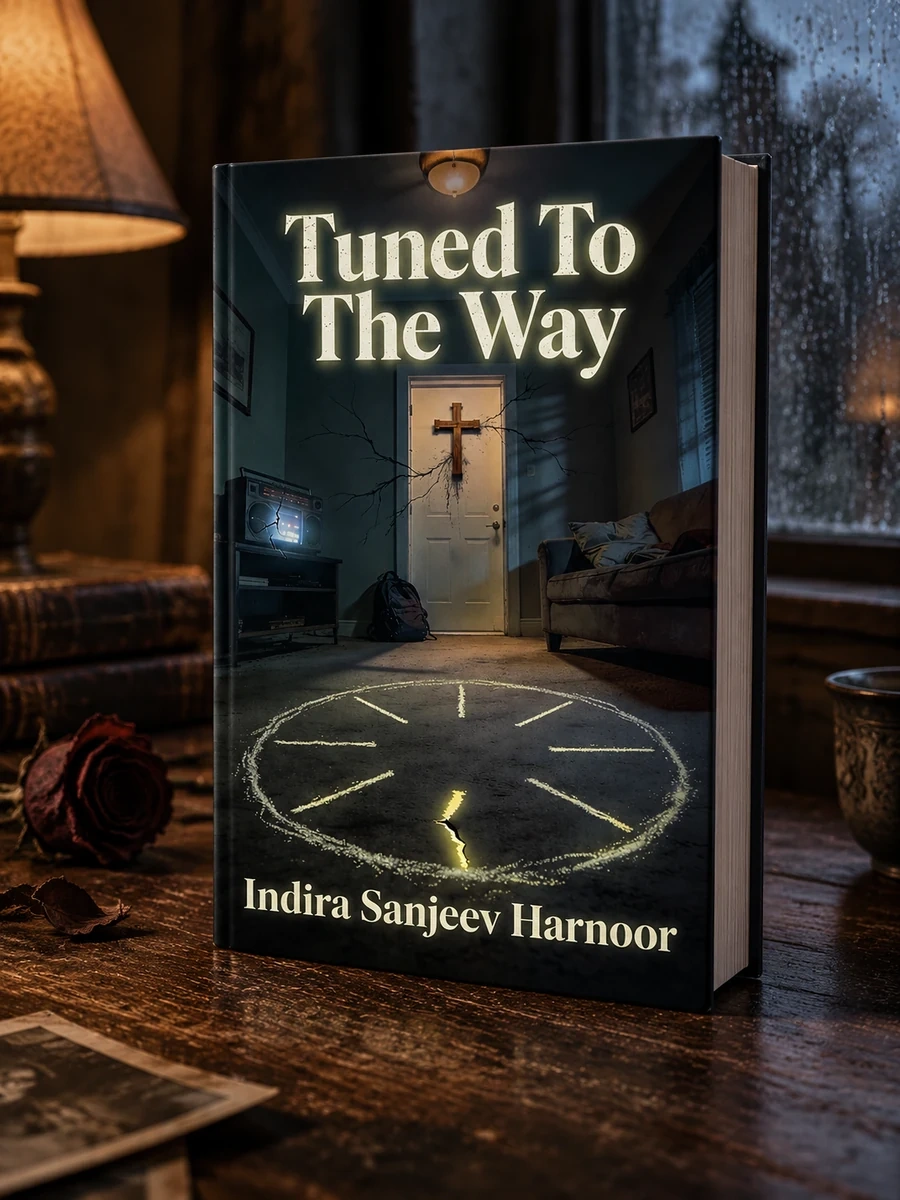
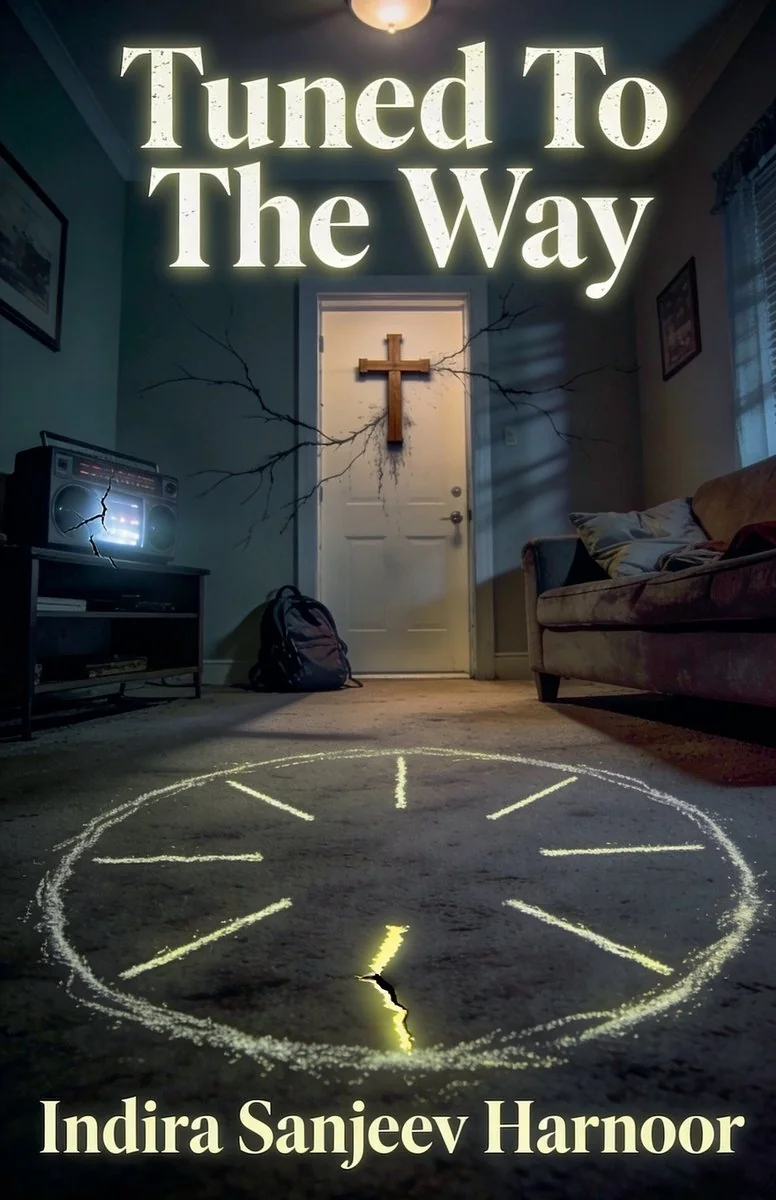
Tuned To The Way
A skeptical woman confronts a time-looping prisoner who is also her priest in this supernatural thriller.
Mara’s journey from disbelief to forced belief forms the core of this narrative. She enters a concrete facility expecting a routine interview but finds herself entangled in a mystery involving her family’s past. The prisoner’s knowledge of her life forces her to reconsider her worldview. As the loop tightens, the boundary between the mundane and the divine blurs. Objects and environments shift to reflect an internal struggle rather than external events. Harnoor uses this premise to explore the weight of inherited faith and the terror of the unknown. The story does not rely on jump scares but on a slow accumulation of dread. Mara must choose between maintaining her atheism or engaging with a reality that demands acknowledgment.
The narrative draws on Catholic traditions and the concept of purgatory or temporal punishment within Christian theology. It is set in a modern context where concrete facilities and parish structures coexist with supernatural elements, reflecting contemporary anxieties about faith and institutional authority.


📝 Description: Tuned To The Way
💎 Our verdict on Tuned To The Way
📖 Why choose it
Why this book is worth reading
Readers who appreciate slow-burn psychological horror and gothic fiction will find this narrative compelling for its atmospheric dread rather than visceral scares. It appeals to those interested in the intersection of faith, identity, and the breakdown of reality. The book offers a unique exploration of inherited belief systems through a temporal loop premise. Those who enjoy stories where religious symbols manifest in impossible ways will appreciate the vivid, disturbing imagery. It is ideal for audiences seeking unsettling tones over lighthearted entertainment or clear theological resolutions. The focus on internal struggle against an unseen observer provides a profound meditation on the weight of faith.
⭐ Reader reviews
Reader rating
Harnoor crafts a disorienting narrative where concrete facilities warp into crooked churches, blurring the line between mundane and divine. The story excels in its accumulation of dread, avoiding jump scares in favor of psychological tension. Mara’s journey from skepticism to forced belief is rendered through shifting environments and impossible religious manifestations. This approach suits readers who enjoy supernatural fiction with gothic elements and deep character introspection. The work does not offer easy answers or traditional redemption arcs, instead demanding engagement with a vividly alive, unsettling presence. It is best for those comfortable with ambiguous endings and complex explorations of inherited faith and reality breakdown.