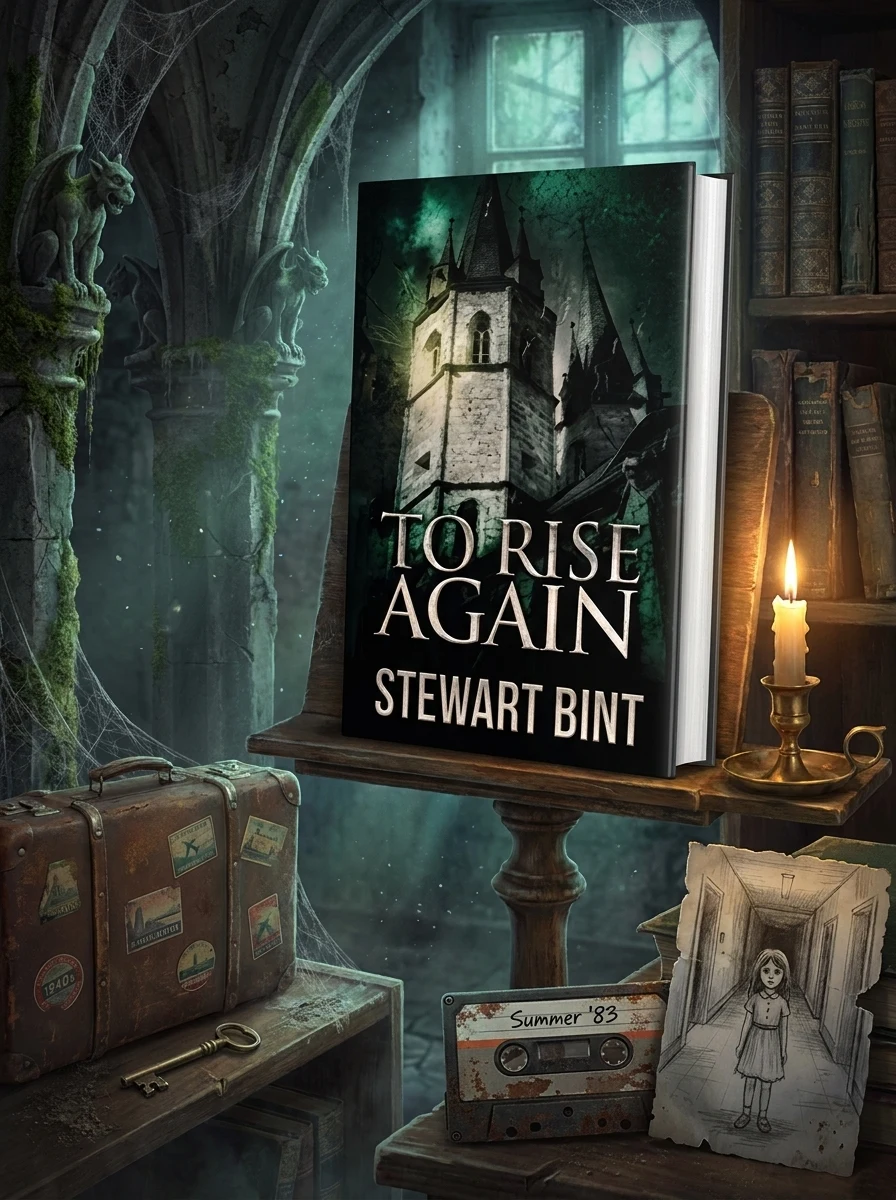
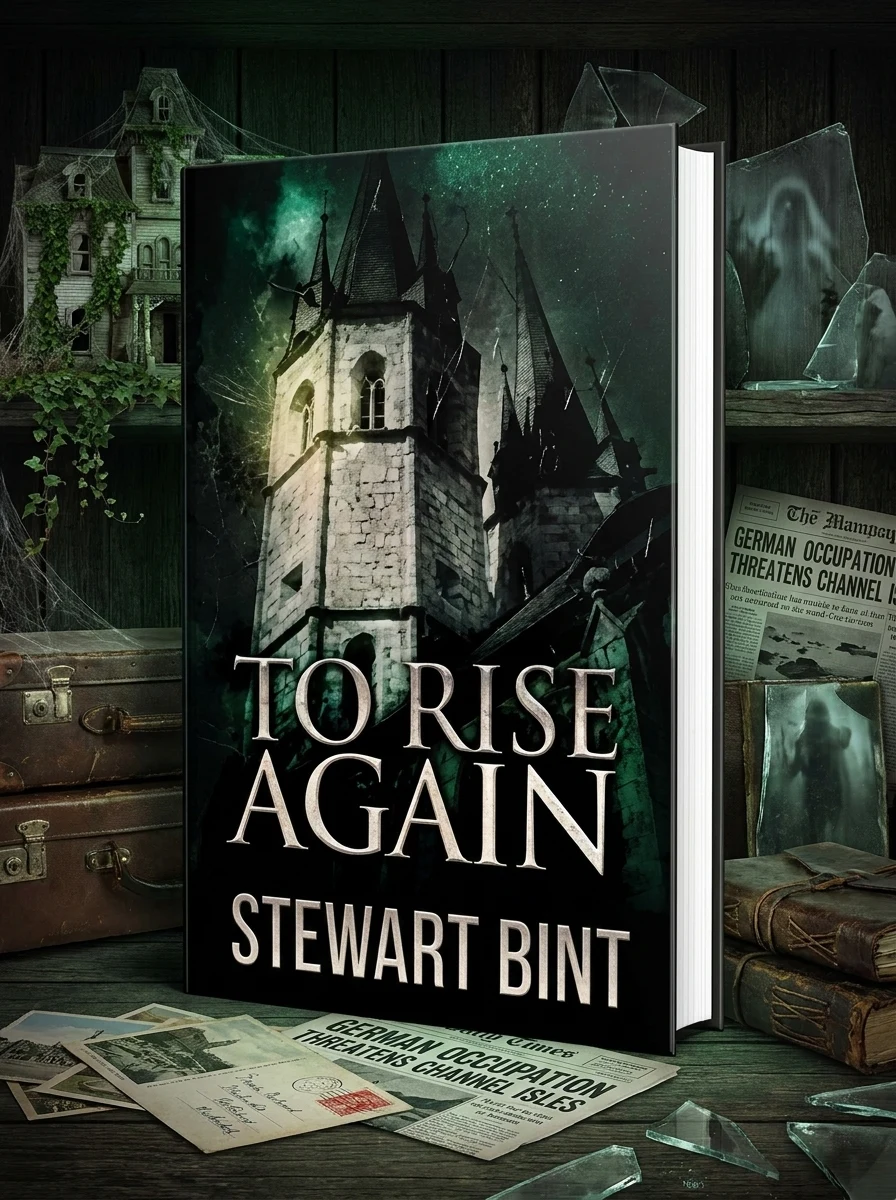
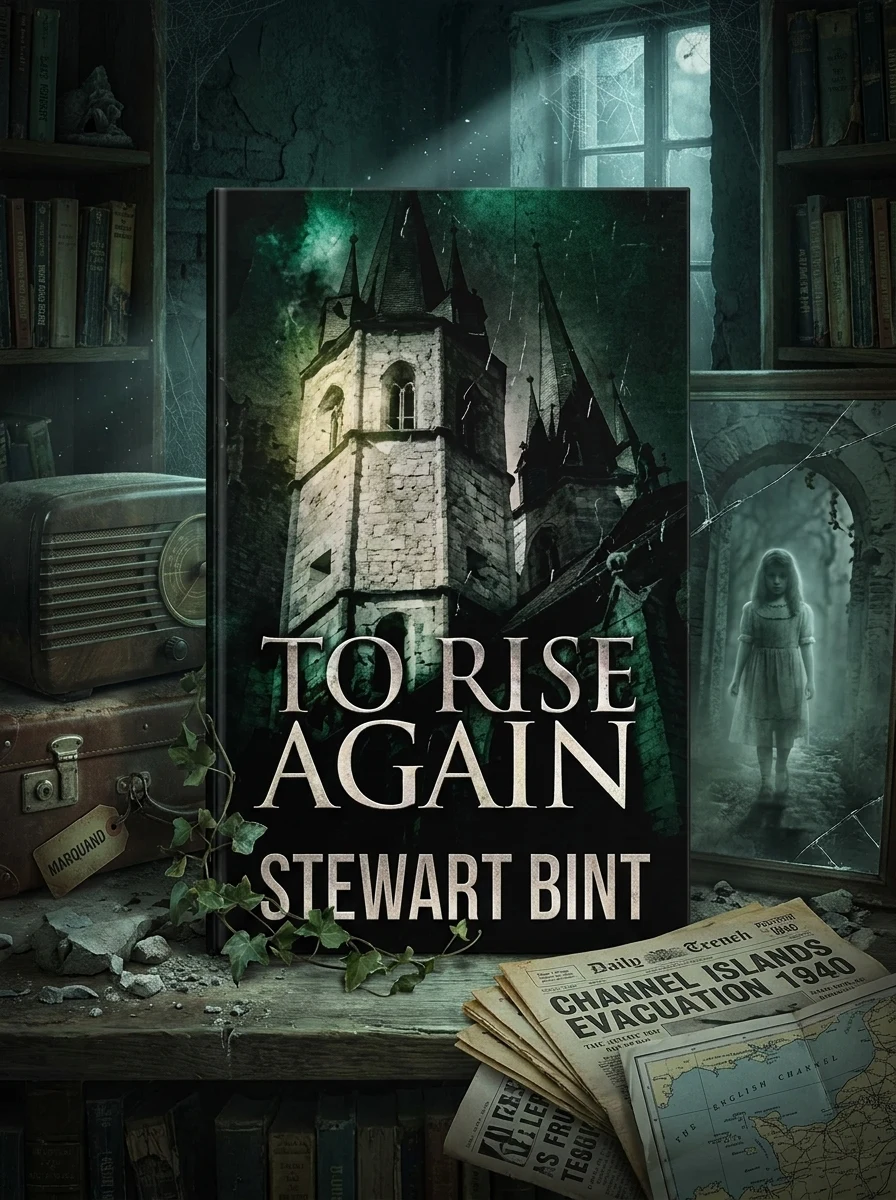
To Rise Again
A haunted mansion bridges the gap between a fleeing family in 1940 and a dreamer in 1983.
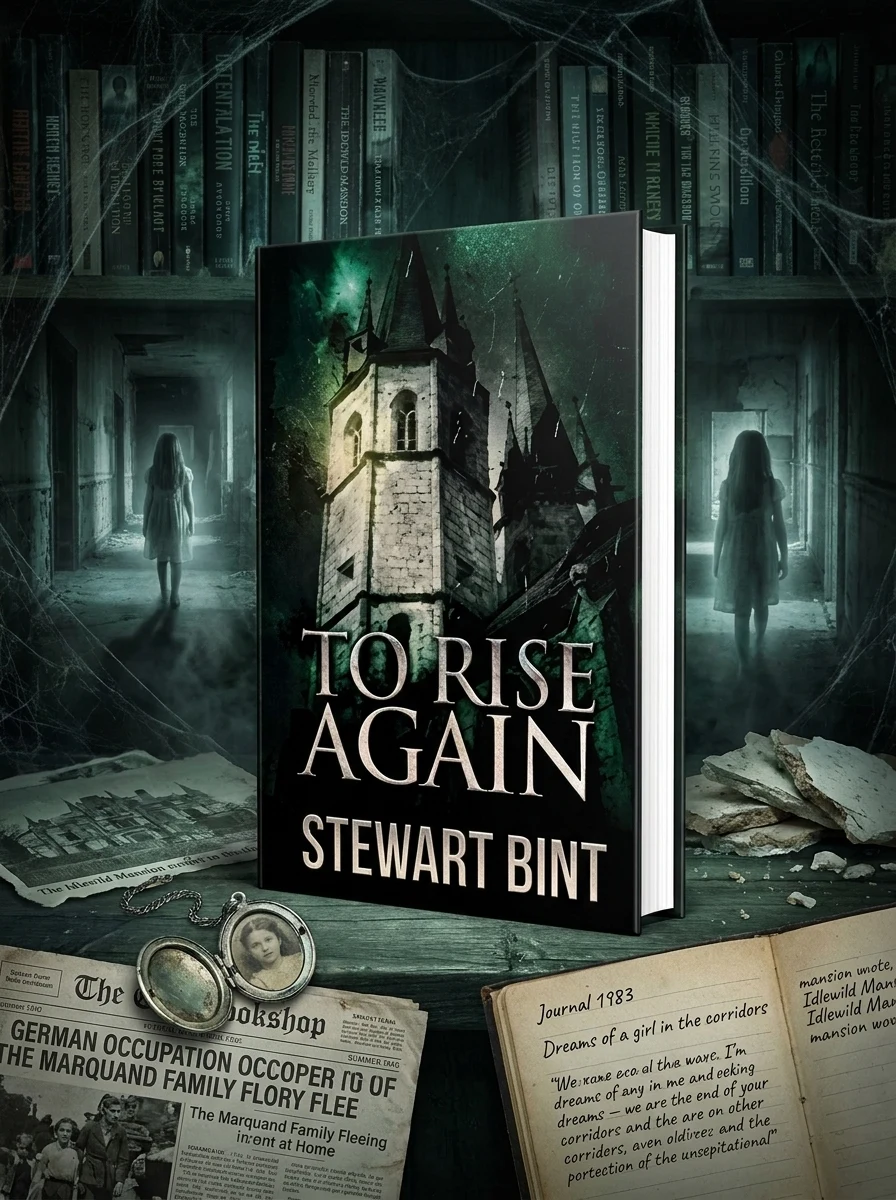
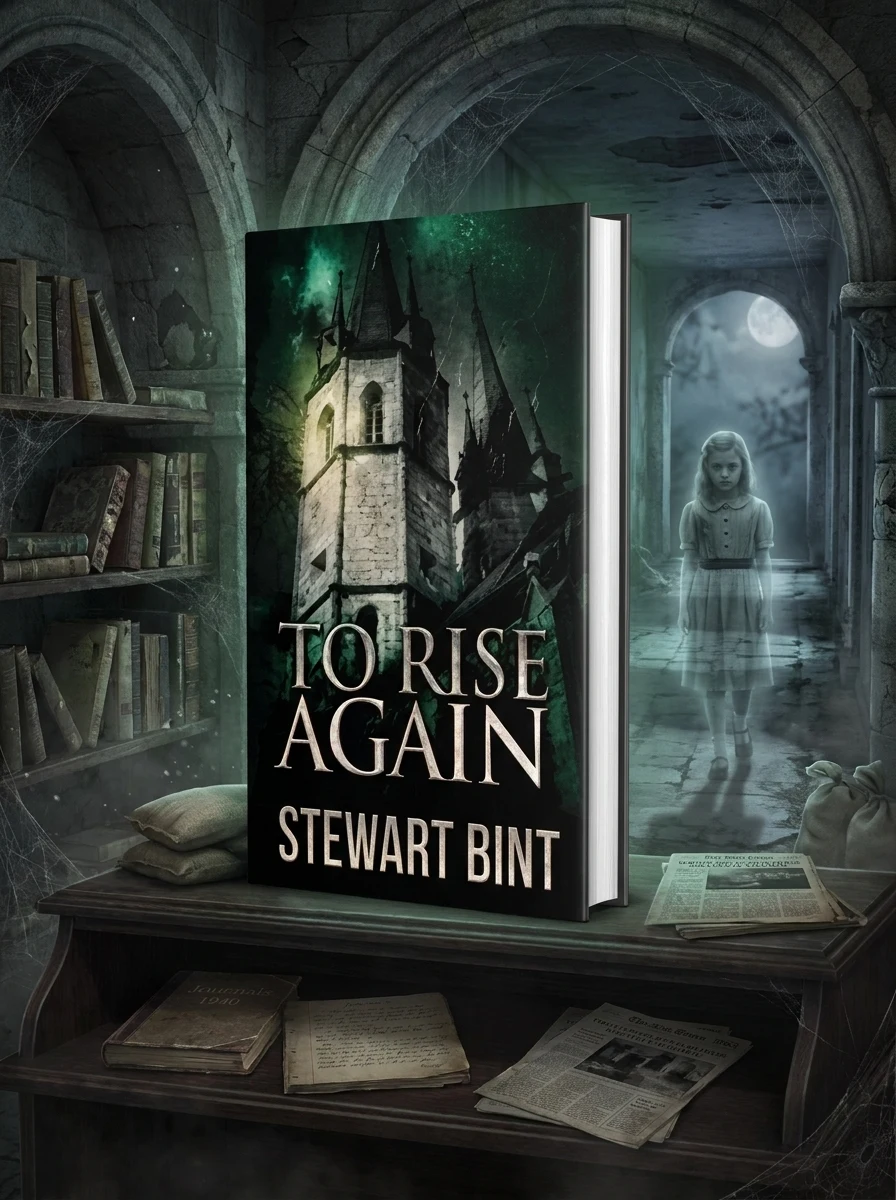
The narrative structure alternates between the pre-war exodus of the Marquand family and the subsequent decay of their estate. David Simeon’s recurring visions of a lost girl serve as the primary mechanism for connecting these timelines. The text examines how trauma persists across generations, manifesting in physical spaces that refuse to stay empty. Bint uses the setting of Idlewild Mansion not merely as a backdrop but as an active participant in the unfolding mystery. The story focuses on the psychological impact of displacement and the inability to escape one’s heritage. It is a study of memory, loss, and the supernatural intrusion into ordinary life.
The work sits within the tradition of gothic fiction, utilizing the specific historical context of the German occupation during World War II. It draws on the period of the English Channel exile in 1940 and the post-war decay of grand estates by 1983.


📝 Description: To Rise Again
💎 Our verdict on To Rise Again
📖 Why choose it
Why this book is worth reading
Readers who appreciate the slow-burn tension of gothic fiction will find this book compelling. It offers a deep exploration of how trauma persists across generations, manifesting in physical spaces that refuse to remain empty. Those interested in the psychological impact of displacement and the inability to escape one's heritage will gain insight into how memory lingers within architecture. The narrative demands patience, rewarding those who enjoy mood-driven stories over fast-paced action. It is ideal for audiences seeking a study of loss and supernatural intrusion into ordinary life, rather than conventional horror thrills.
⭐ Reader reviews
Reader rating
Stewart Bint constructs a haunting tale where Idlewild Mansion acts as an active participant in the mystery, bridging the gap between 1940 and 1983. The alternating timelines effectively demonstrate how family secrets and displacement leave lasting psychological marks. David Simeon’s visions of a lost girl blur the line between memory and haunting, creating an unsettling atmosphere. While the reliance on mood and historical setting may deter fans of urban contemporary horror, it suits those who enjoy atmospheric gothic fiction. Bint successfully illustrates how the past physically shapes the present, making this a rewarding read for patients willing to engage with complex generational trauma.
📖 Read on the blog
✍️ More books by this author Stewart Bint


🏛 Books from this publisher Next Chapter
You might also like
See more →
Have a question about this item?
Ask about the edition, condition, delivery or anything else — we reply by email or phone, usually within a day.
