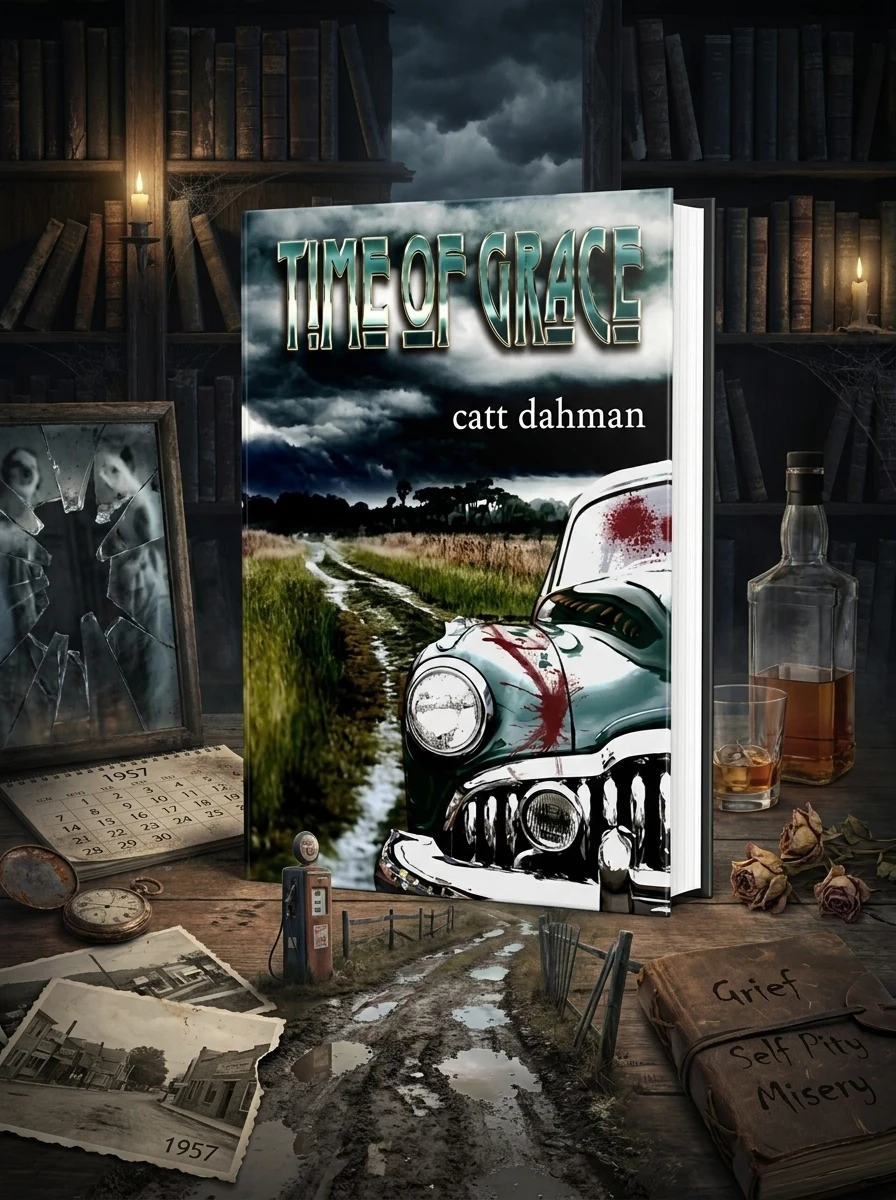
Time of Grace
A 1957 return to a haunted hometown reveals real monsters born from grief and historical curses.
Dahman constructs a narrative where psychological decay merges with supernatural threat. David’s journey is defined by his interaction with abstract figures that take physical form. The author relies on the Texarkana killer case and De Soto legends to ground the horror in specific history. This approach creates a world where the past actively invades the present. The story does not offer redemption but rather a confrontation with the self. Readers interested in character-driven psychological terror will find this compelling. Those seeking traditional jump scares or clear resolutions may find the ambiguity unsettling.
The book is set in 1957, a time often viewed as idyllic but presented here as fraught with underlying darkness. It references the 1946 Texarkana murders and Spanish explorer Hernan De Soto to anchor its supernatural elements in real historical events.


📝 Description: Time of Grace
💎 Our verdict on Time of Grace
📖 Why choose it
Why this book is worth reading
Readers seeking character-driven psychological terror will find this compelling, particularly those who appreciate horror that merges mental decay with supernatural threat. The book appeals to audiences interested in narratives where the past actively invades the present, forcing a confrontation with the self rather than offering redemption. It is ideal for those comfortable with ambiguity and unsettling tones over traditional jump scares or clear resolutions. By grounding abstract fears like grief and misery in physical forms, it offers a raw exploration of obsession and madness. Those who enjoy historical legends blended with cosmic horror will find the specific Texarkana and De Soto references enriching. It serves readers who want to face the raw nerves of psychological horror without escape.
⭐ Reader reviews
Reader rating
Catt Dahman constructs a formidable narrative where psychological decay merges seamlessly with supernatural threat, creating a world where the past actively invades the present. David’s journey is defined by his interaction with abstract figures that take physical form, blurring the line between nightmare and reality through references to the Texarkana killer case and De Soto legends. The text suggests that insanity lurks near every corner, presenting monsters as manifestations of our own inner demons. This approach creates a chilling atmosphere where personified concepts like Grief and Misery become real threats. Readers interested in character-driven psychological terror will find this compelling. However, those seeking traditional jump scares or clear resolutions may find the ambiguity unsettling. The work demands readers face the raw nerves of psychological horror without offering escape.
📖 Read on the blog
✍️ More books by this author Catt Dahman



🏛 Books from this publisher Createspace Independent Publishing Platform






You might also like
See more →
Have a question about this item?
Ask about the edition, condition, delivery or anything else — we reply by email or phone, usually within a day.
