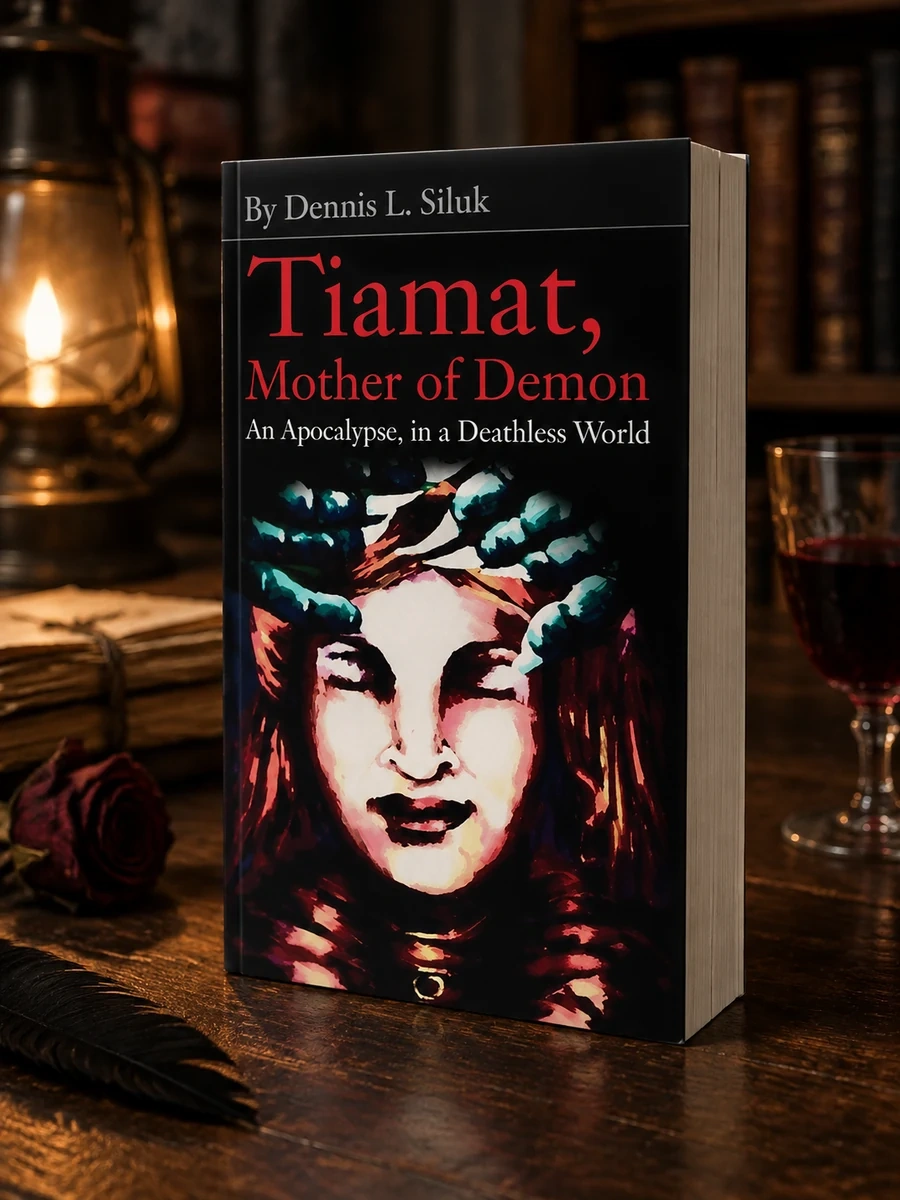

Tiamat, Mother of Demon: An Apocalypse, in a Deathless World
A mythic tale of demonic gods invading the upper world from Yort in 6807 BC.
Siluk constructs a prehistoric conflict where underworld rulers challenge terrestrial existence. The protagonist Sinned utilizes strategic surrender to counter these entities. The narrative structure moves through emotional and visionary landscapes defined by this ancient war. It contrasts the rigid architecture of temples with the fluid nature of demonic influence. The story does not rely on modern military tactics but rather on psychological warfare and spiritual resilience. This approach distinguishes it from standard fantasy adventures by rooting its magic in a specific, dated epoch.
The book is set in 6807 BC at the city-state of Yort. It references ancient rulers like Gilgamesh and Alexander the Great to establish a timeline preceding known history. The narrative draws on mythological traditions involving half-god figures and underworld hierarchies to frame its supernatural conflict.


📝 Description: Tiamat, Mother of Demon: An Apocalypse, in a Deathless World
💎 Our verdict on Tiamat, Mother of Demon: An Apocalypse, in a Deathless World
📖 Why choose it
Why this book is worth reading
This work appeals to readers seeking dense explorations of power dynamics between divine and human realms, specifically those interested in ancient mythological frameworks and supernatural fiction. It suits those who enjoy stories where faith is tested through conflict, offering a vision of psychological warfare and spiritual resilience against underworld rulers. The narrative provides a unique perspective on containment versus all-out war, distinguishing itself by rooting magic in a specific, dated epoch rather than relying on modern military tactics or simple plots.
⭐ Reader reviews
Reader rating
Siluk constructs a prehistoric conflict where underworld rulers challenge terrestrial existence, utilizing the protagonist Sinned to navigate this ancient war through strategic surrender. The text distinguishes itself from standard fantasy by emphasizing psychological resilience over physical combat. While it offers a dense exploration of power dynamics and spiritual themes, it does not provide light entertainment for casual browsers. Readers who appreciate rigid temple architecture contrasted with fluid demonic influence will find value here. The book serves best for those willing to engage with complex emotional landscapes defined by an epoch far removed from historical figures like Attila or Alexander the Great.
📖 Read on the blog
🏛 Books from this publisher iUniverse



You might also like
See more →



Have a question about this item?
Ask about the edition, condition, delivery or anything else — we reply by email or phone, usually within a day.
