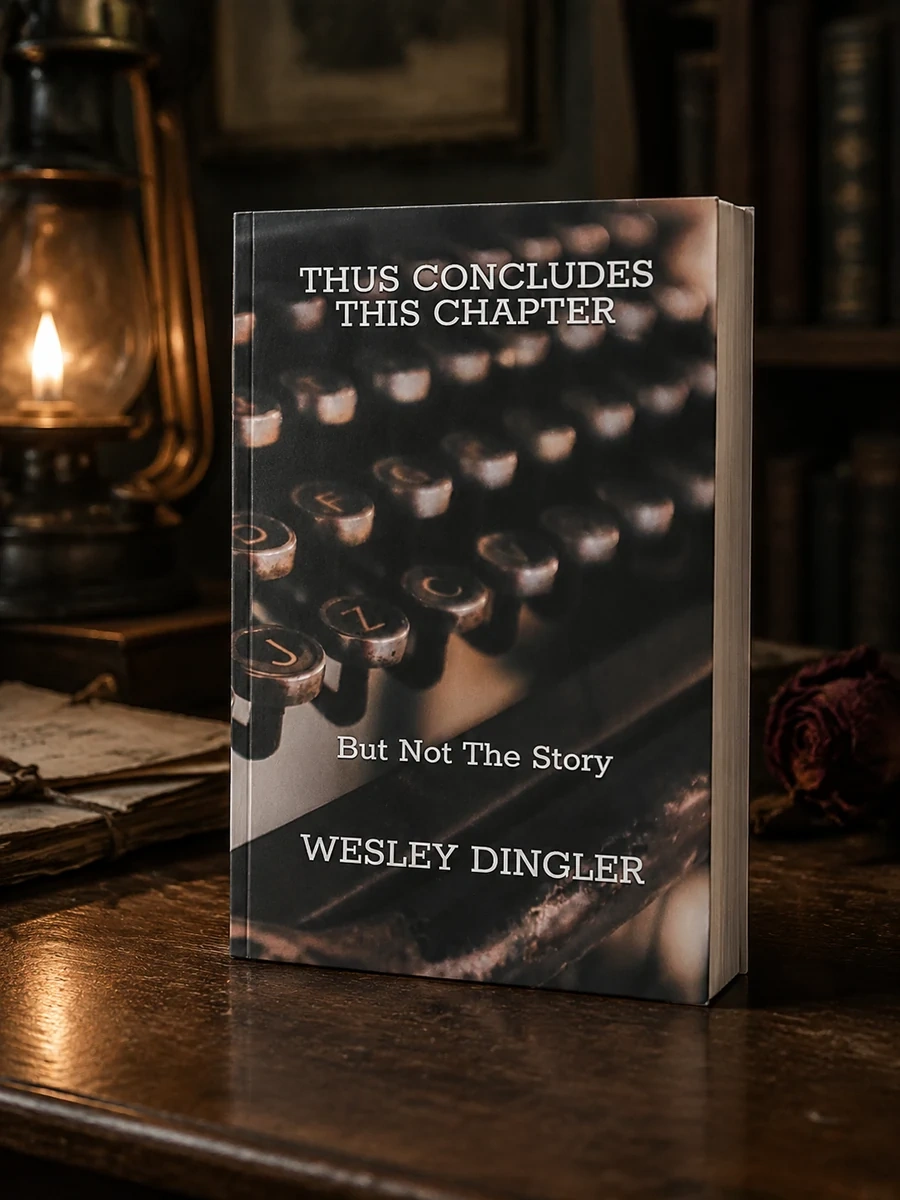
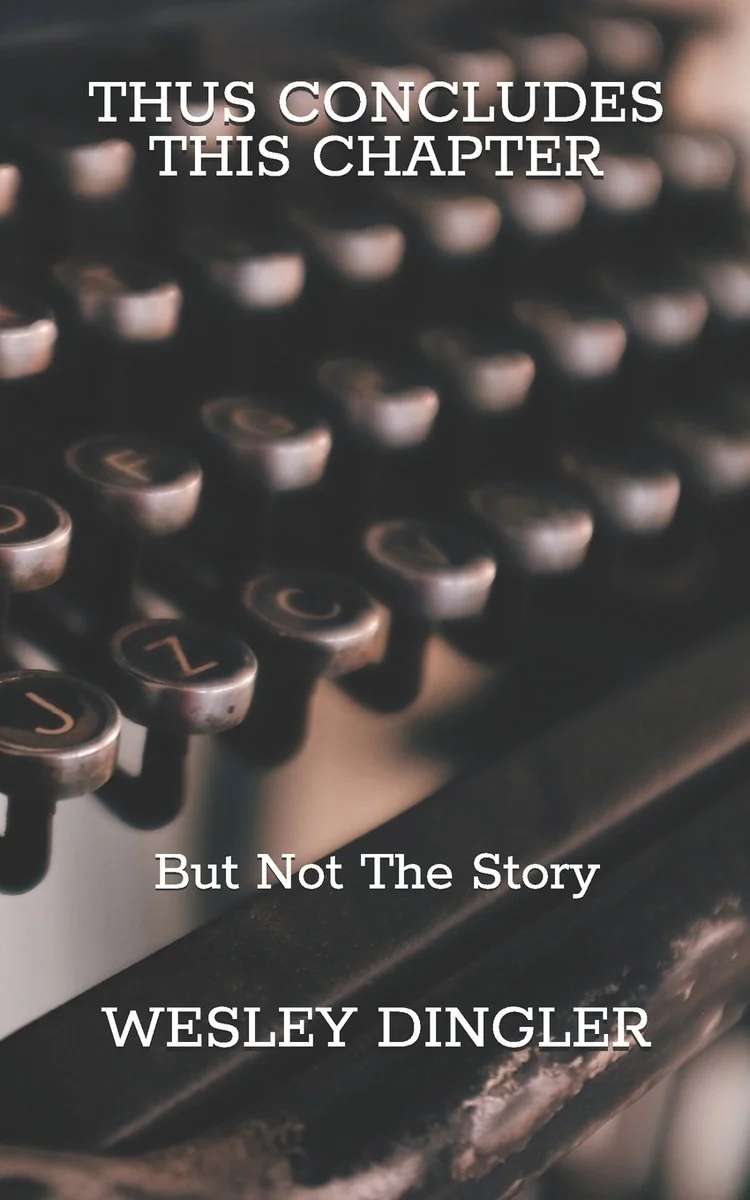
Thus Concludes This Chapter: But Not the Story
A widow battles an evil spirit inhabiting her late husband's typewriter.
Wesley Dingler presents a tale of domestic horror in Thus Concludes This Chapter: But Not the Story. The narrative follows Madeline Talley after her husband dies unexpectedly. She finds a terrifying secret in his writing office connected to an old typewriter. An ancient evil has inhabited the machine and now targets the widow. The darkness that haunted him spreads through their home, seeking to consume her soul. The story draws on gothic traditions of haunted objects and psychological terror. Dingler explores how grief can make one vulnerable to supernatural forces. The typewriter acts as a conduit for this malevolent presence. Madeline must confront the horror within the machine before it claims her life. The plot focuses on isolation and the invasion of personal space. This book suits readers who enjoy classic haunted object stories and slow-burn psychological dread. It appeals to those interested in modern takes on gothic fiction. Readers seeking fast-paced action or explicit content may find the atmosphere too heavy. The narrative relies on tension rather than gore. Dingler crafts a chilling experience for fans of supernatural suspense.
Published in 2019 by Independently Published, this work sits within the contemporary landscape of self-published horror fiction. It reflects a period where authors bypassed traditional gatekeepers to reach niche audiences directly. The book engages with enduring American gothic traditions, focusing on domestic spaces turned hostile.


📝 Description: Thus Concludes This Chapter: But Not the Story
💎 Our verdict on Thus Concludes This Chapter: But Not the Story
📖 Why choose it
Why this book is worth reading
This title is ideal for readers who appreciate slow-burn psychological dread over immediate visceral shock. Those interested in modern interpretations of gothic fiction will find value in how the narrative examines the intersection of grief and supernatural terror. The book suits individuals drawn to the tension of invasion of personal space rather than explicit gore. It offers a chilling experience for fans of supernatural suspense who prefer atmosphere and isolation as primary drivers of fear. By focusing on the psychological impact of loss, it provides a deeper emotional resonance for those seeking meaningful horror that lingers long after the final page.
⭐ Reader reviews
Reader rating
Dingler crafts a compelling domestic horror narrative centered on the terrifying premise of an evil spirit inhabiting a typewriter. The strength lies in its atmospheric tension and exploration of how grief renders one vulnerable to malevolent forces. The isolation of the protagonist enhances the psychological terror effectively. While lacking fast-paced action, the slow-burn approach creates a heavy, immersive dread suitable for patient readers. It successfully merges classic haunted object tropes with modern psychological insight. Fans of supernatural suspense will appreciate the chilling focus on the invasion of private space. The narrative relies on mood rather than gore, offering a refined horror experience that prioritizes emotional and spiritual consumption over physical violence.
📖 Read on the blog
🏛 Books from this publisher Independently Published








You might also like
See more →
Have a question about this item?
Ask about the edition, condition, delivery or anything else — we reply by email or phone, usually within a day.
