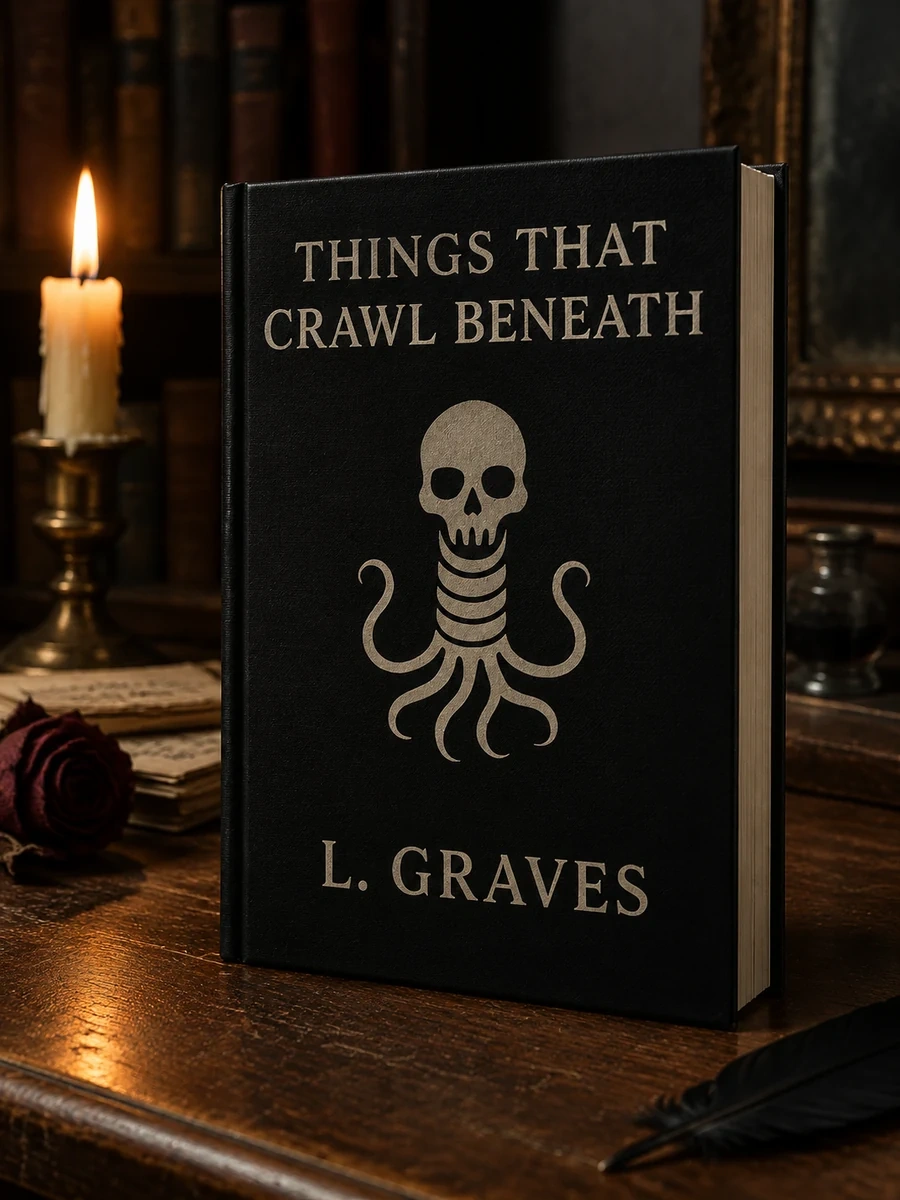
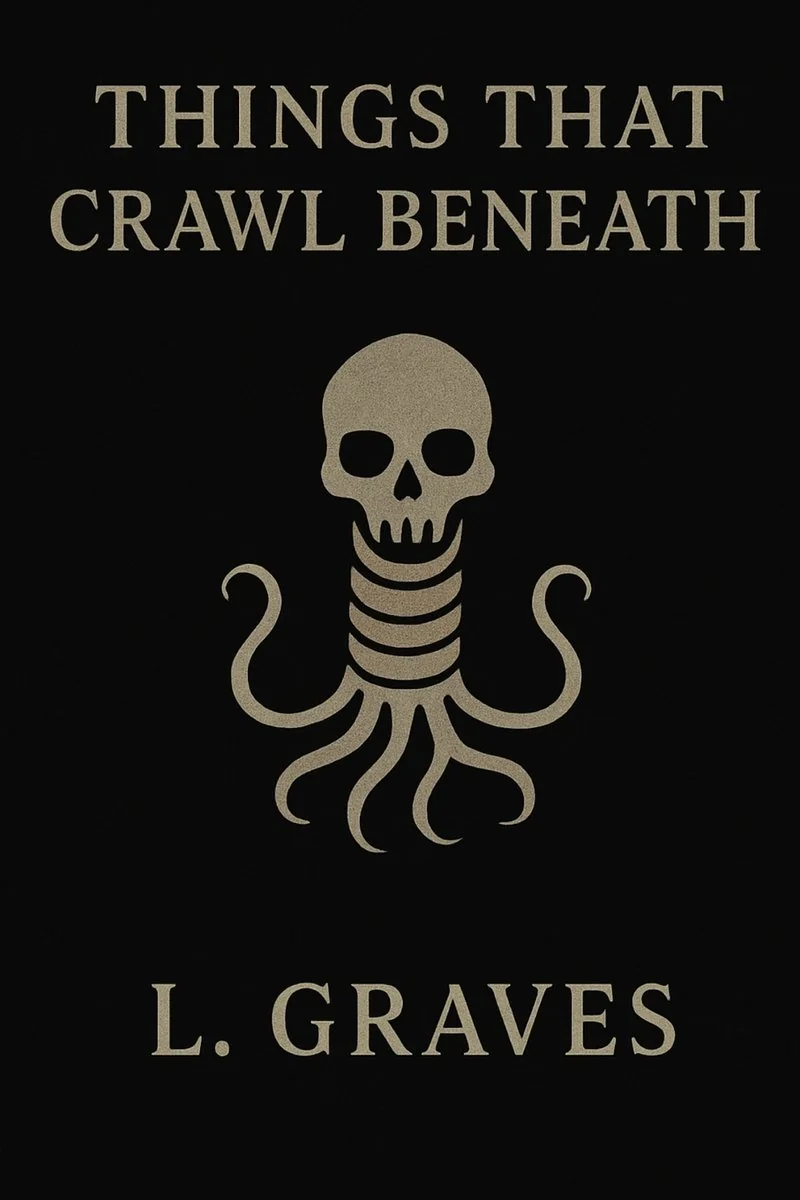
Things That Crawl Beneath
A recovered anthology of scientific horror told through field reports and specimen notes.
This work functions as a transmission from below rather than a standard novel. Graves uses the voice of an unnamed Archivist to document strange phenomena. The content includes accounts of living tunnels and glass eggs growing in lungs. These elements suggest the earth is remembering itself. The organization follows a pattern where each story reveals more about the larger organism beneath the surface. This approach builds quiet dread through forensic detail rather than action.
L Graves continues their tradition of quiet dread and forensic worldbuilding. The book sits within the genre of scientific horror and folklore. It draws on the idea that memory collects in quiet places beneath cities and rivers. This approach connects modern field reports with ancient supernatural beliefs.


📝 Description: Things That Crawl Beneath
💎 Our verdict on Things That Crawl Beneath
📖 Why choose it
Why this book is worth reading
Readers who appreciate atmospheric dread over traditional narrative arcs will find significant value in this collection. The book appeals to those interested in the intersection of folklore and scientific observation, offering a unique perspective on the supernatural undercurrents of the earth. By utilizing field reports and specimen notes, Graves constructs a sense of forensic worldbuilding that immerses the audience in quiet terror. It is ideal for individuals who enjoy fragmented formats that reveal larger truths through cumulative detail rather than direct exposition. Those seeking to explore how foundations collapse into living tunnels or how the ground breathes will discover a compelling, if unsettling, exploration of memory and biology within the natural world.
⭐ Reader reviews
Reader rating
Graves delivers a masterclass in quiet dread, utilizing the clinical voice of an unnamed Archivist to document strange phenomena with chilling precision. The anthology’s strength lies in its forensic detail and the gradual revelation of a larger organism beneath the surface. This approach builds tension through accumulation rather than action, creating a pervasive sense of unease. The work suits readers who enjoy scientific horror and folklore, offering a distinct alternative to plot-driven narratives. While the fragmented format may challenge those preferring straightforward storytelling, it rewards patience with a deeply atmospheric experience. The earth is portrayed not as dead matter but as something remembering itself, providing a fresh and unsettling lens for cosmic horror enthusiasts.