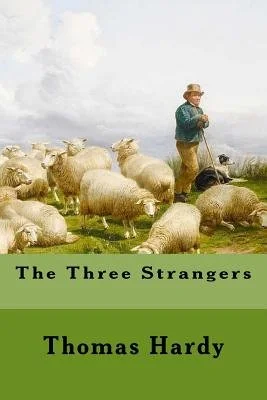
The Three Strangers
A reprint of Thomas Hardy's 1883 pastoral short story about a surviving sheep-stealer.
This edition focuses on the character of the sheep-stealer who operates as a folk hero within Hardy’s Wessex. The narrative is framed by an omniscient voice looking back over half a century. Casterbridge serves as the setting, representing Dorchester in the author’s fictional landscape. Cooper provides this text for readers who appreciate historical English fiction. The story avoids modern horror tropes in favor of rural drama and legal evasion. It appeals to those studying Hardy’s regionalism. The book does not contain supernatural elements despite the shop’s genre focus.
Thomas Hardy wrote this story in 1883, placing it firmly in the late Victorian period. The narrative is set in Casterbridge, which represents Dorchester in his fictional Wessex region. Cooper published this edition in 2017 through Createspace Independent Publishing Platform, bridging the gap between nineteenth-century literature and modern readers.


📝 Description: The Three Strangers
💎 Our verdict on The Three Strangers
📖 Why choose it
Why this book is worth reading
Readers interested in the intersection of classic English literature and atmospheric storytelling will find value in this text, despite its classification under horror. It offers a unique entry point for those who appreciate the psychological tension inherent in Hardy’s regionalism without requiring engagement with supernatural tropes. The narrative provides a historical perspective on rural drama and legal evasion, appealing to collectors of late Victorian prose. While it lacks modern horror elements, the story’s focus on survival and justice within a specific literary geography offers depth for students of English literature. It serves as a bridge for horror fans seeking foundational texts that influence genre tone through psychological realism rather than explicit fear.
⭐ Reader reviews
Reader rating
This volume presents a distinct departure from typical shelf expectations, offering instead a pastoral narrative rooted in Hardy’s Wessex. The omniscient retrospective structure creates a reflective tone suitable for those studying regionalism and late nineteenth-century prose. While it avoids immediate action and supernatural thrills, the text excels in grounding its drama in specific literary geography. It is best suited for readers who value historical context over genre conventions. The editorial approach highlights survival and justice, making it an interesting anomaly for horror enthusiasts willing to explore the roots of English rural drama. It stands as a testament to Hardy’s exploration of human endurance.
📖 Read on the blog
🏛 Books from this publisher Createspace Independent Publishing Platform






You might also like
See more →


Have a question about this item?
Ask about the edition, condition, delivery or anything else — we reply by email or phone, usually within a day.
