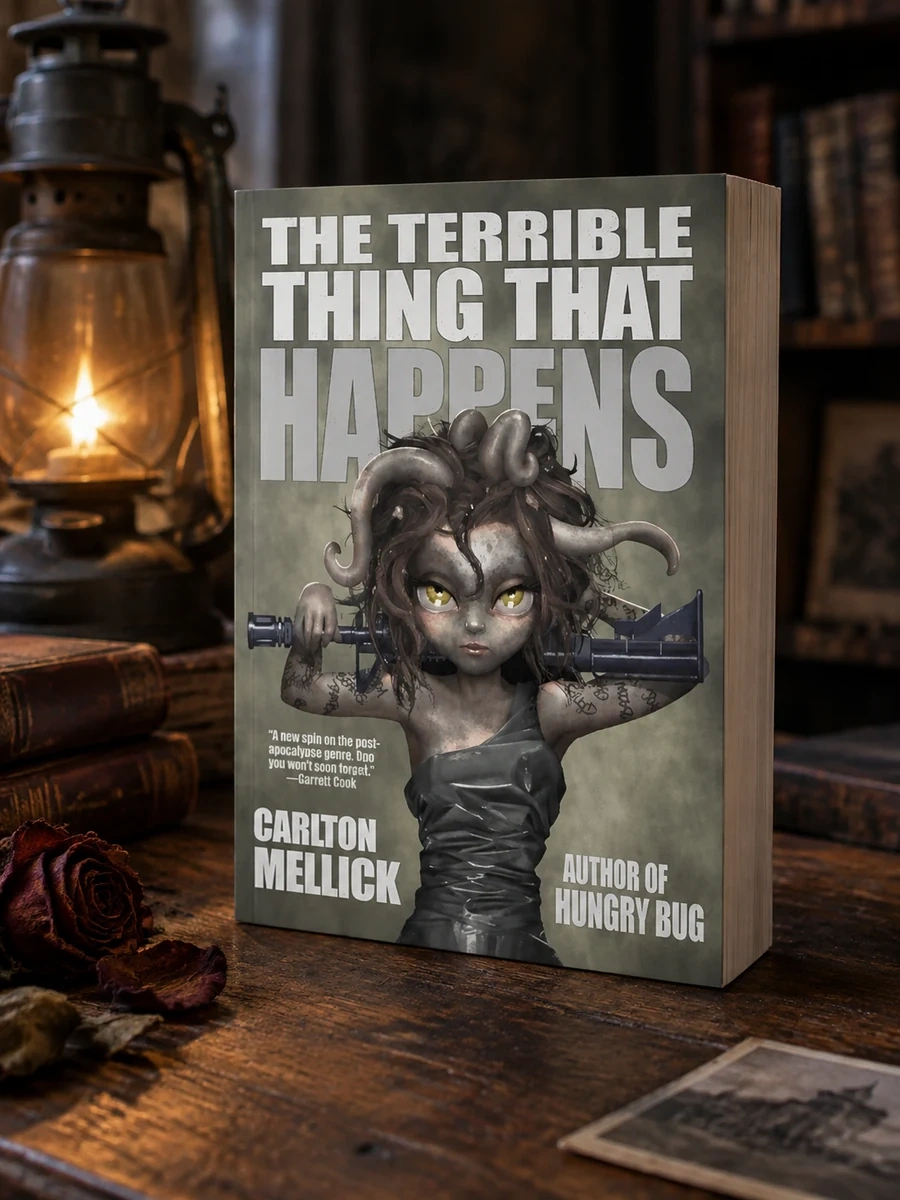

The Terrible Thing That Happens
A novel about survivors looting a ghost store during nightly massacres.
The text examines how memory functions as a survival tool in a hopeless environment. The protagonist community does not fight the apocalypse but adapts to its rhythms. They learn the timing and paths of the masked attackers to minimize casualties while collecting goods. The book focuses on the mundane horror of routine violence rather than epic battles. It highlights the contrast between the comforting scent of baked bread and the rust-caked parking lot filled with blood. This approach emphasizes the endurance required to live in a place where death is scheduled and inevitable.
This work sits within the tradition of American horror fiction, specifically the subgenre of post-apocalyptic narratives. It draws on gothic elements by placing supernatural occurrences in a mundane setting like a grocery store. The story reflects anxieties about societal collapse and the persistence of human violence even after civilization ends.


📝 Description: The Terrible Thing That Happens
💎 Our verdict on The Terrible Thing That Happens
📖 Why choose it
Why this book is worth reading
This book is essential for readers who find comfort in the mundane horror of routine violence and the endurance required to survive a scheduled apocalypse. It appeals to those interested in grim survival tales where memory functions as a critical tool against hopelessness, rather than epic battles or heroic quests. Readers drawn to gothic atmospheres and psychological horror will appreciate the focus on adaptation and resilience within a ruined world. The narrative offers a unique perspective on trauma, highlighting how communities adapt to horrific cycles by memorizing killer patterns. It is ideal for fans of dark fantasy who prefer atmospheric dread over traditional plot progression, seeking stories that emphasize the contrast between comforting domesticity and rust-caked bloodshed in a toxic wasteland.
⭐ Reader reviews
Reader rating
Carlton III Mellick’s work excels in portraying the psychological toll of enduring recurring violence without resorting to epic confrontations. The narrative effectively utilizes the setting of a final grocery store to explore themes of memory, adaptation, and the grotesque beauty of survival. By focusing on the rhythmic precision of nightly massacres and the mundane horror of looting amidst bloodshed, the book creates a suffocating yet compelling atmosphere. It suits readers who appreciate gothic traditions and cosmic dread over hopeful redemption. The contrast between the scent of baked bread and the toxic wasteland serves as a powerful motif for resilience. This is a sophisticated exploration of human endurance in a hopeless environment, appealing to those who enjoy dark, atmospheric fiction that prioritizes psychological depth and grim realism.