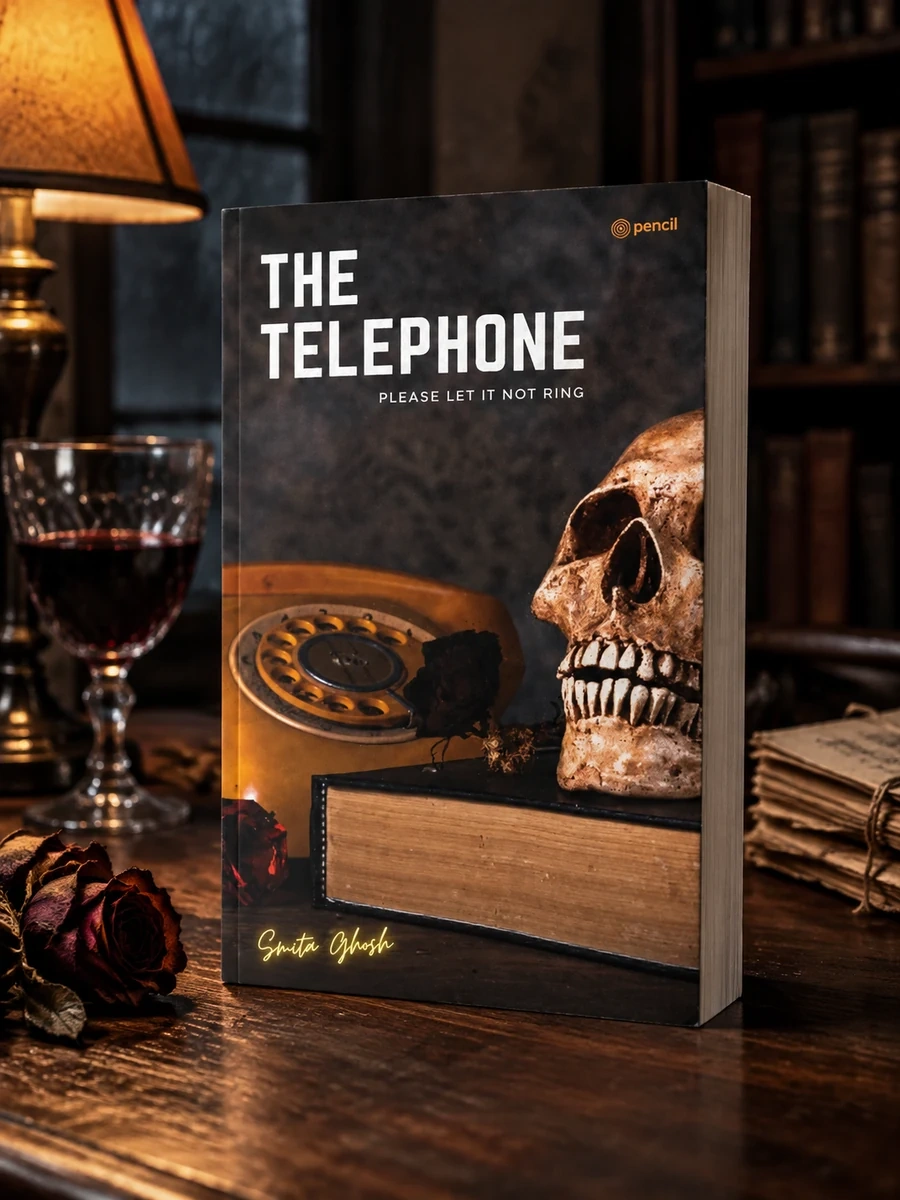

The Telephone: Please Let It Not Ring
A short horror novel about a woman haunted by mysterious nightly phone calls in her new apartment.
The narrative follows Aditi Khanvilkar after she accepts a job and moves into a new residence. Her sense of maturity quickly fades as the telephone begins to ring each evening with disturbing content. Ghosh uses this recurring event to drive the plot forward, creating an atmosphere of suspicion and fear. The story does not explain the source of the calls immediately, allowing the tension to build through Aditi’s reactions and investigations. The text is organized around her efforts to understand the phenomenon, leading to a climactic revelation. This structure keeps the focus tight on the protagonist’s psychological state and her interaction with the supernatural object. The ending resolves the mystery in a way that aligns with the mystic tone established throughout.
Published by Pencil, an imprint of One Point Six Technologies Pvt Ltd, this 2021 release fits within contemporary Indian English horror fiction. It draws on the tradition of supernatural tales where everyday objects become sources of terror. The work reflects modern anxieties about isolation and unknown threats in urban living spaces.


📝 Description: The Telephone: Please Let It Not Ring
💎 Our verdict on The Telephone: Please Let It Not Ring
📖 Why choose it
Why this book is worth reading
This short horror novel appeals to readers who prefer intense, focused narratives over expansive world-building. It is ideal for those seeking immediate psychological tension and the fear of domestic intrusion. The story offers a tight exploration of isolation and suspicion, driven by the protagonist's personal interactions with the unknown. Readers interested in the subversion of safe spaces and the eerie potential of everyday technology will find value in its atmospheric construction. It provides a quick, chilling experience centered on mental fragility rather than complex lore, making it suitable for those who enjoy concise, impactful supernatural fiction that prioritizes mood and emotional resonance over plot complexity.
⭐ Reader reviews
Reader rating
Ghosh effectively utilizes the telephone as a conduit for dread, transforming a mundane object into a source of profound anxiety. The narrative succeeds in maintaining a tight focus on Aditi’s psychological state, ensuring the horror feels personal rather than abstract. By withholding immediate explanations, the author builds a compelling atmosphere of suspicion and fear. The structure supports a clear progression toward a mystic resolution, satisfying readers who appreciate defined endings to supernatural mysteries. While it lacks extensive character development or historical context, its strength lies in its immediacy and atmospheric precision. It best suits fans of gothic tales where domestic spaces turn hostile, offering a direct and chilling encounter with the unexplained.
You might also like
See more →







Have a question about this item?
Ask about the edition, condition, delivery or anything else — we reply by email or phone, usually within a day.
