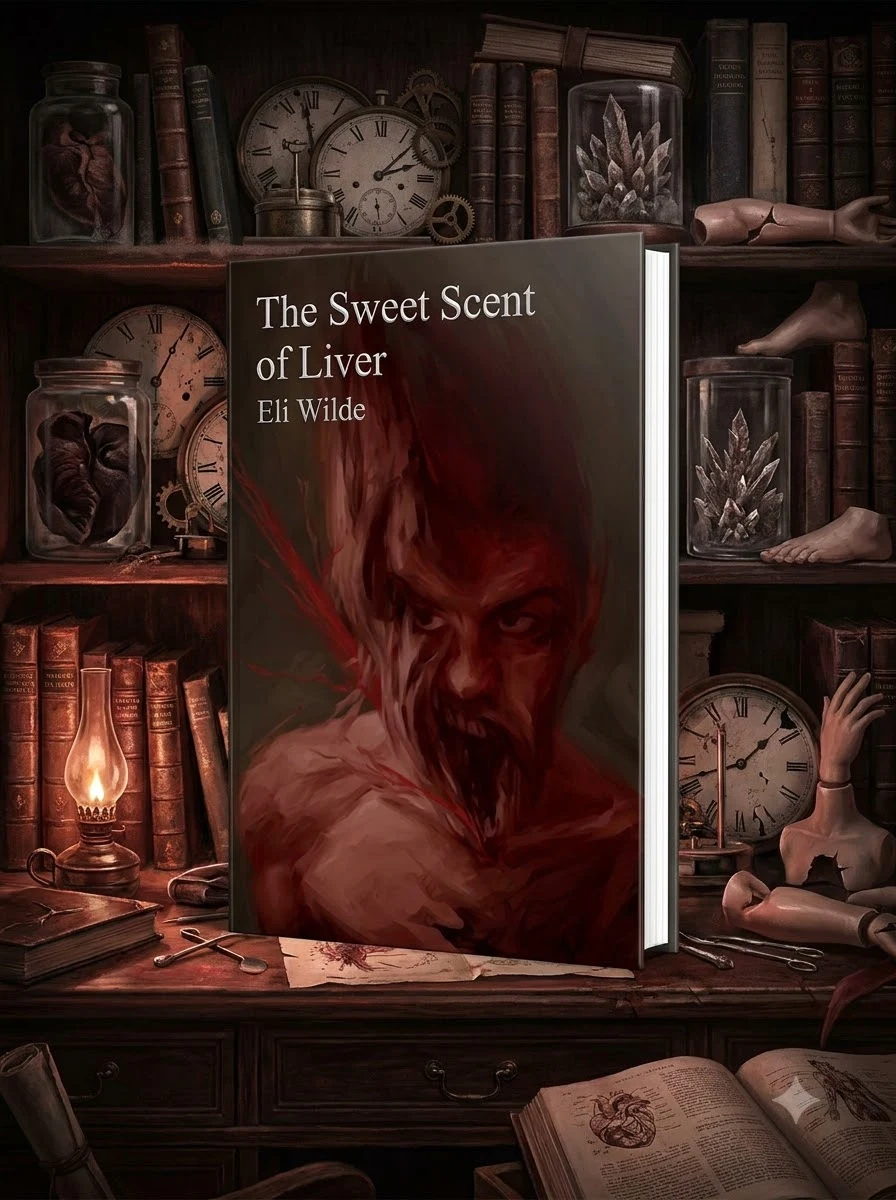

The Sweet Scent of Liver
An anthology of eight stories about infected humans called the sharded spanning one hundred years.
Wilde uses the concept of the sharded to examine human resilience and corruption. The narrative moves across different time periods, showing how society changes when faced with an invisible threat. The stories highlight the tension between natural humans and their synthetic counterparts. Each tale offers a glimpse into a world where the boundary between life and infection is blurred. The author avoids easy answers, leaving readers to ponder the nature of evil within the self.
Published in early 2023 by Witching Hole Publications, this book sits within the contemporary horror genre. It draws on gothic traditions of internal decay and supernatural invasion. The anthology reflects modern anxieties about identity and technology through its focus on clones and replicants.


📝 Description: The Sweet Scent of Liver
💎 Our verdict on The Sweet Scent of Liver
📖 Why choose it
Why this book is worth reading
Readers who appreciate the subtle dread of psychological horror and the complex moral ambiguities found in gothic fiction will find this collection deeply rewarding. Eli Wilde invites audiences to confront the unsettling possibility that evil is an inherent part of the self rather than an external invader. Those willing to engage with narrative ambiguity and resist the comfort of clear resolutions will discover a rich exploration of resilience and corruption across different eras. The book appeals to those interested in the blurring lines between life and infection, offering a profound study of identity decay. It is ideal for fans who prefer their horror to challenge the soul as much as it frightens the senses, providing a thought-provoking examination of how society crumbles when faced with an invisible, pervasive threat.
⭐ Reader reviews
Reader rating
Wilde delivers a sophisticated anthology that transcends traditional monster tropes by focusing on the psychological and physical transformation of characters across a century. The narrative structure effectively demonstrates how different eras react to the same underlying corruption, highlighting the tension between natural humans and synthetic counterparts. The work excels in its ambiguous tone, refusing easy answers while examining the darkness of the soul as the primary determinant of fate. This approach suits readers who enjoy gothic fiction and supernatural themes that prioritize internal decay over straightforward action. It is a compelling study of identity and resilience for those comfortable with unsettling, open-ended conclusions about the nature of evil.
You might also like
See more →







Have a question about this item?
Ask about the edition, condition, delivery or anything else — we reply by email or phone, usually within a day.
