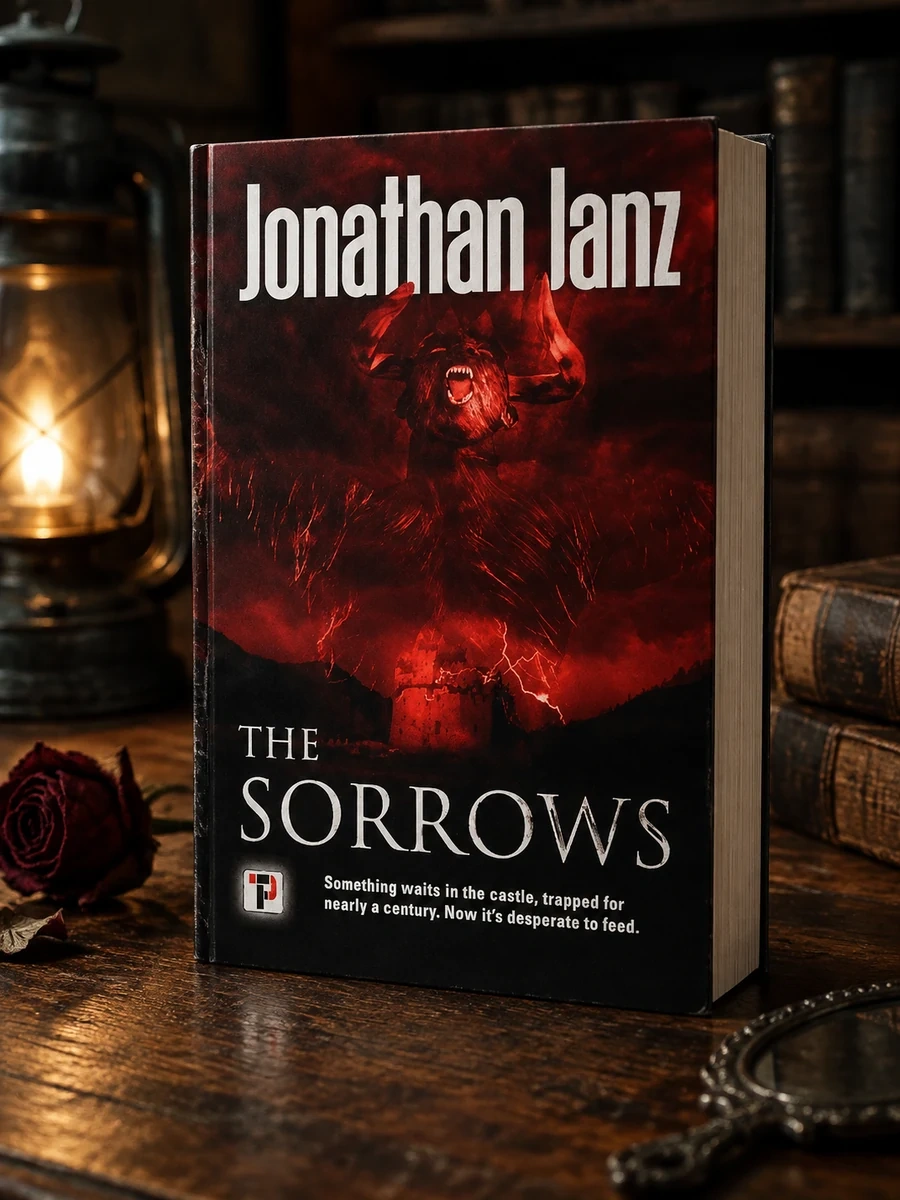

The Sorrows
Currently unavailable
This book is sold out right now. Leave your email — we'll let you know if it comes back, and you'll get 10% off any book today.
In stock now — readers of this book also loved:


A gothic novel about composers trapped in a castle with a century-old evil.
The Sorrows operates as a classic haunted house story where the architecture holds the horror. Ben and Eddie enter the estate expecting inspiration but find a predatory force waiting for them. The text emphasizes the isolation of the castle and the weight of its bloody past. Janz constructs the plot around the inevitable collision between the living intruders and the dormant entity. The narrative does not rely on complex subplots or character backstories, focusing instead on the immediate threat posed by the trapped being. This approach creates a claustrophobic reading experience that mirrors the characters' entrapment within the stone walls of The Sorrows.
Published in 2018 by Flame Tree Press, this work sits within the contemporary revival of gothic horror. It draws on early twentieth-century traditions of cursed estates and supernatural vengeance. The novel reflects a period where classic haunted house tropes were reimagined for modern audiences seeking traditional scares.

📝 Description: The Sorrows
💎 Our verdict on The Sorrows
📖 Why choose it
Why this book is worth reading
Readers who appreciate the atmospheric dread of traditional gothic fiction will find this novel deeply satisfying. It is ideal for those who enjoy slow-building tension and stories where the setting acts as a predator, trapping protagonists in a cycle of fear. Fans of isolated castle narratives and cosmic horror elements that focus on inevitable doom rather than escape will gain much from its claustrophobic experience. It appeals to audiences seeking a return to classic tropes without modern psychological complexity.
⭐ Reader reviews
Reader rating
Janz delivers a potent homage to the haunted house subgenre, effectively utilizing the isolation of The Sorrows castle to generate palpable dread. The narrative succeeds by making the architecture itself the antagonist, creating a claustrophobic atmosphere that mirrors the characters' entrapment. While it lacks complex character development, this simplicity serves the plot well, focusing entirely on the collision between living intruders and a dormant entity. It suits readers who prefer traditional supernatural horror over modern psychological thrillers, offering a pure, unrelenting experience of impending doom.