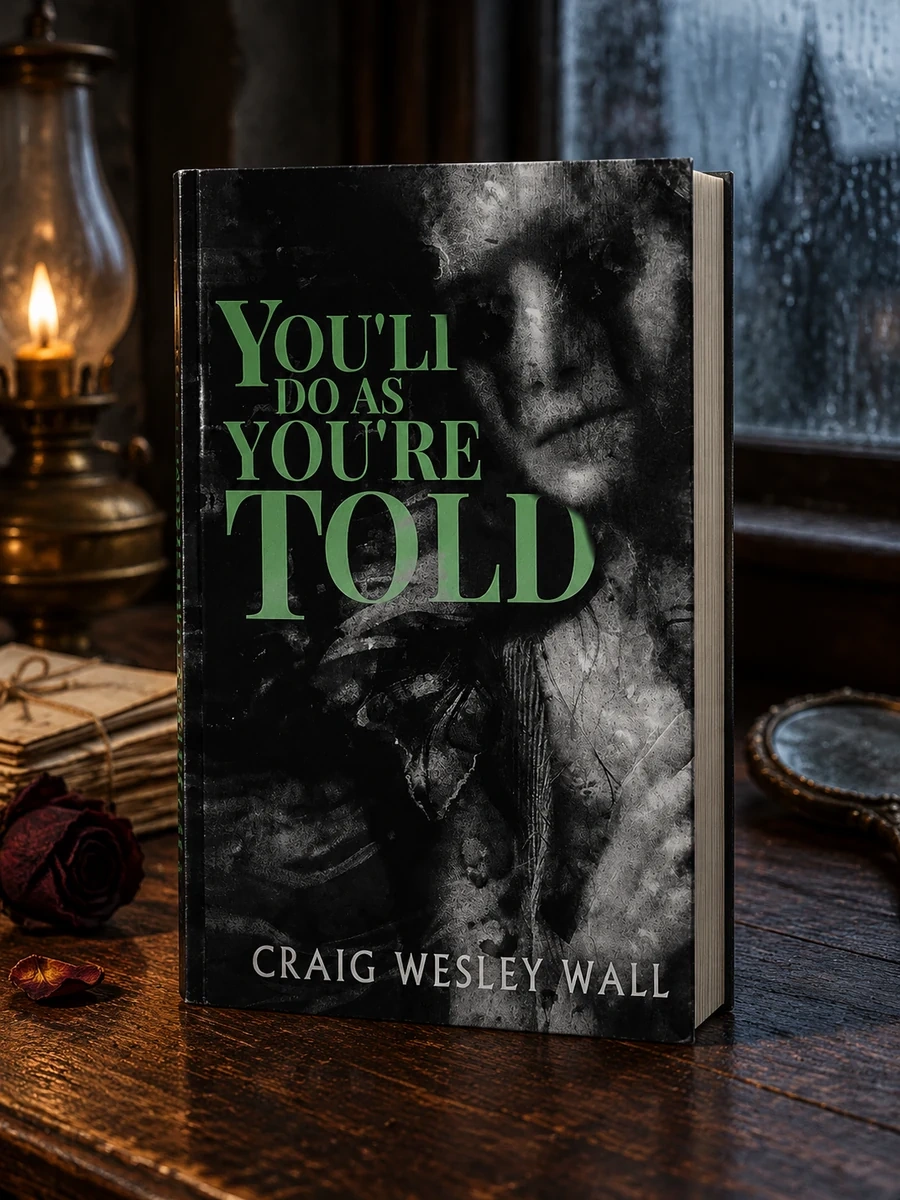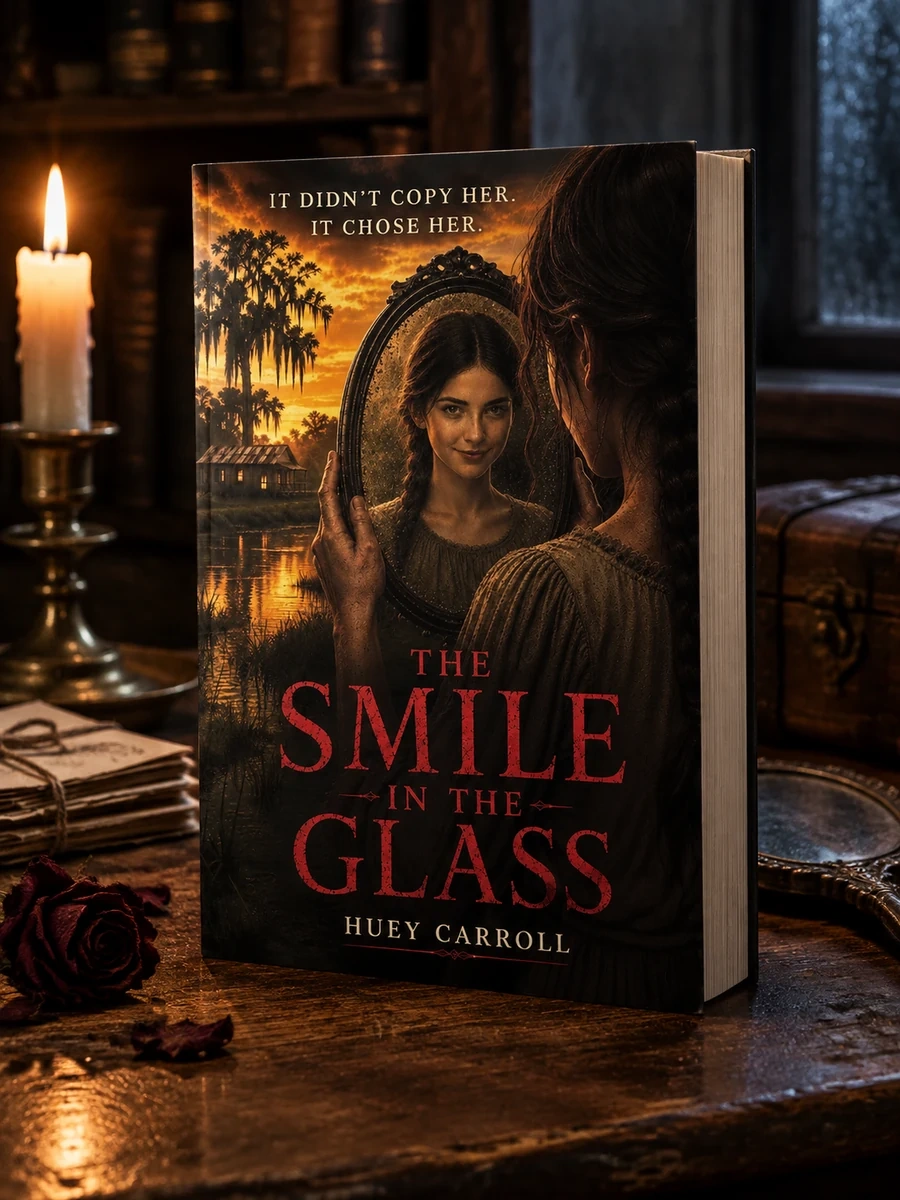
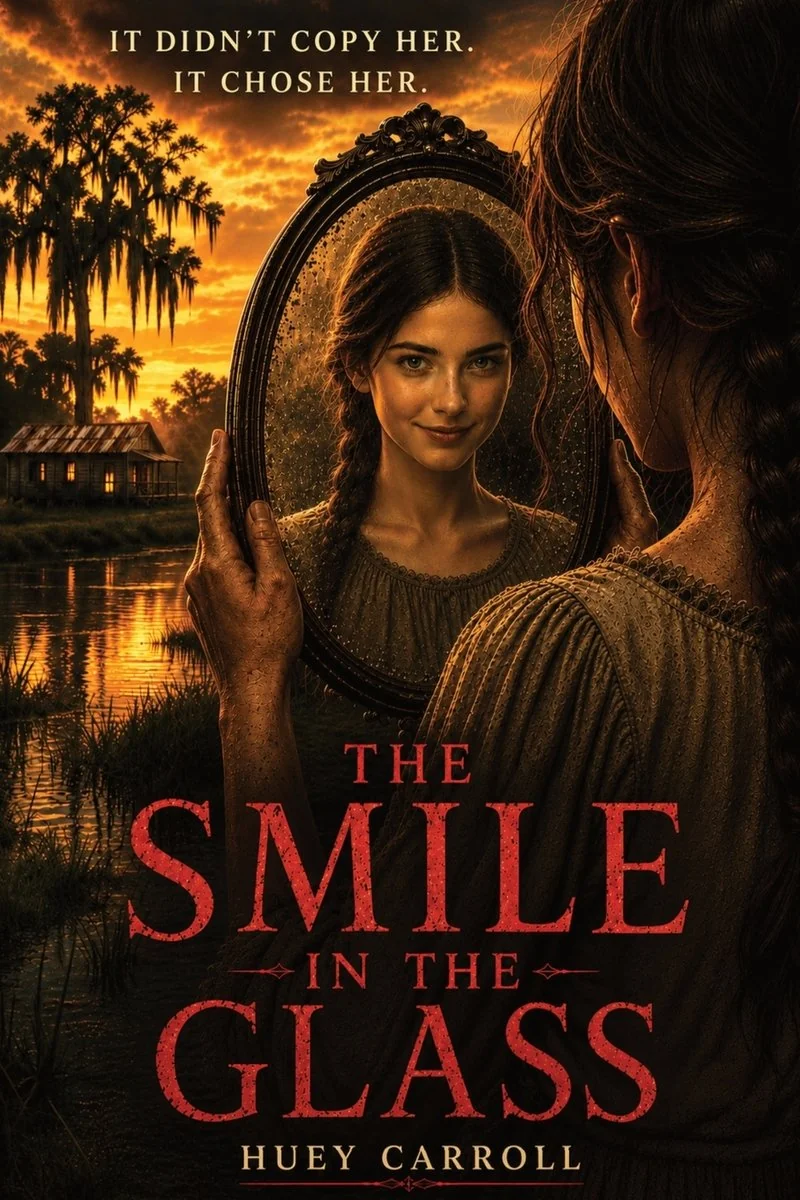
The Smile In The Glass: It Didn't Copy Her. It Chose Her
A desperate girl trades her identity for survival using a haunted mirror in 1937 Louisiana.
The narrative follows Emma Ruth Halloran as she navigates the crushing weight of agricultural failure and familial debt in rural Louisiana. Her life changes when she obtains a mirror linked to a dead woman. The reflection offers practical help, such as food and courage, but demands constant attention and proximity. Each interaction erodes her sense of self. The plot examines the slow erosion of identity under pressure. It highlights how desperation can make impossible choices seem like salvation. The story does not offer easy escapes from economic hardship. Instead, it shows how a supernatural pact can consume the soul while providing temporary relief from worldly struggles.
Set in East Carroll Parish, Louisiana, in 1937, the story reflects the agricultural crisis of the Great Depression era. The narrative draws on Southern Gothic traditions, focusing on rural poverty and the psychological toll of debt during this specific historical period.


📝 Description: The Smile In The Glass: It Didn't Copy Her. It Chose Her
💎 Our verdict on The Smile In The Glass: It Didn't Copy Her. It Chose Her
📖 Why choose it
Why this book is worth reading
Readers who appreciate slow-burn psychological horror and Southern Gothic atmospheres will find this narrative compelling. It offers a deep examination of identity erosion under extreme pressure, making it suitable for those interested in tales where desperation drives impossible choices. The book is ideal for audiences who enjoy character-driven stories that prioritize internal conflict and moral decay over fast-paced action. Those fascinated by the intersection of economic hardship and supernatural influence will gain from its exploration of how temporary relief can consume the soul. It serves as a cautionary tale about trading selfhood for survival, appealing to fans of dark fantasy and true crime-adjacent realism where the horror stems from human vulnerability rather than external monsters.
⭐ Reader reviews
Reader rating
Huey Carroll crafts a chilling portrait of identity erosion rooted in economic despair. The narrative effectively traces Emma Ruth Halloran’s descent as she accepts aid from a sentient mirror, highlighting how desperation makes terrible bargains appear necessary. The slow burn of psychological horror is executed with precision, focusing on the gradual loss of self rather than jump scares. The Southern Gothic setting provides a rich, oppressive atmosphere that enhances the theme of inescapable debt. This work suits readers who prefer introspective terror and complex moral dilemmas over conventional monster hunting. It is a thoughtful exploration of poverty’s psychological toll, making it a strong choice for those seeking substance and unease in their horror fiction.