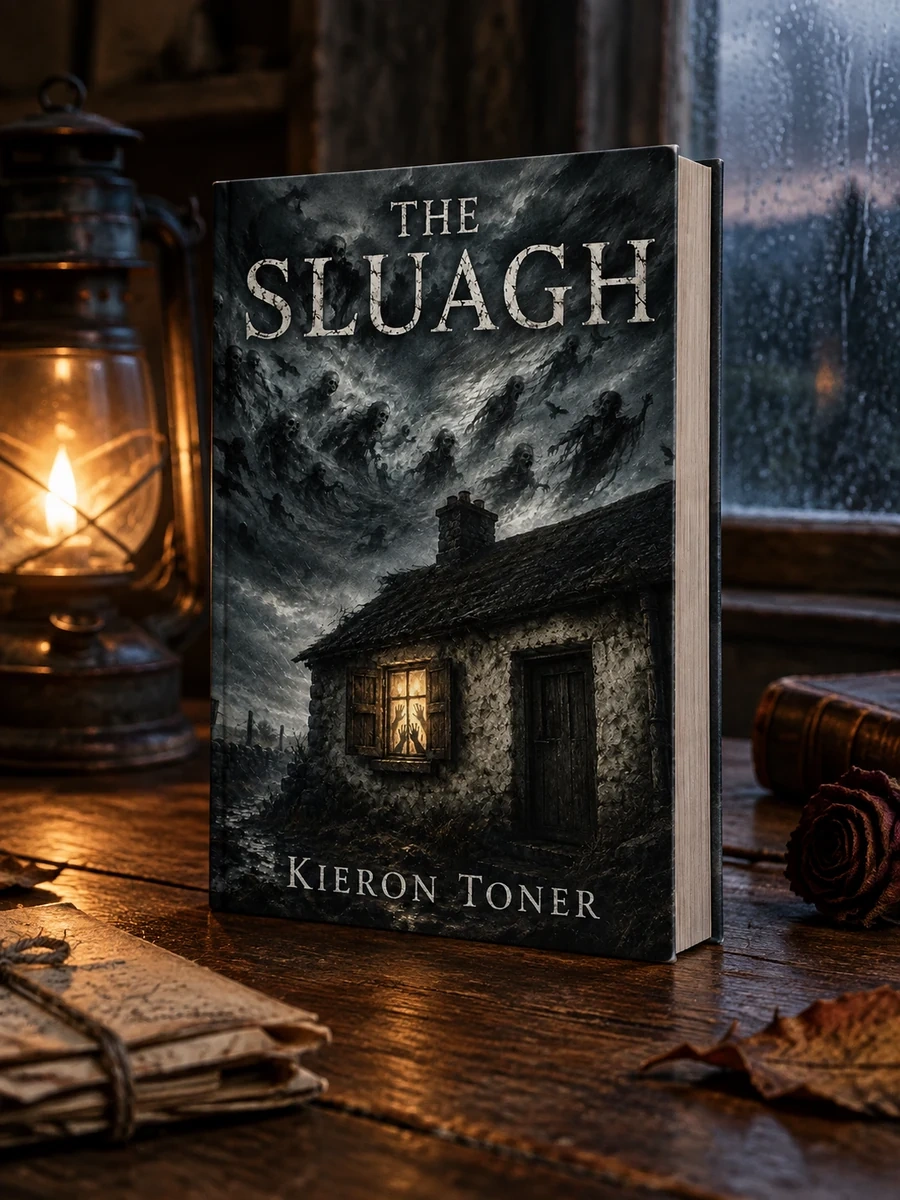
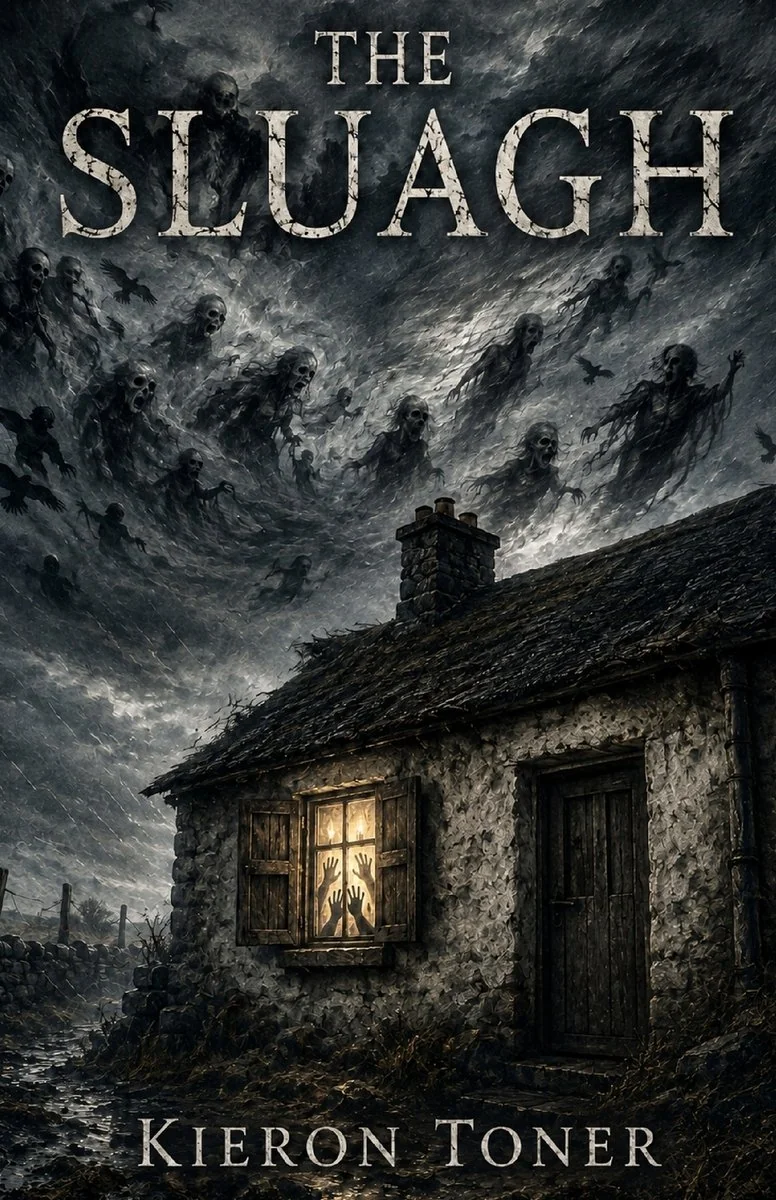
The Sluagh
A one-act script about a family haunted by the Sluagh during an 1839 Irish storm.
The narrative centers on the Doyle family trapped in their cottage during a severe gale. Brigid warns that the visitor at the window may be Liam but not his spirit. The plot unfolds through dialogue as guilt surfaces and boundaries between life and death blur. Toner uses the historical context of the 1839 storm to ground the supernatural elements. The script format allows for intense, immediate confrontation without narrative distance. The ending leaves the reader with the unsettling idea that the invasion is complete. This approach suits fans of stage plays and folklore-based horror who appreciate psychological tension over action.
The story is set in Ireland in 1839 during the Night of the Big Wind. It utilizes Irish traditions concerning the Sluagh, the restless dead who hunt for souls. The historical event provides a backdrop for supernatural horror elements rooted in local folklore.


📝 Description: The Sluagh
💎 Our verdict on The Sluagh
📖 Why choose it
Why this book is worth reading
This title offers a unique reading experience for those who enjoy atmospheric horror scripts that demand active imagination rather than passive consumption. Readers who favor folklore-based horror and psychological tension over traditional narrative prose will find this compelling. The script format allows for intense, immediate confrontation without narrative distance, making it ideal for those intrigued by the intersection of historical events and supernatural fiction. It appeals to individuals interested in the specific cultural tradition of the Sluagh and the eerie possibilities of possession. By focusing on dialogue and stage directions, it provides a chilling exploration of buried guilt and old grief. Those seeking to visualize haunting interactions between the living and the dead through text will appreciate this distinct approach to horror storytelling.
⭐ Reader reviews
Reader rating
Toner delivers a chilling one-act theatre script that effectively grounds supernatural elements in the historical reality of Ireland's 1839 storm. The narrative structure relies heavily on dialogue and stage directions, creating an immediate sense of dread as the Doyle family confronts the possibility of infiltration by the Sluagh. By blurring the boundaries between life and death through guilt and grief, the work achieves a potent psychological tension. It suits readers who enjoy atmospheric horror scripts rooted in specific historical events and folklore traditions. The format requires the audience to actively visualize the haunting interactions, offering a distinct alternative to conventional prose horror. This approach is particularly effective for those who prefer intense confrontation over exposition.
📖 Read on the blog
🏛 Books from this publisher Independently Published








You might also like
See more →
Have a question about this item?
Ask about the edition, condition, delivery or anything else — we reply by email or phone, usually within a day.
