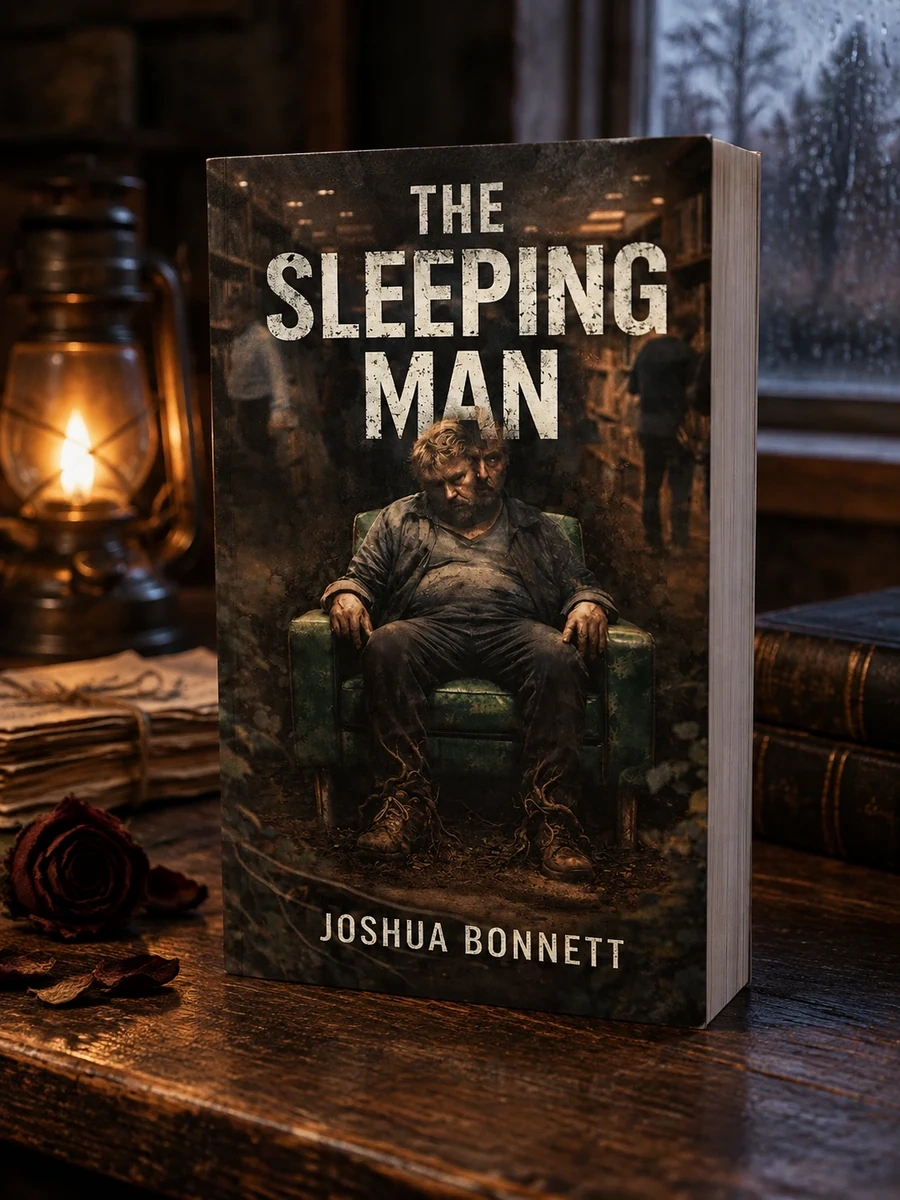
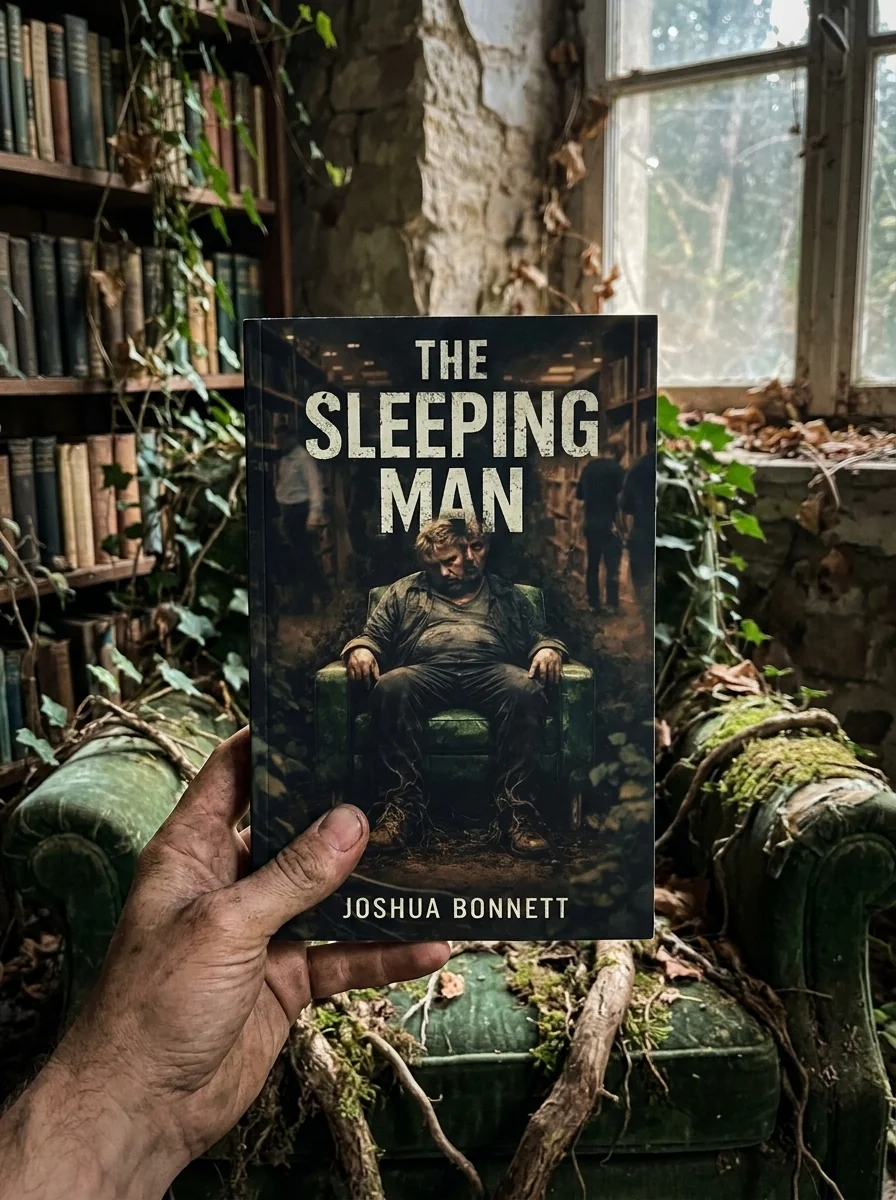

The Sleeping Man
A musician uses unfinished art to fight a sleeping entity in a haunted library.
Adam Dawson arrives in Finley hoping to disappear, but his quiet life is disrupted by Ben, a man who sleeps in a green chair while the community pretends he does not exist. The library becomes a conduit for supernatural events as books generate warnings and recordings play dead voices. Carol Fowler’s long-standing rules prove insufficient against a truth that is actively seeking new vessels. Adam discovers that the entity thrives on completion, forcing him to weaponize his incomplete musical compositions. This approach offers a unique perspective on how art can serve as a defensive tool against cosmic horror. The plot relies heavily on the tension between avoidance and acknowledgment, showing how collective denial can sustain a nightmare.
The story is set in Finley, a town where residents survive by agreeing not to know the truth about Ben. This setting reflects American small-town gothic traditions, focusing on isolation and the supernatural intrusion into ordinary spaces like libraries.


📝 Description: The Sleeping Man
💎 Our verdict on The Sleeping Man
📖 Why choose it
Why this book is worth reading
Readers drawn to atmospheric, slow-burn horror will find resonance in this exploration of collective denial and the uncanny nature of public spaces. It appeals to those who appreciate psychological depth over visceral gore, offering a unique perspective on how art can serve as a defensive tool against cosmic entities. The narrative’s focus on isolation and the tension between avoidance and acknowledgment provides a compelling, unsettling experience for fans of literary horror who enjoy ambiguous resolutions and themes of survival through refusal rather than confrontation.
⭐ Reader reviews
Reader rating
This novel excels in building dread through the mundane horror of an institutional setting gone wrong. Bonnett effectively weaponizes the concept of incomplete art, turning creative stagnation into a shield against a completion-obsessed entity. The portrayal of collective denial as a sustaining force for nightmare is both intellectually stimulating and deeply unsettling. While fast-paced action seekers may find the pacing too deliberate, fans of gothic and cosmic horror will appreciate the nuanced exploration of isolation, attention, and the terrifying power of silence. It is a thoughtful, atmospheric entry in the genre.
📖 Read on the blog
✍️ More books by this author Joshua Bonnett



🏛 Books from this publisher Independently Published






You might also like
See more →


Have a question about this item?
Ask about the edition, condition, delivery or anything else — we reply by email or phone, usually within a day.
