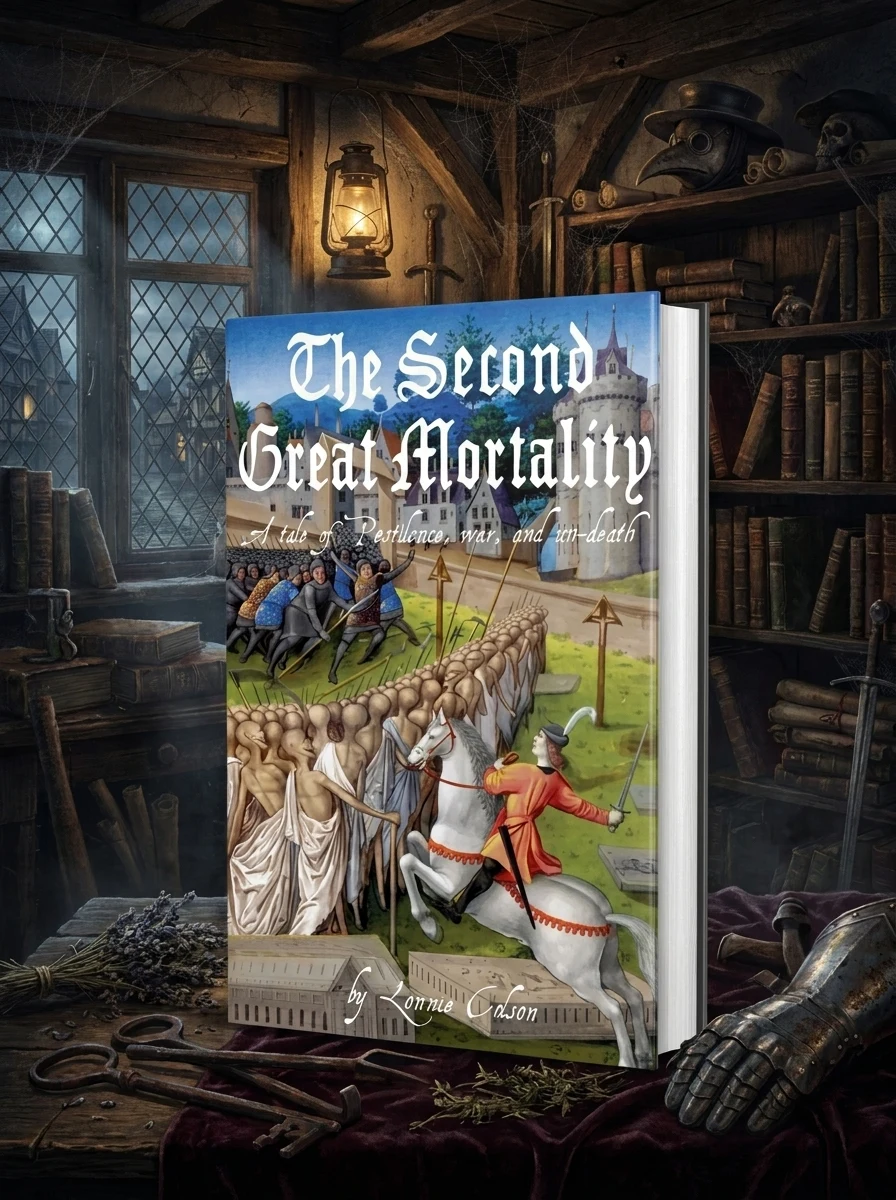
The Second Great Mortality
A medieval English hunting party faces a plague-stricken stranger in this zombie reimagining.
The narrative centers on Sir Richard de Colleville and his companions during a hunt in 1436. Their encounter with a figure marked by plague symptoms shifts the tone from routine activity to dread. The text examines the intersection of historical disease and fictional monstrosity. Colson uses this setting to explore themes of isolation and bodily horror. The story avoids modern clichés by rooting its scares in medieval realities. This creates a distinct atmosphere that differs from typical contemporary horror novels. The focus remains on the psychological impact of witnessing the unknown. Readers experience the confusion and terror of a society unprepared for such threats. The plot unfolds through the eyes of those directly affected by the event.
The book is set in 1436 England, drawing on the historical context of the Black Death era. It reinterprets modern zombie fiction through a medieval lens, blending gothic traditions with historical fiction elements published by Knyghtly Armes.


📝 Description: The Second Great Mortality
💎 Our verdict on The Second Great Mortality
📖 Why choose it
Why this book is worth reading
Readers who appreciate atmospheric horror grounded in historical context will find this novel deeply resonant. It appeals to those interested in gothic fiction and supernatural tales set in earlier centuries, offering a fresh perspective on zombie narratives by rooting them in medieval realities rather than modern clichés. The book is ideal for audiences seeking visceral experiences of encountering the unknown during times of widespread disease. It suits fans who enjoy psychological impact over action, as the narrative focuses on the confusion and terror of a society unprepared for such threats. By exploring isolation and bodily horror through the eyes of those directly affected, it provides a distinct reading experience that differs from typical contemporary urban horror or non-fiction historical accounts.
⭐ Reader reviews
Reader rating
Colson constructs a compelling tale where medieval life collides with supernatural terror, avoiding the pitfalls of modern genre conventions. The narrative excels in building tension through the gradual revelation of the stranger's condition, allowing dread to mount naturally. This approach creates a distinct atmosphere that differs from typical contemporary horror novels by focusing on the psychological impact of witnessing the unknown. The work is best suited for readers who enjoy atmospheric horror blending historical context with monstrous elements. It effectively examines how communities react to inexplicable violence and disease, drawing on the rich tradition of plague literature. For those seeking a visceral experience of fear in a pre-modern world, this novel delivers a unique and unsettling perspective on survival and isolation.
You might also like
See more →




Have a question about this item?
Ask about the edition, condition, delivery or anything else — we reply by email or phone, usually within a day.
