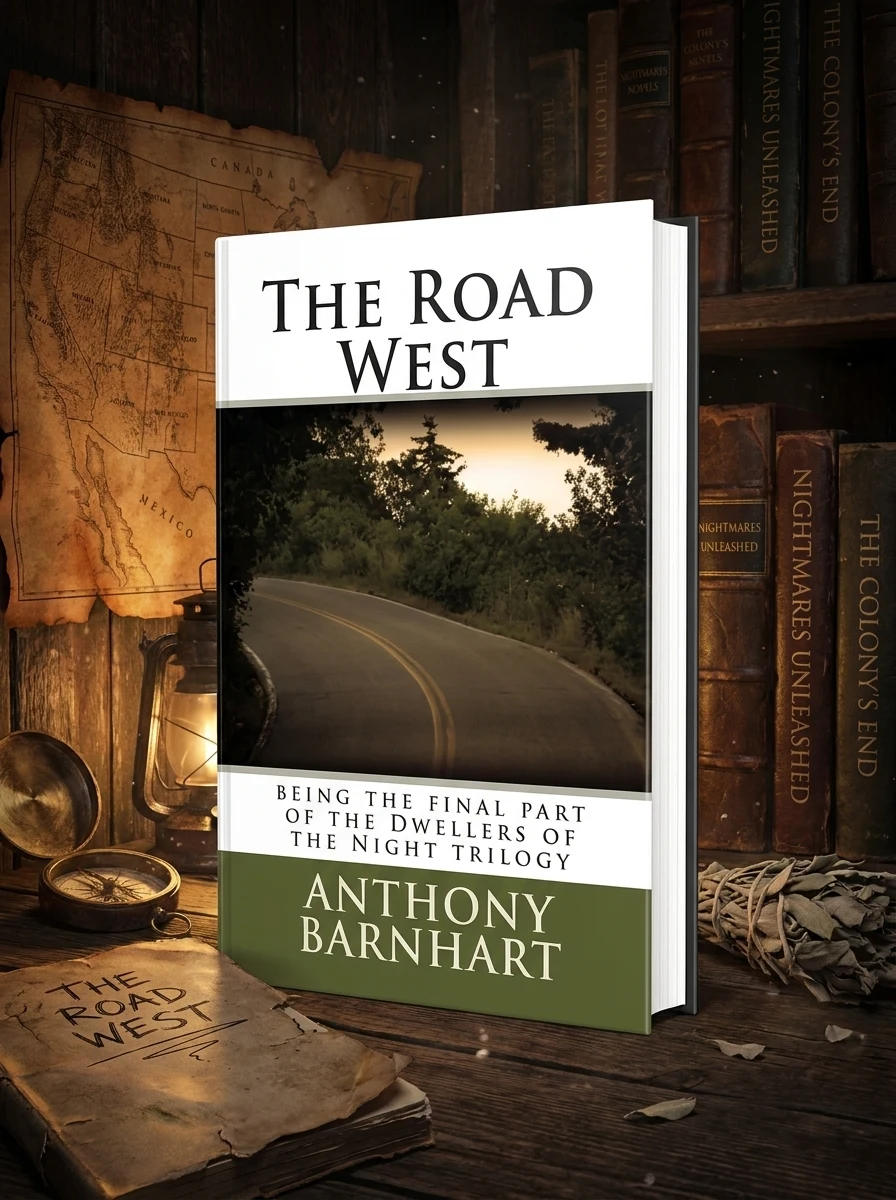
The Road West
The final chapter of a trilogy tracking survivors fleeing westward through nightmare.
This novel completes the Dwellers of the Night Trilogy by focusing on the grim aftermath of a cross-country trek. Barnhart directs attention to the psychological decay of his characters as they move across the United States. The narrative prioritizes the internal torment of The Man, who battles demons that manifest as waking nightmares. The plot centers on the realization that survival requires immense personal loss. The text avoids traditional heroism, instead portraying a group worn down by their environment. This perspective offers a unique look at horror through the lens of exhaustion and despair. The story does not rely on monster encounters but on the creeping dread of the journey itself. Readers will encounter a tale where the landscape itself feels hostile and unforgiving. The conclusion ties together the thematic threads of fear and isolation that define the series. It leaves the reader with a sense of lingering unease rather than triumphant victory.
Published in 2015, this work sits within the contemporary American horror genre. It draws on the tradition of gothic fiction and supernatural dread. The narrative uses the United States as a backdrop for exploring post-apocalyptic survival themes.


📝 Description: The Road West
💎 Our verdict on The Road West
📖 Why choose it
Why this book is worth reading
Readers seeking a bleak, atmospheric conclusion to a trilogy will find this book rewarding. It appeals to those who prioritize psychological dread over monster encounters. Fans of exhaustion-driven horror and internal torment will appreciate the focus on The Man's waking nightmares. Those interested in the fragility of human endurance against hostile environments should read it. It suits individuals who prefer lingering unease rather than triumphant victories. The text offers a unique perspective on survival through despair. It is ideal for those who enjoy exploring fear as a constant companion. Readers who value thematic depth over action will gain from this intense examination of isolation.
⭐ Reader reviews
Reader rating
Barnhart delivers a grim, psychologically dense conclusion that prioritizes internal torment over external spectacle. The narrative effectively utilizes the hostile American landscape to amplify themes of isolation and despair. By focusing on the physical toll of the trek, the author creates a palpable sense of exhaustion. The portrayal of waking nightmares blurs reality and terror with skillful precision. This approach avoids traditional heroism, offering a refreshing yet bleak perspective on survival. The book is best suited for readers who appreciate slow-burn dread and psychological horror. It may disappoint those seeking lighthearted adventure or clear resolutions. Instead, it offers a deep exploration of fear as an inescapable companion. The connection between supernatural elements and historical trajectory creates a sense of inevitable doom. This final installment successfully ties together the series' thematic threads of isolation.