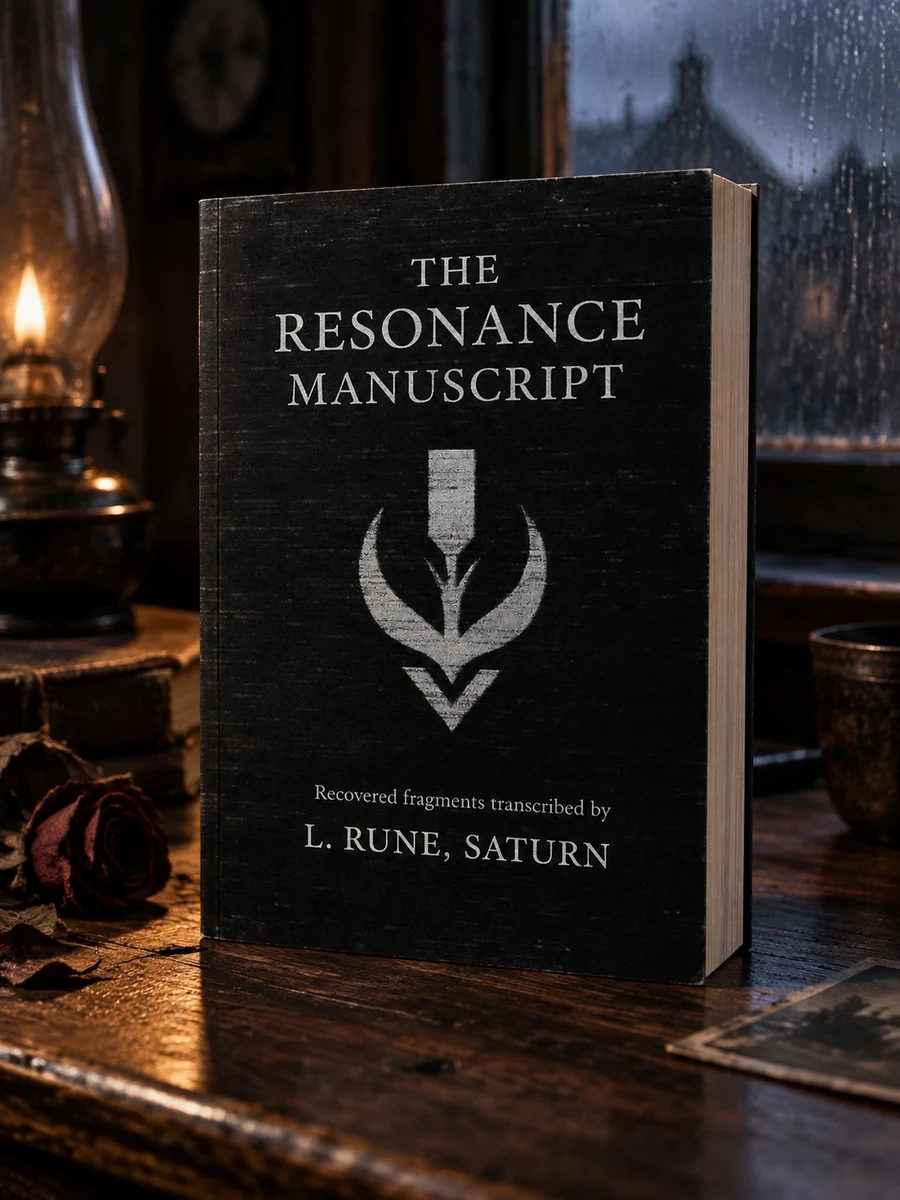
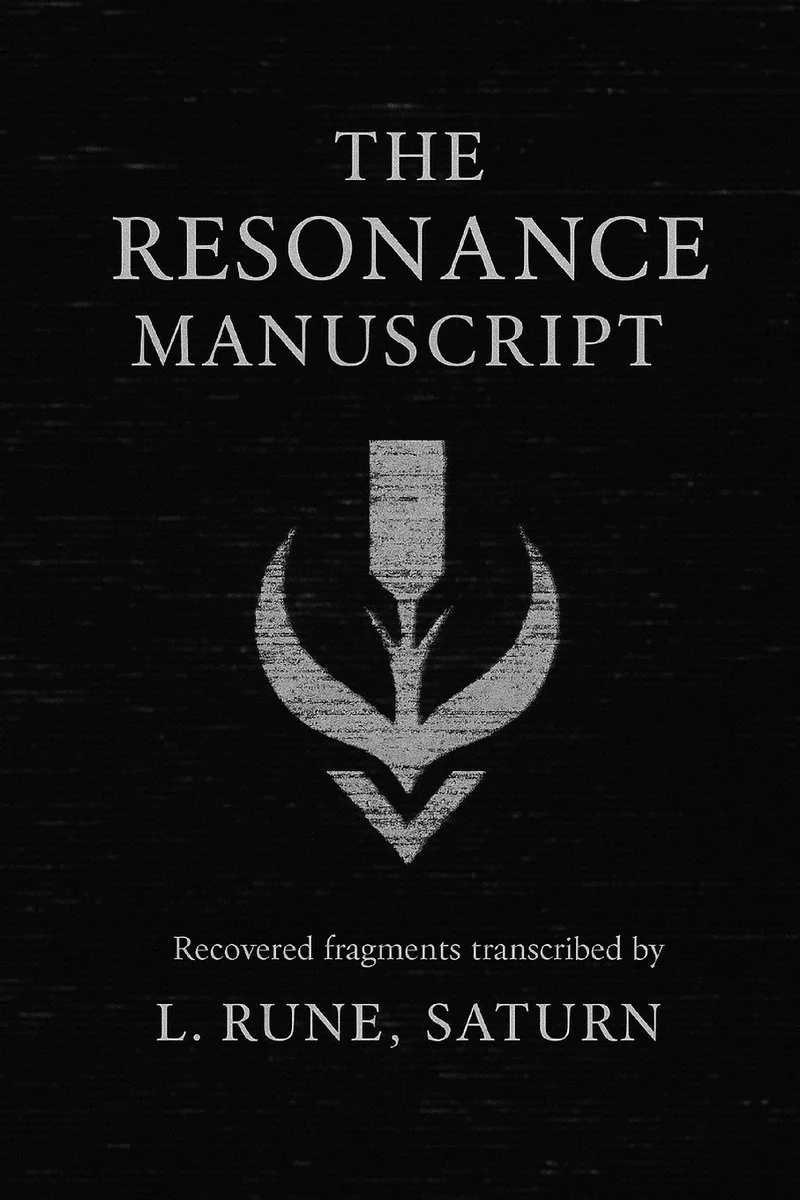
The Resonance Manuscript
A fragmented diary of corrupted archives and recurring symbols from L. Saturn.
L. Saturn presents an experimental horror artifact composed of recovered diary entries and research notes from fragmented archives, creating a narrative that resists traditional order through scattered text and recurring symbols. The voice feels unfinished yet deliberate, raising questions about the author's intent. Saturn acts as the collector and transcriber. This book suits readers who enjoy unsettling journals, fragmented horror, and liminal texts, but does not suit those seeking a linear plot or complete resolution.
The Resonance Manuscript sits within the tradition of experimental horror and diary fiction. It draws on the conventions of archival mystery, presenting recovered texts from corrupted sectors. Published independently in 2025 by L. Saturn, it appeals to fans of unsettling journals and liminal texts who prefer fragmented narratives over traditional storytelling structures.


📝 Description: The Resonance Manuscript
💎 Our verdict on The Resonance Manuscript
📖 Why choose it
Why this book is worth reading
Readers who crave unsettling journals, fragmented horror, and liminal texts will find this manuscript deeply rewarding. It offers a unique experience for those willing to assemble a trail of fragments into a coherent pattern. The book appeals to individuals fascinated by corrupted archives and recurring symbols that defy logical placement. It is ideal for enthusiasts of experimental horror artifacts who enjoy narratives that resist traditional order. Those seeking a linear plot or complete resolution will likely find it frustrating, but fans of deliberate incompleteness will appreciate the haunting voice. The work provides a sense of discovery through scattered text and echoes of a larger presence, making it perfect for readers who enjoy piecing together mysterious signals from fractured documents.
⭐ Reader reviews
Reader rating
The Resonance Manuscript succeeds as an atmospheric horror artifact rather than a conventional novel. Its strength lies in the deliberate fragmentation of diary entries and research notes, creating a pervasive sense of unease through corrupted sectors and recurring watermarks. The narrative resists traditional order, forcing the reader to engage actively with the text. This approach suits those who enjoy unsettling journals and liminal texts that hint at cosmic or psychological dread. While it lacks a linear plot, its experimental structure effectively builds tension through scattered patterns and echoes of an unknown presence. It is best suited for readers comfortable with ambiguity and intentional incompleteness in horror fiction.