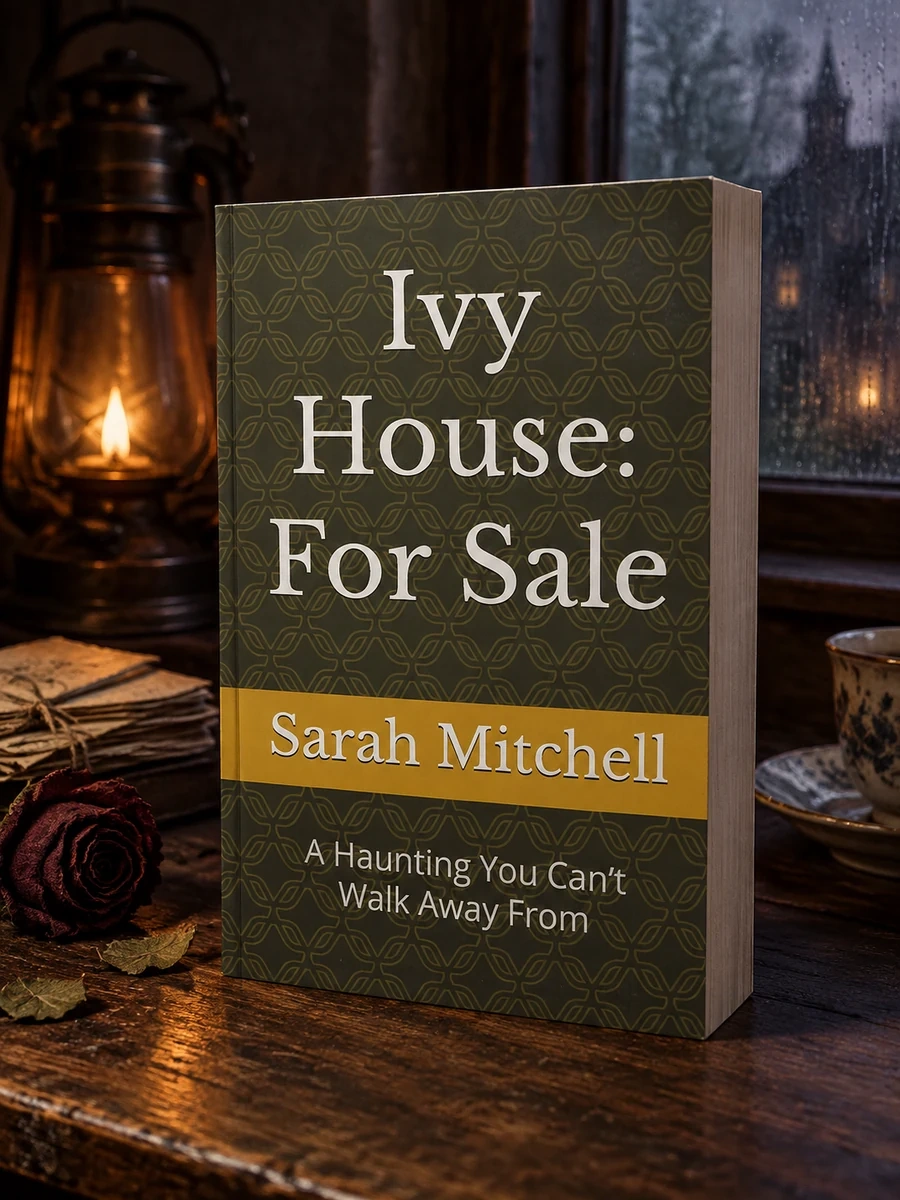

Ivy House for Sale: A Haunting You Can't Walk Away From
A novel about a sentient house that traps its new owners through architectural horror.
The narrative follows the Deed signing, which triggers a lockdown of the property. The protagonist discovers that the seller withheld critical information about the building's nature. The house functions as a living entity that feeds on memory and fear. Specific details include the forty-three step cellar and the windowless pantry void. These features create a claustrophobic atmosphere where escape becomes impossible. The story explores the consequences of ignorance in the face of ancient evil.
This work sits within the American independent publishing sphere, released in 2026. It draws on gothic horror traditions where the home becomes a site of terror. The narrative style emphasizes psychological unease over jump scares, aligning with modern supernatural fiction trends.


📝 Description: Ivy House for Sale: A Haunting You Can't Walk Away From
💎 Our verdict on Ivy House for Sale: A Haunting You Can't Walk Away From
📖 Why choose it
Why this book is worth reading
Readers seeking atmospheric dread and psychological terror rooted in domestic spaces will find this narrative deeply engaging. It appeals to those who appreciate detailed descriptions of haunted architecture and sentient environments where the setting itself acts as an antagonist. The book is ideal for audiences interested in architectural anomalies that defy logic, such as fossilized foundations and voids without ceilings. It offers a claustrophobic experience for fans of cosmic horror who enjoy gradual revelations of ancient evil rather than external monsters. Those who value subsonic vibrations and memory retrieval through physical structure will appreciate its unique approach to supernatural fiction.
⭐ Reader reviews
Reader rating
Mitchell delivers a potent exploration of sentient architecture, transforming a simple property transaction into a nightmare of inescapable dread. The narrative excels in depicting rooms that retain memory and shadows that breathe independently, creating a suffocating atmosphere. By focusing on the forty-three step cellar and the windowless pantry void, the author grounds cosmic horror in tangible, terrifying details. This approach suits readers who prefer psychological terror over jump scares. The gradual revelation of architectural horrors allows for a deep immersion into gothic traditions. It is a compelling choice for those who enjoy the consequences of ignorance against ancient forces, offering a distinctively claustrophobic and intellectually stimulating horror experience.