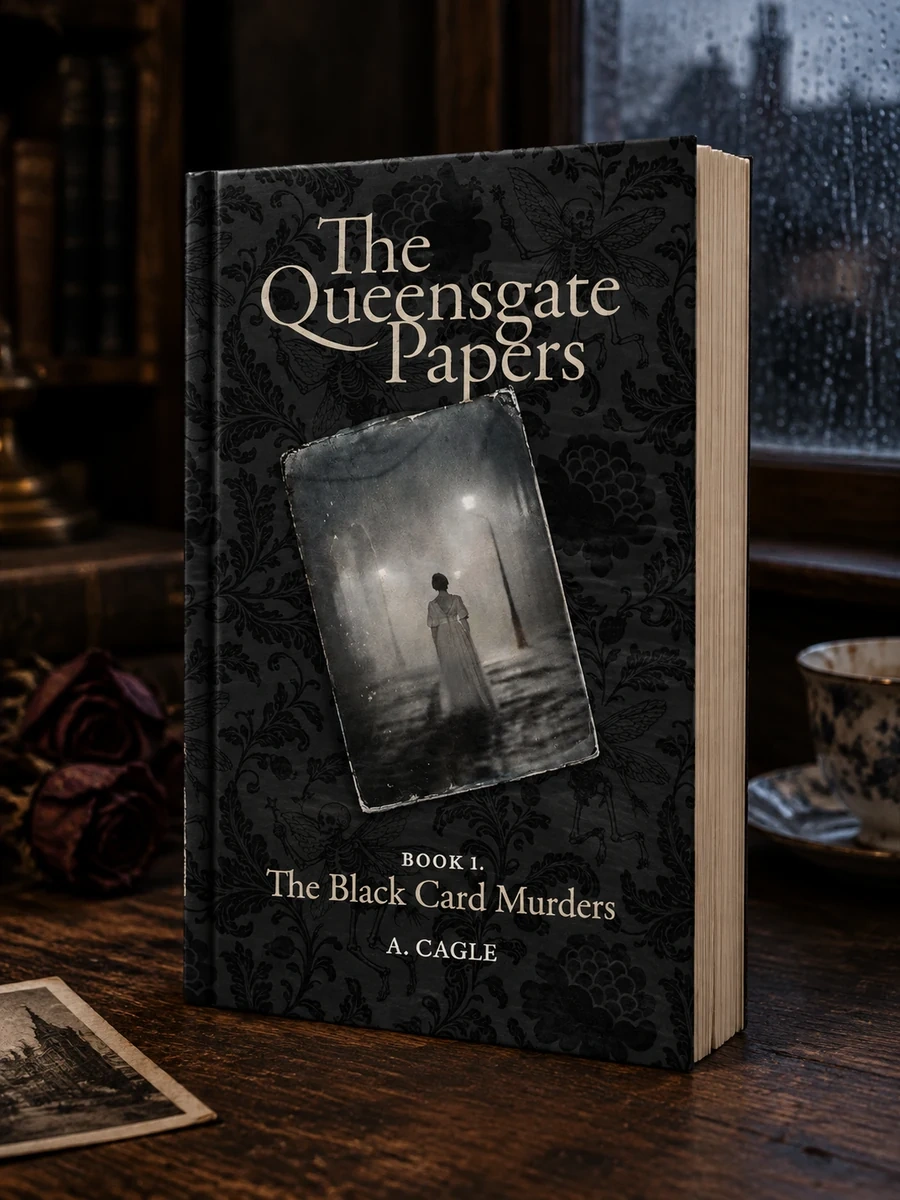
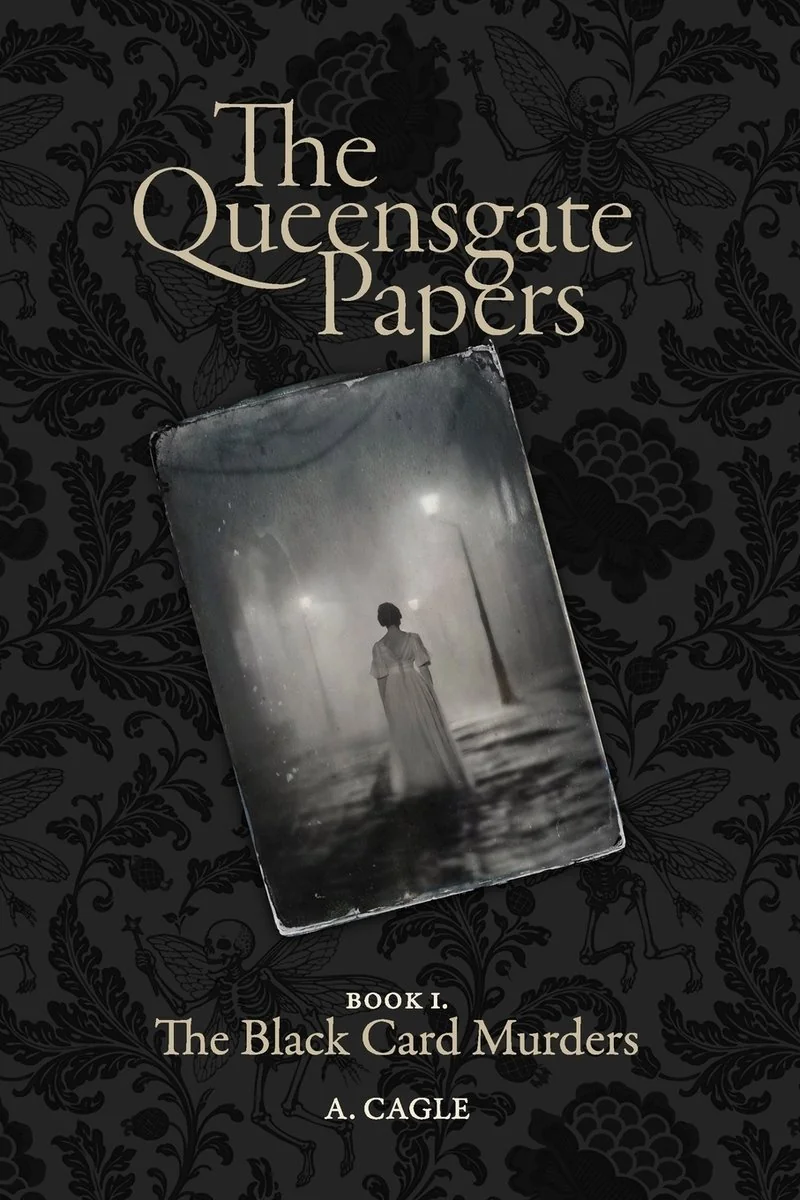
The Queensgate Papers - Book 1: The Black Card Murders
A 1853 mystery told through coroner reports and newspaper clippings.
This volume operates as an archival discovery rather than a traditional novel. It utilizes the format of illustrated newspapers to document the Black Card Murders. The structure forces readers to assemble the narrative from official records and personal accounts. This technique highlights the bureaucratic response to supernatural events in British America. The focus remains on the institutional failure to contain the sickness spreading through Queensgate. By presenting the story as published fragments, the text emphasizes the public nature of the horror. The reader experiences the confusion and fear of the era through these primary documents. This method avoids omniscient narration, keeping the perspective grounded in the investigators' limited understanding. The result is a chilling look at how society processes the unexplainable. The book suits fans of found-footage fiction and historical gothic tales. It may not appeal to readers who prefer clear resolutions or fast-paced action sequences.
The story is set in Queensgate, British America, during 1853. This period reflects the Gothic tradition of urban decay and hidden sins beneath civilized surfaces. The narrative draws on the history of early journalism and forensic medicine to ground its supernatural elements in reality.


📝 Description: The Queensgate Papers - Book 1: The Black Card Murders
💎 Our verdict on The Queensgate Papers - Book 1: The Black Card Murders
📖 Why choose it
Why this book is worth reading
Readers who appreciate the slow-burn tension of historical mystery and the intellectual challenge of piecing together fragmented narratives will find this book deeply rewarding. It is ideal for those fascinated by the intersection of institutional failure and supernatural dread, offering a unique perspective on how reason collapses when faced with sorcery. The book suits audiences who enjoy atmospheric world-building over plot-driven action, allowing them to immerse themselves in the decay of Queensgate through the eyes of investigators like Doc Galahan and Agnes Grey. It provides a chilling look at public fear and corruption, rewarding patience with a haunting chronicle that lingers long after the final document is read.
⭐ Reader reviews
Reader rating
A Cagle delivers a masterclass in atmospheric horror by utilizing coroner reports and newspaper clippings to construct a terrifying narrative of decay. The fragmented structure effectively conveys the panic of 1853 Queensgate, where bureaucratic records fail to contain metaphysical dread. By grounding the story in official documents, the author creates a sense of immediacy and authenticity that traditional omniscient narration often lacks. This approach highlights the institutional inability to comprehend the Black Card Murders, making the horror feel more real and invasive. The book is best suited for fans of gothic fiction who enjoy unraveling mysteries from disparate sources rather than seeking clear resolutions or fast-paced action. It is a chilling exploration of faith unravelling under pressure.
📖 Read on the blog
🏛 Books from this publisher Independently Published








You might also like
See more →

Have a question about this item?
Ask about the edition, condition, delivery or anything else — we reply by email or phone, usually within a day.
