
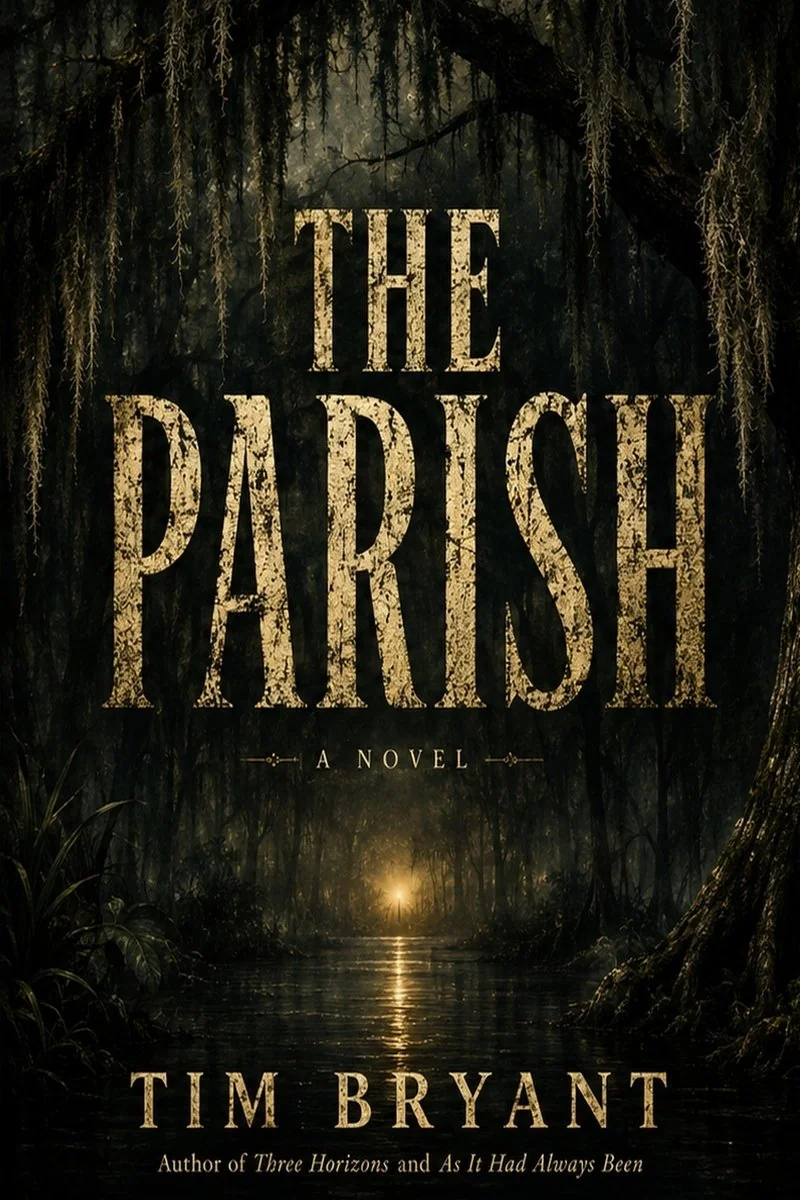
The Parish
A man returns home to find his religious debt still unpaid.
St. Brigitte Parish functions as a labyrinth of obligation where care equals control. Eli Mercer thought he escaped this place years ago. He returns only for his dying mother. The church informs him that his departure was never valid. His name stays on the rolls. His covenant remains active. To leave, he must find a replacement. The institution uses public testimonies and quiet paperwork to enforce its will. Love here is not free. It is organized into something inescapable. The story reveals how memory and faith can become tools of entrapment. Bryant portrays the parish as a place where nothing is forgotten and every debt must be balanced. Eli realizes that freedom is not permission to walk away. It is a process he cannot complete alone.
This work sits within the dark Southern literary tradition. It draws on gothic and supernatural fiction conventions to explore themes of faith and community obligation in a rural American setting.


📝 Description: The Parish
💎 Our verdict on The Parish
📖 Why choose it
Why this book is worth reading
Readers who appreciate slow-burning atmospheric dread and complex character studies within a gothic framework will find this novel deeply rewarding. It offers a compelling examination of the psychological toll of religious bureaucracy and the horror of familial duty twisted by institutional demands. Those interested in narratives where memory and faith serve as mechanisms of control, rather than sources of comfort, will engage with its intricate portrayal of communal obligation. The book is ideal for audiences seeking a dark exploration of tradition's weight and the inescapable nature of debt, provided they are comfortable with ambiguous resolutions and lack fast-paced action.
⭐ Reader reviews
Reader rating
Tim Bryant crafts a chilling portrait of St. Brigitte Parish as a labyrinth where care equals control. The narrative excels in depicting how love becomes an organized force that traps Eli Mercer in a cycle he cannot escape alone. By focusing on the terrible cost of being kept by an institution, Bryant reveals how nothing is forgotten and every debt must be balanced with precision. This approach creates a pervasive sense of entrapment through smiling mercy and quiet paperwork rather than overt violence. The novel suits readers who favor psychological horror over supernatural spectacle. It delivers a nuanced critique of religious obligation, making it a strong choice for those who enjoy literary depth within the horror genre.
📖 Read on the blog
✍️ More books by this author Tim Bryant





🏛 Books from this publisher Independently Published






You might also like
See more →


Have a question about this item?
Ask about the edition, condition, delivery or anything else — we reply by email or phone, usually within a day.
