The Other Side Leaves Footprints
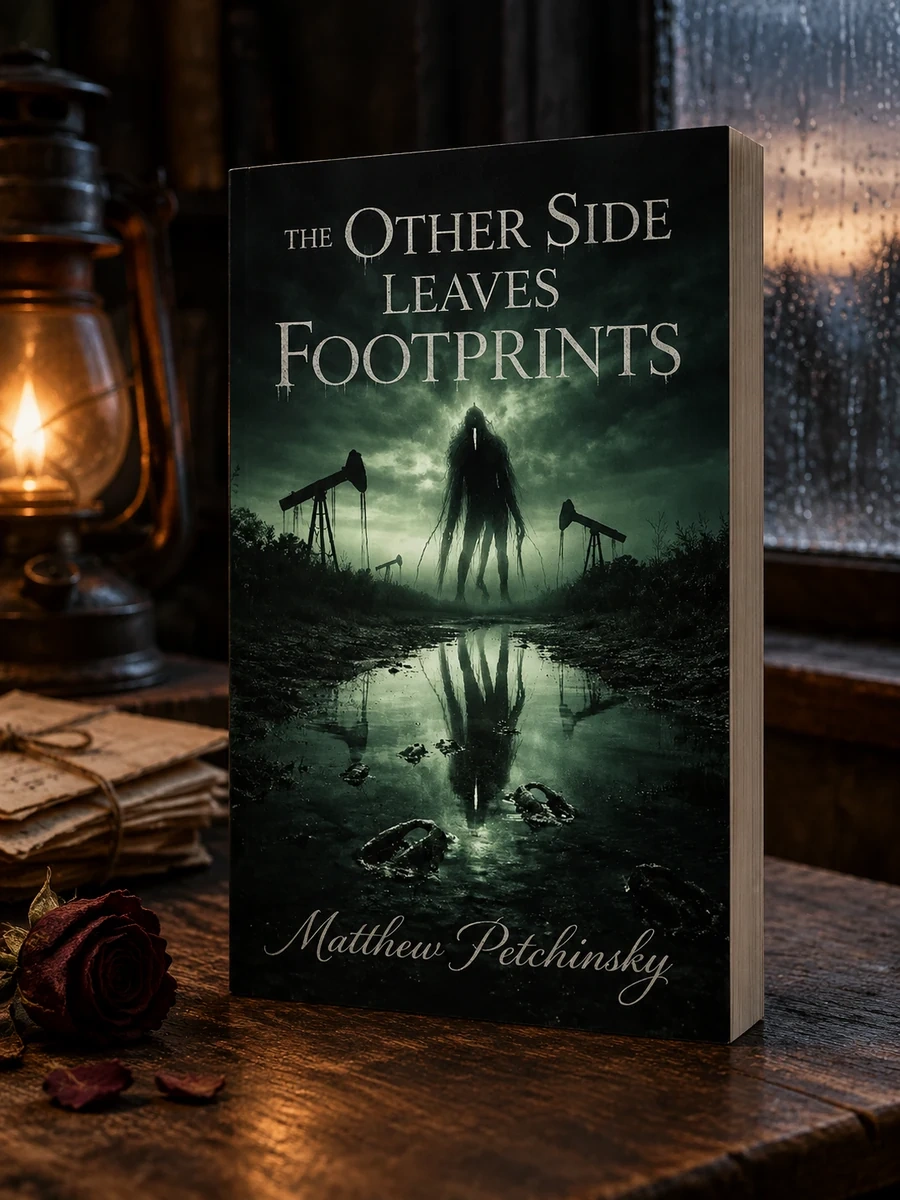
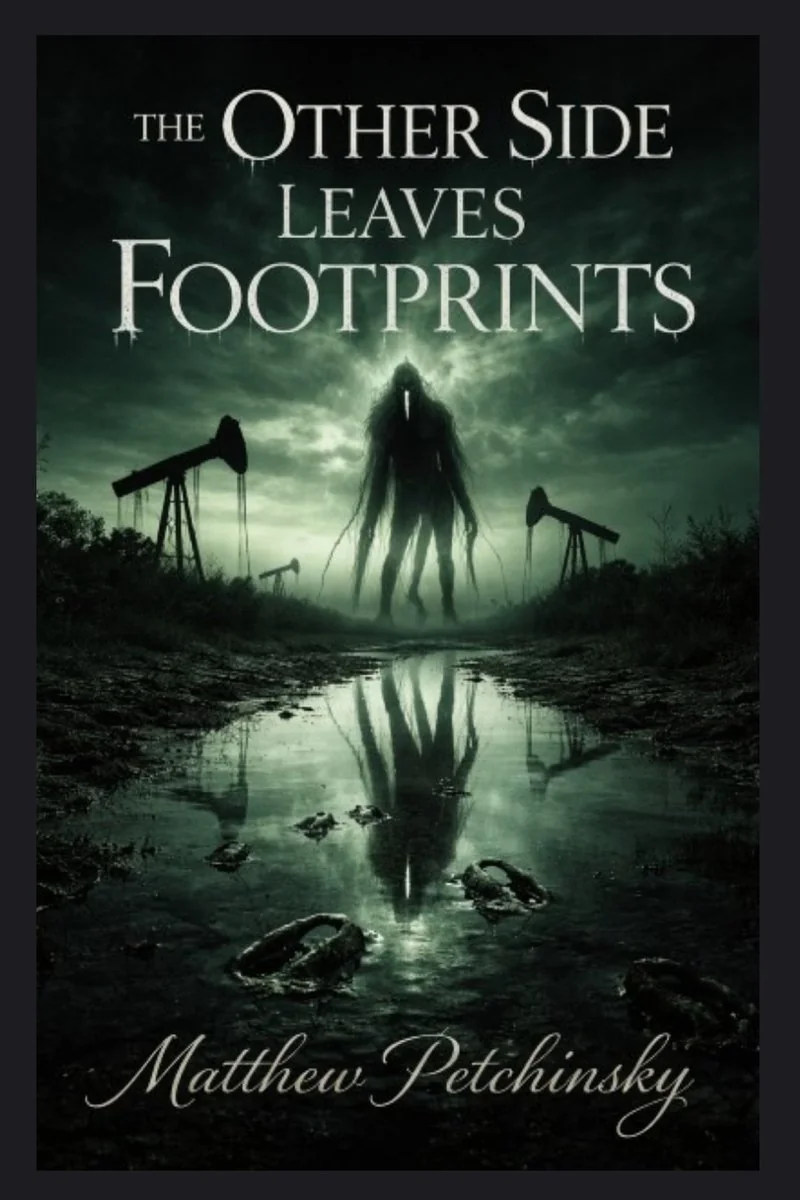
A gothic novel about grief exploited by an ancient Texas cryptid.
The narrative follows Maeve and Rowan as they navigate a museum where contracts rewrite themselves and boundaries dissolve. The horror stems from the realization that the supernatural entity is formalizing its presence through persuasion rather than force. This approach transforms personal loss into a weapon, making the internal world of the characters as dangerous as the external landscape. The story does not offer escape but rather a confrontation with the consequences of broken consent and the persistence of memory in hostile forms.
Set against abandoned Texas oilfields and mesquite-shadowed landscapes, this work draws on local folklore regarding ancient entities. It engages with gothic traditions by treating the landscape as a character that remembers its past. The narrative reflects on how modern industrial decay intersects with older, deeper supernatural histories in the American South.


📝 Description: The Other Side Leaves Footprints
💎 Our verdict on The Other Side Leaves Footprints
📖 Why choose it
Why this book is worth reading
Readers seeking atmospheric dread and psychological tension over gore or action will find this book deeply rewarding. It offers a unique exploration of grief as vulnerability and love as leverage against a terrifying intelligence. The narrative’s slow-burn ambiguity and focus on broken consent provide a haunting examination of how memory persists in hostile forms. Those who appreciate gothic traditions grounded in tangible, decaying realities like abandoned oilfields will find the setting immersive. This is not for fans of fast-paced thrillers or clear-cut resolutions, but for those willing to confront the consequences of persuasion and the dissolution of boundaries.
⭐ Reader reviews
Reader rating
Petchinsky delivers a masterclass in psychological horror by transforming personal loss into a weapon through formalized persuasion rather than brute force. The depiction of Maeve and Rowan’s struggle within a museum where contracts rewrite themselves is both chilling and intellectually stimulating. The use of Texas folklore, particularly the Thorned Witness, grounds the supernatural elements in a tangible, decaying landscape. While the slow-burn pace may unsettle those preferring quick action, the atmospheric dread is palpable. The narrative structure effectively builds tension through the gradual shifting of boundaries, making the internal world as dangerous as the external. It is a sophisticated entry in the gothic horror canon.