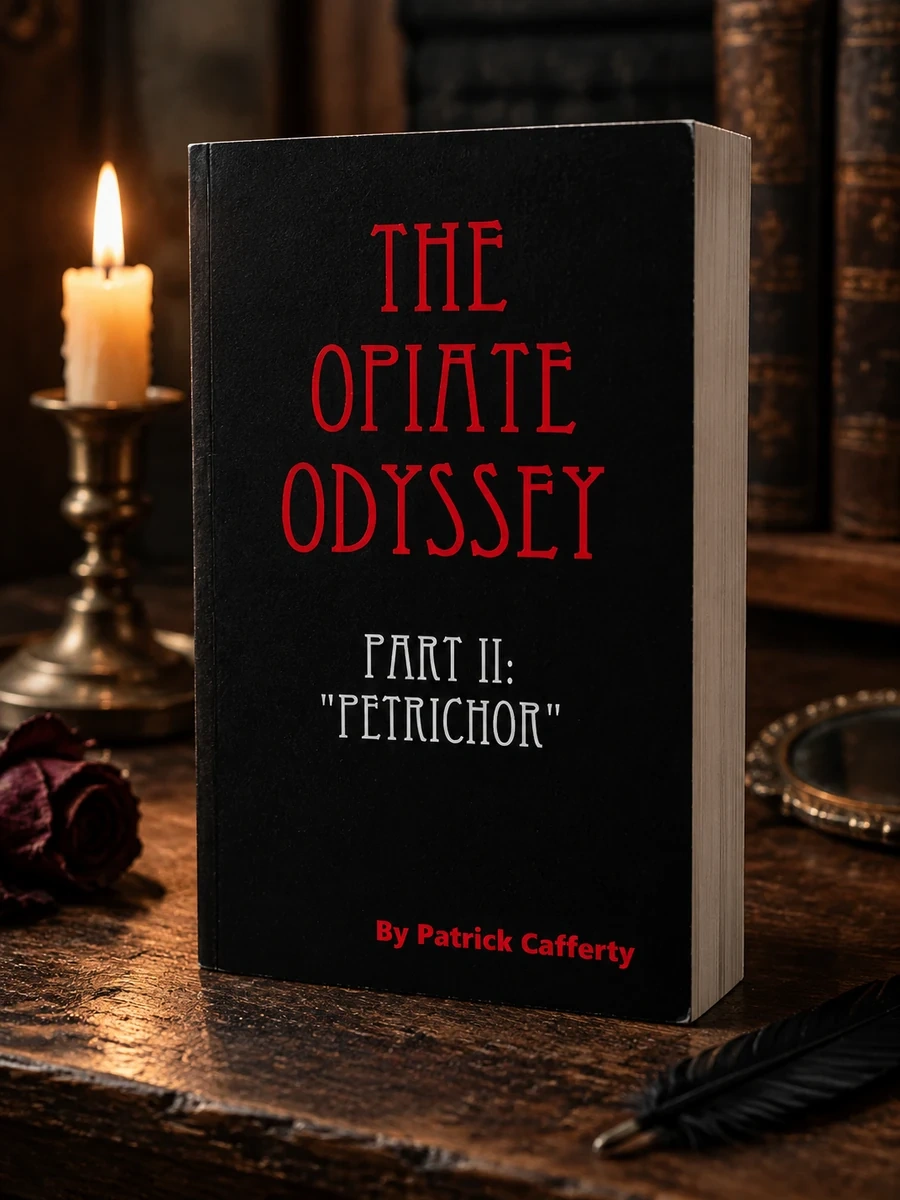
The Opiate Odyssey Book II: "Petrichor"
A gritty sequel following Mark's violent conflict with the Mexican mafia.
Cafferty continues his narrative by intensifying the stakes for Mark. He faces direct retaliation from criminal organizations while attempting to eliminate Raul Hernandez. The plot emphasizes the cost of such actions rather than their glory. Jaden’s role remains central as the text questions the nature of heroism in a lawless environment. The author avoids romanticizing violence, instead showing its messy and destructive reality. This approach creates a tense atmosphere where survival depends on ruthlessness. The story does not offer easy answers or clear victories. It presents a world where justice is subjective and power determines truth. Readers must engage with the discomfort of rooting for a flawed protagonist.
Published in 2011 by Lulu.com, this work sits within the contemporary self-published thriller genre. It reflects early twenty-first-century interest in anti-hero narratives and decentralized publishing models. The text engages with American anxieties regarding law enforcement and vigilante justice.


📝 Description: The Opiate Odyssey Book II: "Petrichor"
💎 Our verdict on The Opiate Odyssey Book II: "Petrichor"
📖 Why choose it
Why this book is worth reading
Readers who crave intense, unflinching narratives will find value in this text's refusal to romanticize violence or provide easy answers. It appeals specifically to those interested in psychological horror and dark fantasy where the protagonist is flawed and the world is lawless. The book offers a tense atmosphere where survival relies on ruthlessness, challenging conventional morality rather than reinforcing it. For audiences tired of clean resolutions, this story provides a visceral exploration of justice as subjective and power as truth. It forces engagement with discomfort, making it ideal for fans of gritty crime fiction that prioritizes consequence over glory.
⭐ Reader reviews
Reader rating
Cafferty delivers a tense sequel that intensifies stakes through direct retaliation from criminal organizations rather than supernatural spectacle. The text succeeds in depicting the messy reality of violence, positioning its hero as barely superior to his antagonists. This approach creates a compelling moral ambiguity that defines the central figure. Readers seeking traditional heroism may find this unsatisfying, but those embracing dark, uncompromising thrillers will appreciate the focus on action and consequence. The narrative avoids philosophical exposition, relying instead on direct prose to highlight inevitable backlash. It is best suited for readers willing to root for a flawed protagonist in a world where justice is subjective.