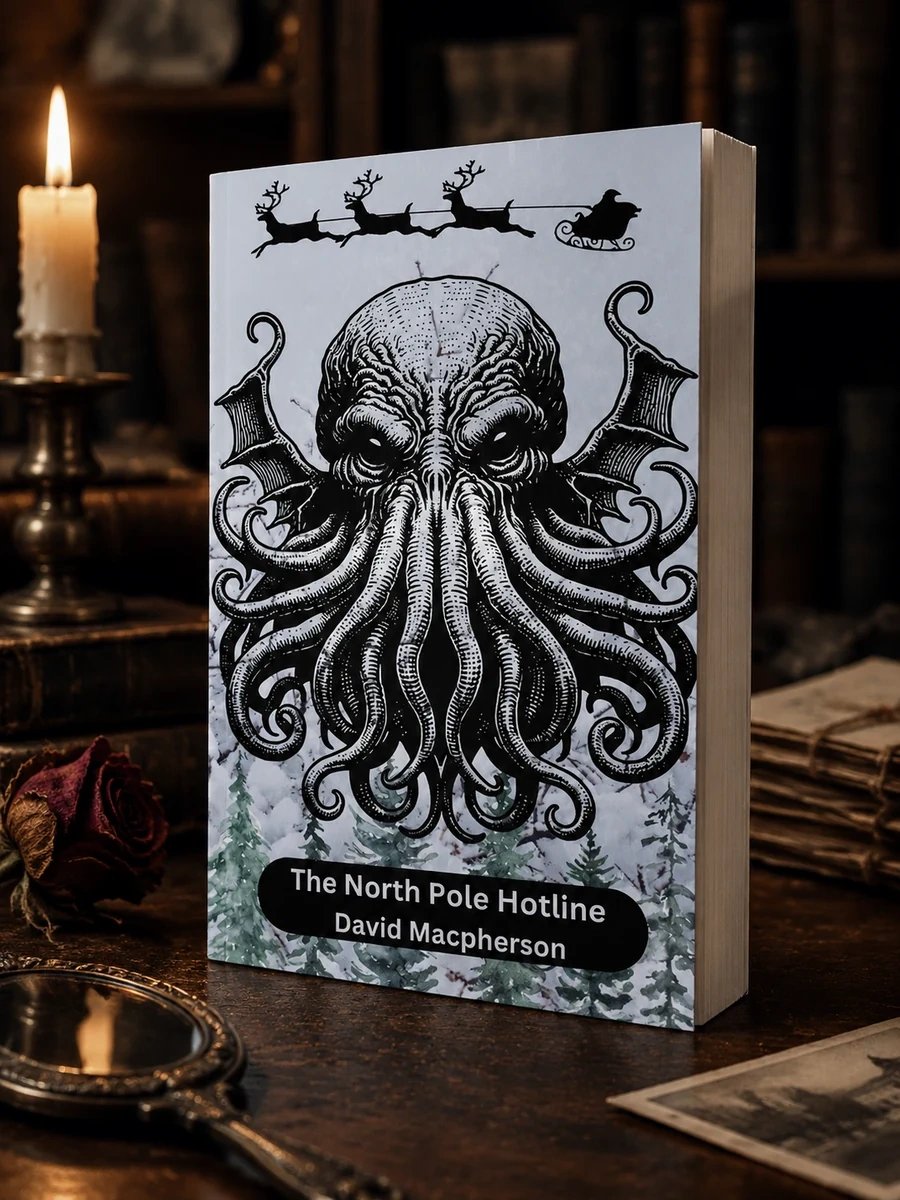
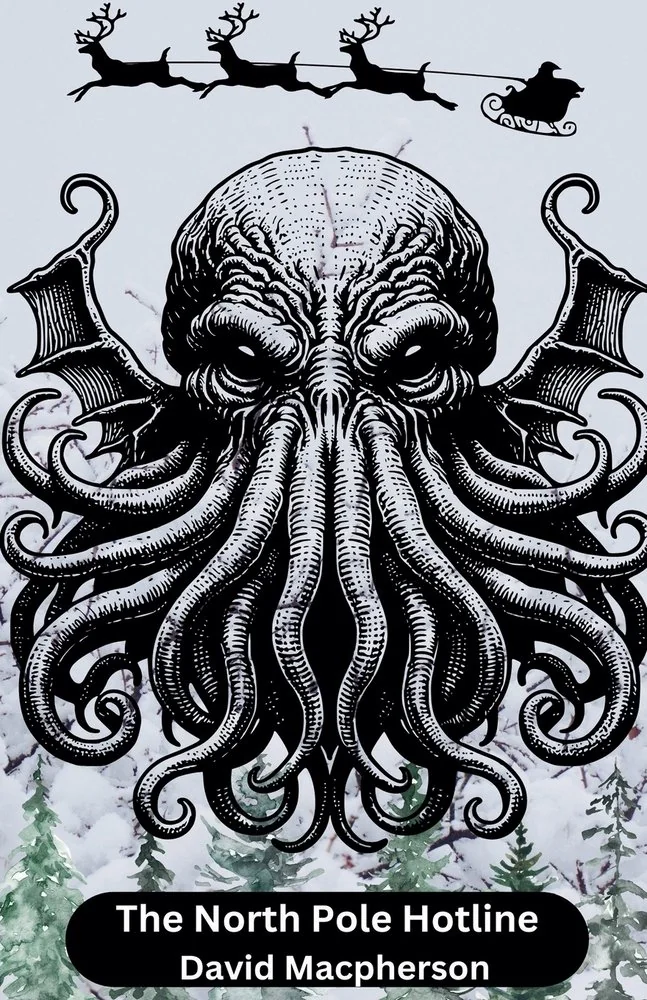
The North Pole Hotline
A fictional guide to calling Santa for grim truths behind the holidays.
The narrative centers on a payphone system allowing contact with the North Pole. MacPherson uses this device to expose hidden aspects of Christmas lore. The text details eerie rituals and the potential disappearance of Santa after the holiday. It questions the future of Christmas and the nature of gifts received. The story highlights connections between mythical figures like Krampu and Mrs Claus. Readers learn that ancient gods influence the season's events. The tone remains dark and cautionary throughout. The book does not offer comfort but rather a stark warning about what might happen if one listens too closely to the voices from the pole.
This work reimagines Western Christmas mythology by introducing supernatural elements like Krampu and ancient gods. It subverts the traditional narrative of Santa Claus and elf labor, presenting a darker, more ominous version of holiday preparations and their underlying costs.


📝 Description: The North Pole Hotline
💎 Our verdict on The North Pole Hotline
📖 Why choose it
Why this book is worth reading
Readers who enjoy deconstructing beloved cultural narratives will find significant value in this text. It appeals to those who appreciate dark folklore and subversive takes on mythological figures, offering a detailed exploration of hidden dynamics within Christmas lore. The book is ideal for audiences seeking unsettling atmospheres rather than traditional holiday cheer. By exposing the grim realities behind festive traditions, it challenges assumptions about safety and predictability in the season. Those interested in the intersection of ancient gods and modern mythology will gain insight into these connections. It serves as a stark warning to those who listen too closely to mythical voices, providing a chilling alternative view for the brave.
⭐ Reader reviews
Reader rating
MacPherson successfully strips away the warmth of December to reveal a cold, potentially apocalyptic truth beneath the surface of holiday traditions. The narrative effectively utilizes the concept of a fictional payphone service to expose eerie rituals and supernatural connections, such as those involving Krampu and Mrs. Claus. The tone remains consistently dark and cautionary, avoiding any attempt at comfort in favor of a stark warning about listening too closely to the North Pole. This work suits readers interested in cosmic horror and psychological dread who wish to see familiar myths destabilized. It challenges the stability of the season itself, suggesting that the structure of giving rests on the whims of ancient entities. For those seeking bravery in the face of hidden horrors, this text delivers a chilling exploration of what lies beneath.