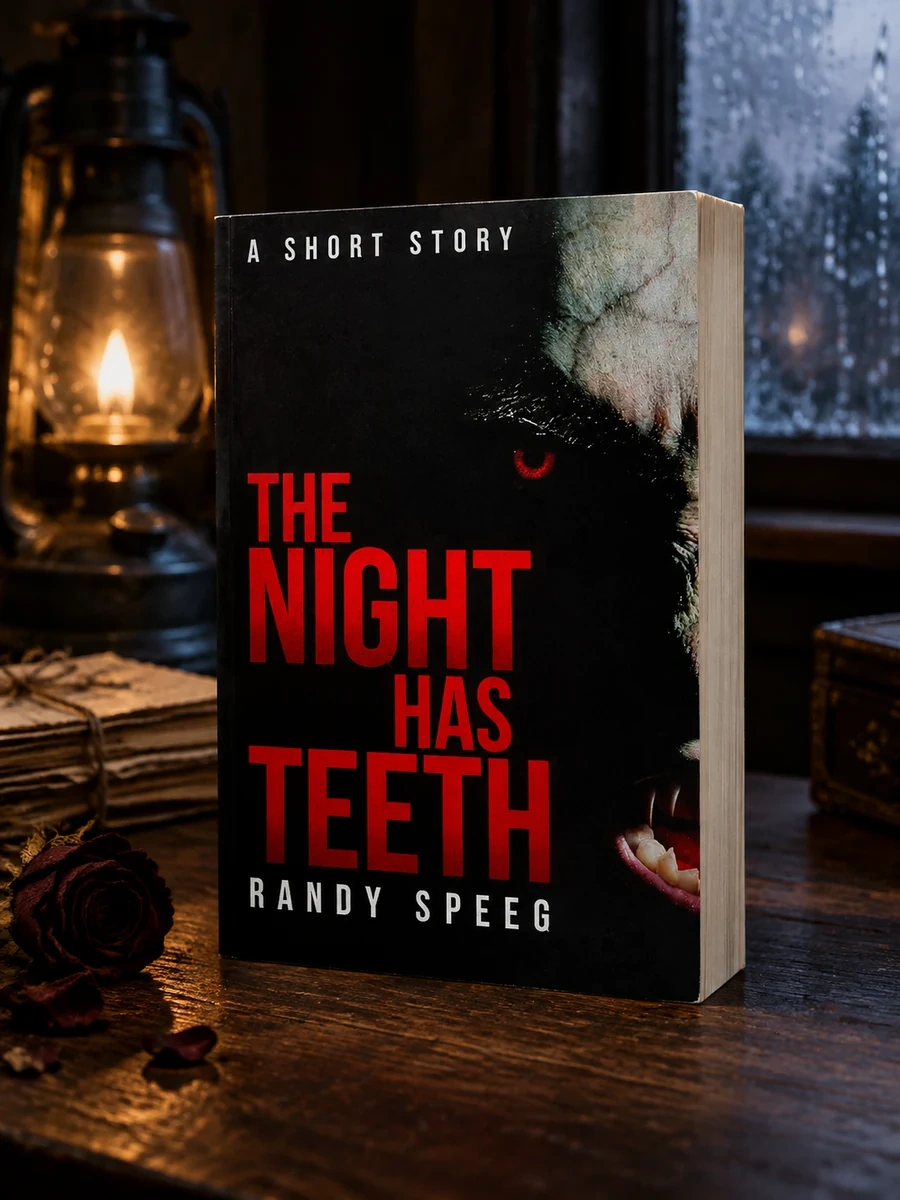
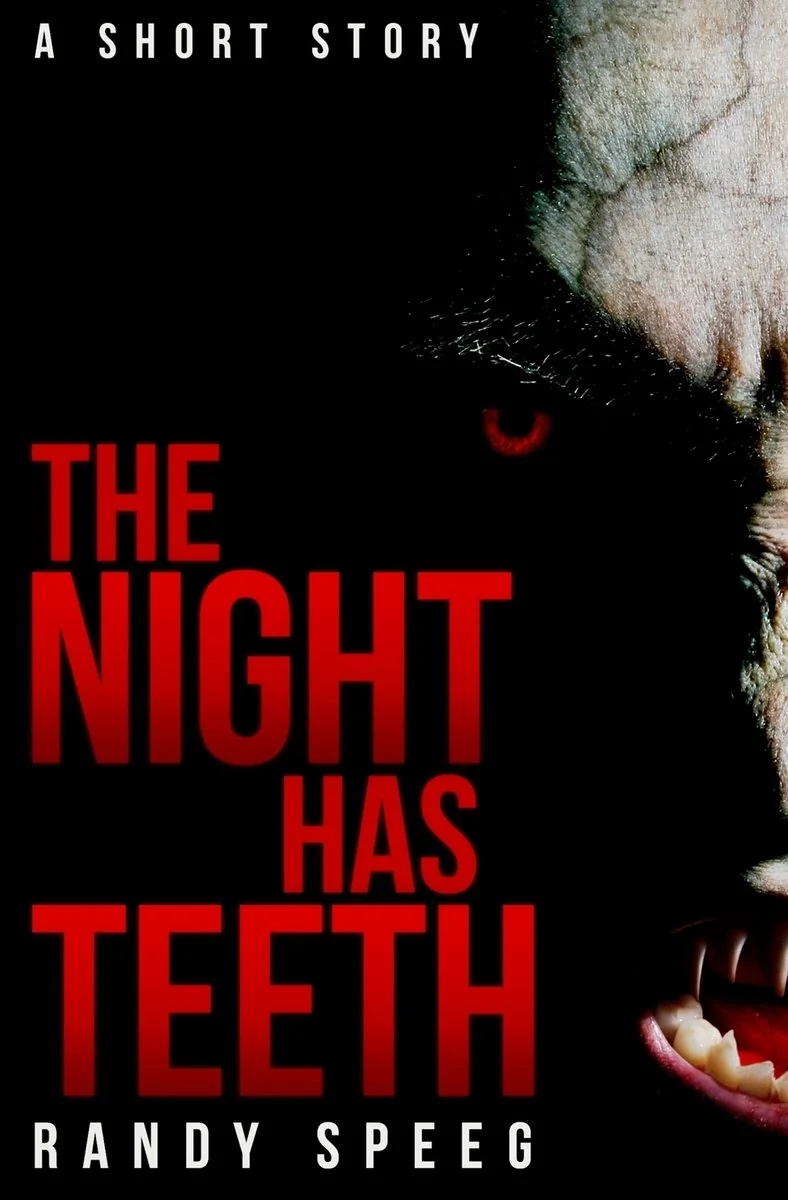
The Night Has Teeth
A couple's drive to a childhood home triggers a primal survival fight against a werewolf-like creature.
The narrative follows Carrie and Steve as their weekend trip devolves into a nightmare. A hulking shadow with glowing eyes and razor fangs attacks them on rural backroads. The story emphasizes isolation and the sudden shift from safety to danger. Speeg uses this setup to explore fears of the unknown in isolated spaces. The text relies on the tension of the approaching night and the physical threat of the creature. It avoids complex plotting in favor of immediate, visceral reaction. The ending provides a savage payoff that lingers with the reader.
The book sits within the tradition of rural American horror and shifter tales. It aligns with the style of quick-hit chills found in Stephen King's short works. The story utilizes the setting of isolated backroads to amplify fear. It reflects a period where rural isolation serves as a primary source of supernatural dread.


📝 Description: The Night Has Teeth
💎 Our verdict on The Night Has Teeth
📖 Why choose it
Why this book is worth reading
Readers seeking raw, visceral horror will find this short story delivers immediate satisfaction through its swift pacing and savage tone. It appeals to those who enjoy shifter tales and the tension of rural settings where safety is an illusion. Fans of psychological horror that emphasizes isolation over complex plotting will appreciate the focus on primal survival instincts. The narrative offers a sharp, frightening encounter with the dark, providing a rapid payoff for those willing to endure intense discomfort. It is ideal for readers who prefer immediate danger and physical threats over gentle supernatural romance or lengthy epics.
⭐ Reader reviews
Reader rating
Randy Speeg crafts a tense, visceral narrative that transforms a routine drive into a desperate struggle against an unknown predator. By stripping away complex plot mechanics, the author amplifies the isolation of rural backroads, making every sound feel threatening. The story effectively utilizes the tradition of rural Gothic horror to evoke primal terror, focusing on the sudden shift from safety to nightmare. While it lacks the comfort of traditional genre escapism, its strength lies in its immediate, savage impact. This short work suits readers who appreciate raw intensity and quick-hit chills, offering a lingering sense of dread rather than resolution.
You might also like
See more →







Have a question about this item?
Ask about the edition, condition, delivery or anything else — we reply by email or phone, usually within a day.
