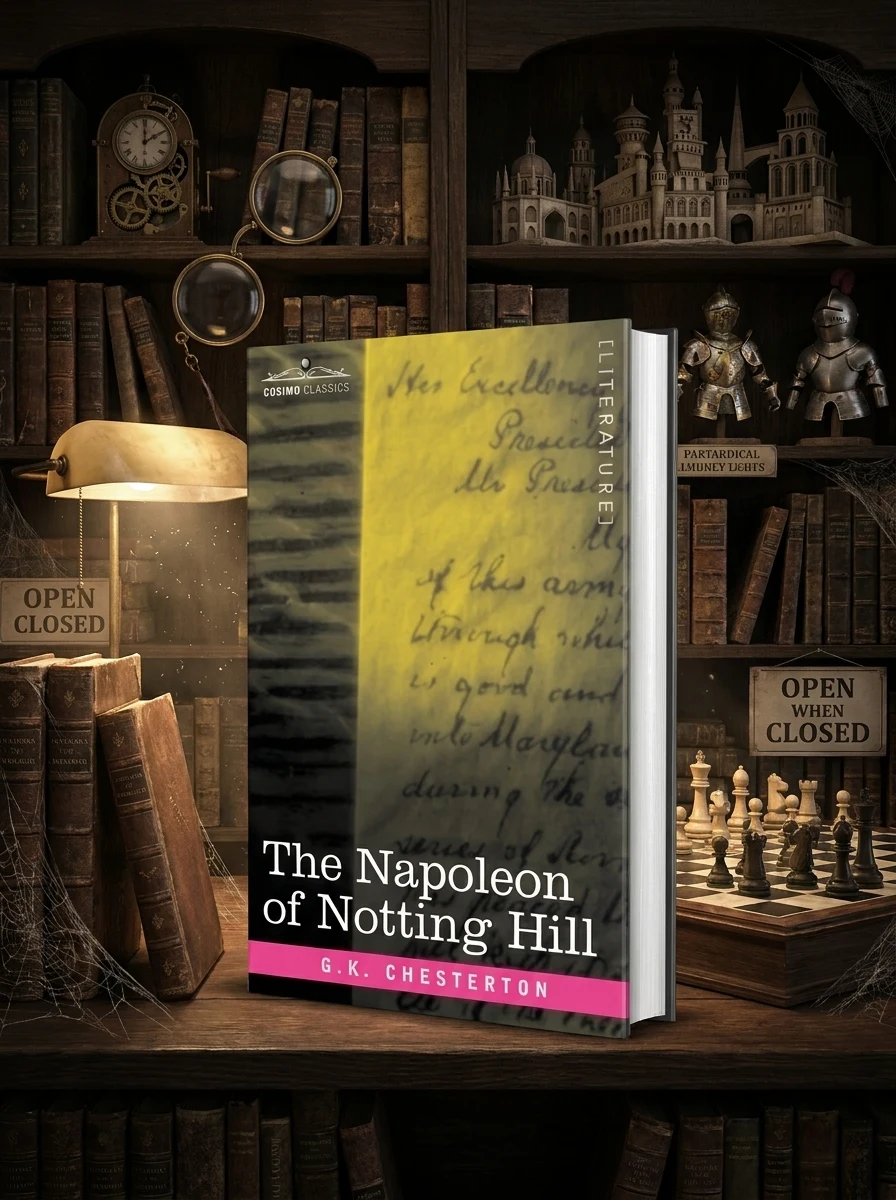
The Napoleon of Notting Hill
A 1904 satirical novel predicting modern public indifference through a futuristic London setting.
This work offers a sharp critique of ruling class corruption and societal decay. Chesterton uses the lens of a future London in 1984 to explore these issues. He ignores technological advancements to focus on sociological trends. The result is a prediction of mass indifference that feels remarkably current. The book influenced figures like Michael Collins and potentially George Orwell. It remains a key text for understanding early twentieth-century political thought. Readers will find its humor both dry and penetrating. The prose reflects Chesterton's reputation as a master of paradox. It challenges the reader to question the value of local tradition.
Published in 1904, this book sits within the early twentieth-century literary landscape. Chesterton was a British writer known for his wide-ranging philosophies. He worked as a novelist, poet, and columnist. His style earned him recognition as the prince of paradox. The work reflects his concern with social structures and political decay.


📝 Description: The Napoleon of Notting Hill
💎 Our verdict on The Napoleon of Notting Hill
📖 Why choose it
Why this book is worth reading
Readers interested in political satire and social commentary will find this text profoundly rewarding, particularly those who appreciate Chesterton’s reputation as the prince of paradox. It appeals to scholars of early twentieth-century thought seeking to understand the roots of modern public indifference. While it lacks fast-paced action, its dry humor and penetrating prose offer a unique intellectual engagement. Those willing to engage with philosophical debate rather than scientific speculation will discover a stellar example of comic genius that challenges assumptions about tradition and power.
⭐ Reader reviews
Reader rating
This allegorical fantasy delivers a sharp critique of ruling class corruption and societal decay without relying on technological advancements. Chesterton’s masterful use of paradox drives the narrative, focusing on sociological trends in a futuristic London to predict mass indifference with startling accuracy. The text succeeds as a key text for understanding early political thought, offering dry humor that remains remarkably current. It is best suited for readers who value dialogue and philosophical debate over action. While scientific speculation fans may find it dull, those seeking penetrating social commentary will find its exploration of local tradition’s collapse both witty and thought-provoking.
📖 Read on the blog
✍️ More books by this author G K Chesterton
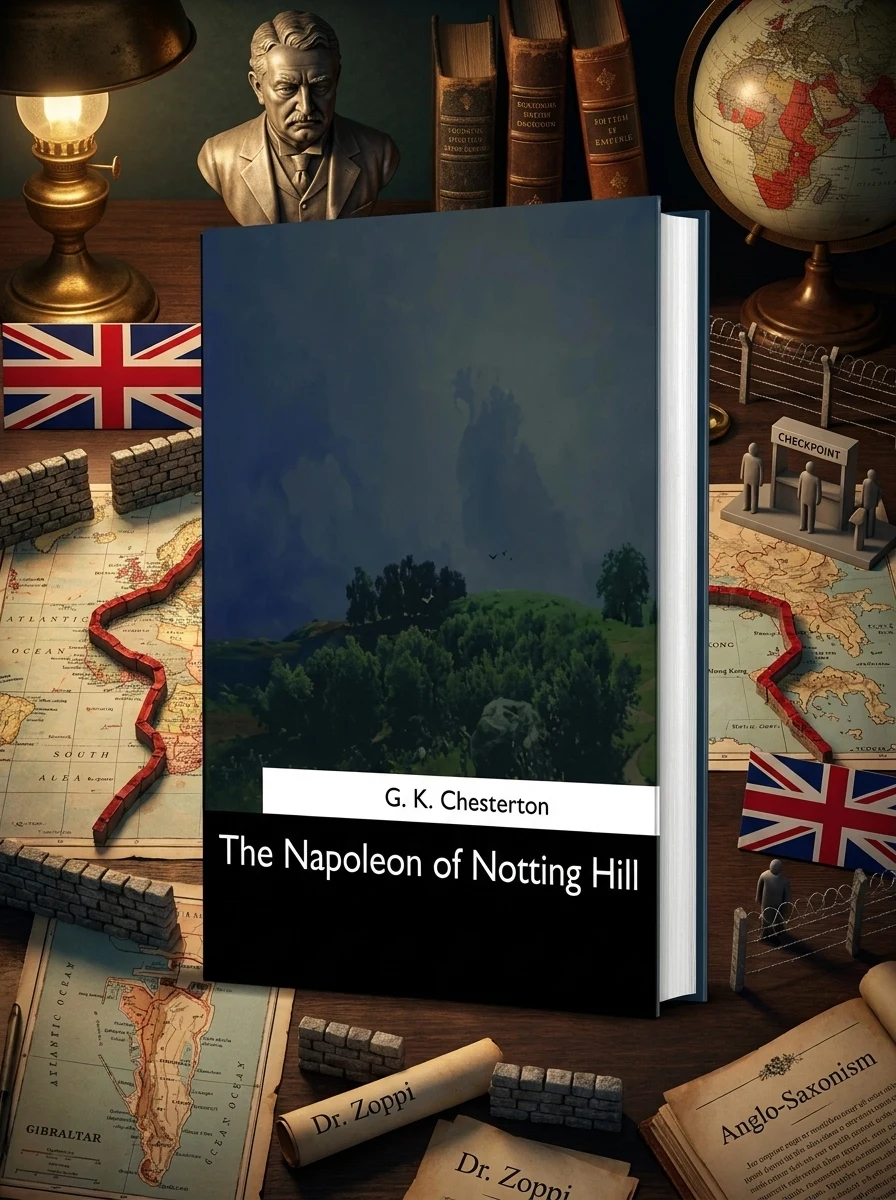


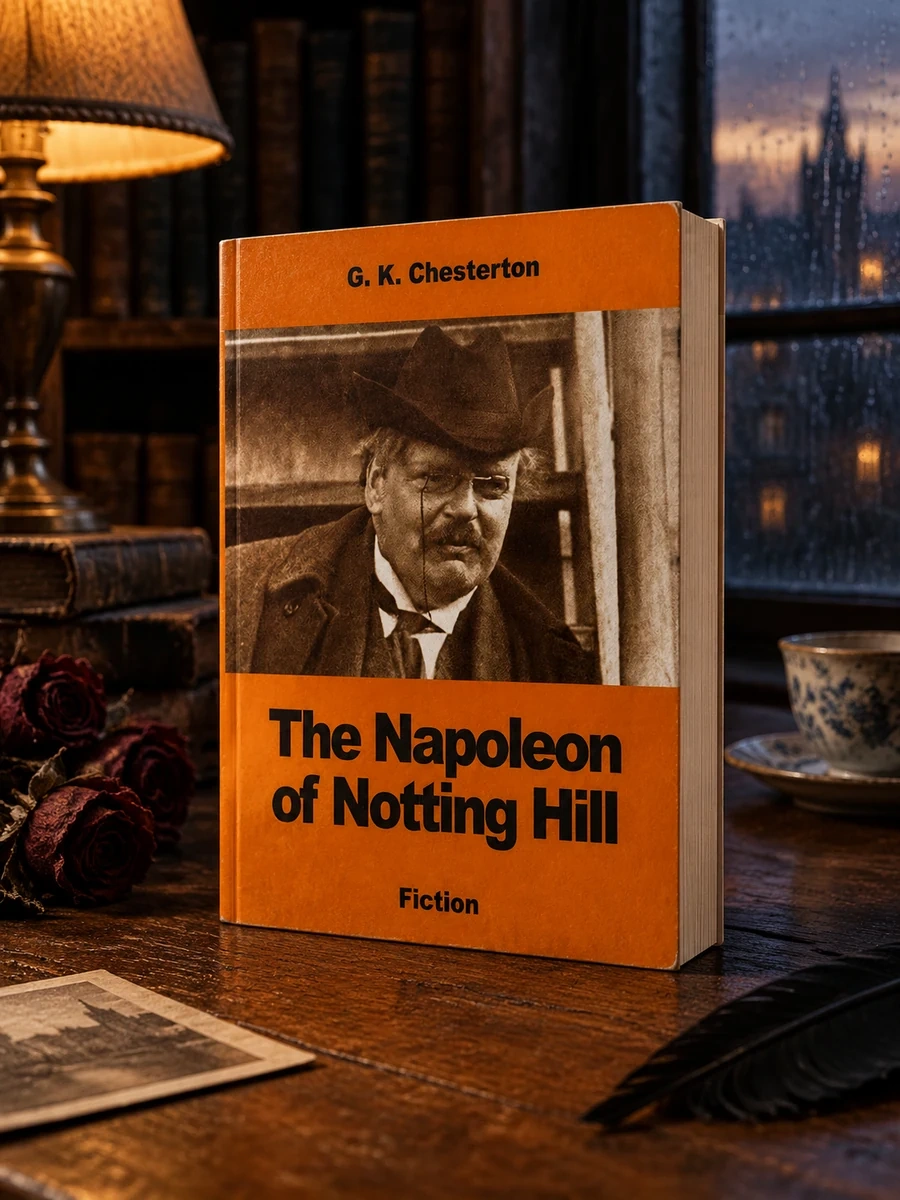
🏛 Books from this publisher Cosimo Classics
You might also like
See more →



Have a question about this item?
Ask about the edition, condition, delivery or anything else — we reply by email or phone, usually within a day.
