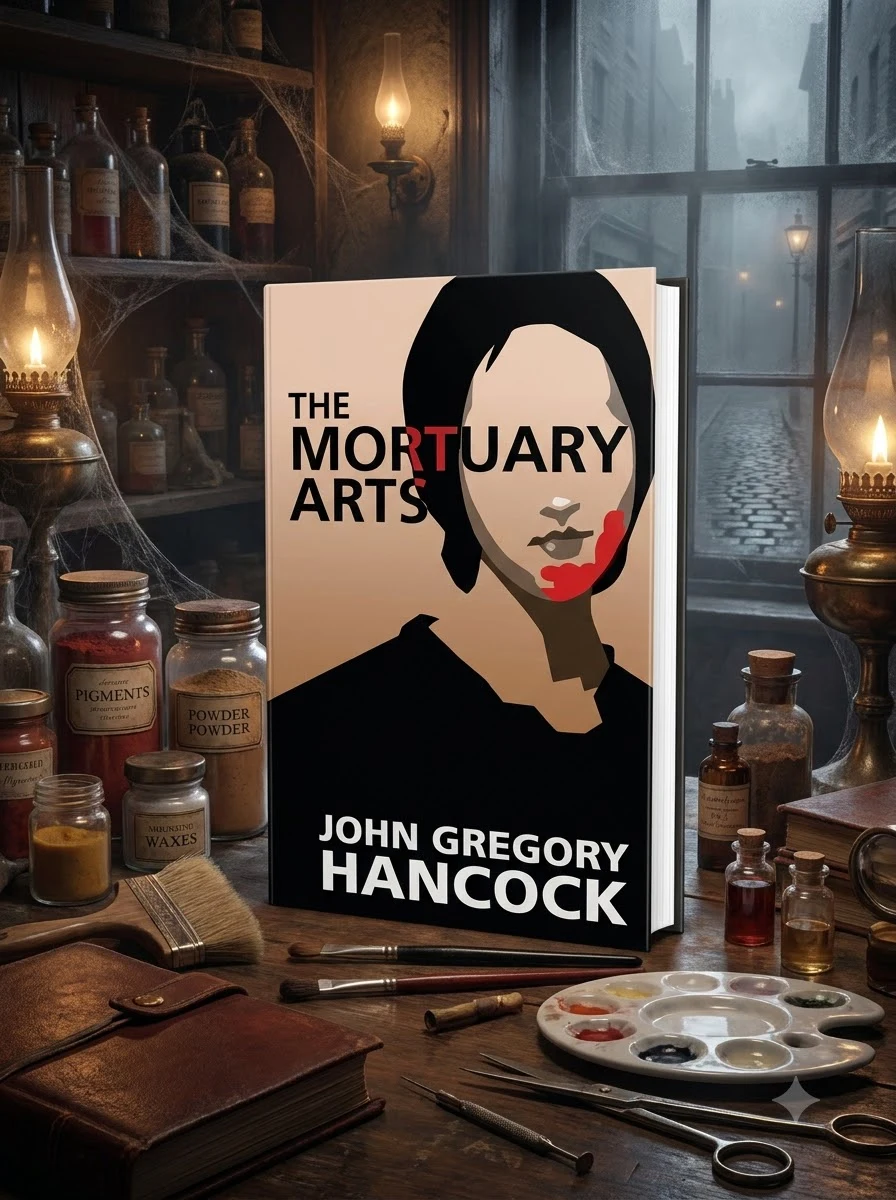
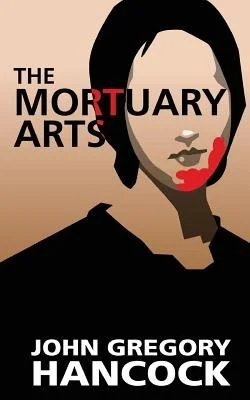
The Mortuary Arts
A neo-gothic novella about a woman who applies makeup to corpses in Victorian London.
Katherine O'Donnell’s life changes when tragedy strips away her sheltered existence. She finds employment at a mortuary, where she discovers a unique talent for restoring the faces of the dead. Her own disfigurement becomes an asset in this profession. The narrative examines how she learns to see beauty in death through her craft. Hancock illustrates this transformation with detailed descriptions and visual aids. The story remains grounded in the specific historical context of 1880s London. It avoids broad generalizations about the era, focusing instead on Katherine’s immediate experiences. The illustrations complement the text by depicting key moments and characters. This approach creates an intimate portrait of a woman navigating a harsh world. Readers interested in the intersection of art and mortality will find this novella compelling.
The story is set in 1880s London. It draws on the traditions of neo-gothic fiction and supernatural horror. The narrative reflects the social constraints placed on women with visible disfigurements during that period. Hancock uses this historical backdrop to explore themes of isolation and professional adaptation.


📝 Description: The Mortuary Arts
💎 Our verdict on The Mortuary Arts
📖 Why choose it
Why this book is worth reading
Readers drawn to atmospheric historical horror and character-driven narratives will find this novella compelling. It offers a unique perspective on beauty and identity through the lens of mortuary artistry. Those interested in psychological depth rather than action will appreciate the intimate portrait of Katherine’s transformation. The work appeals to fans of gothic literature who enjoy detailed descriptions and visual aids that enhance the macabre atmosphere. It is ideal for those exploring the aestheticization of death in Victorian culture.
⭐ Reader reviews
Reader rating
Hancock delivers a thoughtful exploration of identity and craft within a grim historical setting. The narrative succeeds by grounding its horror in psychological realism and specific professional details rather than supernatural spectacle. The inclusion of interior illustrations effectively complements the text, providing visual context for the mortuary environment. This approach creates an intimate and immersive experience for the reader. While it lacks fast-paced action, the story’s strength lies in its character development and atmospheric tension. It is best suited for readers who value literary horror and historical accuracy over traditional jump scares or contemporary settings.
📖 Read on the blog
✍️ More books by this author John Gregory Hancock


🏛 Books from this publisher Createspace Independent Publishing Platform

You might also like
See more →

Have a question about this item?
Ask about the edition, condition, delivery or anything else — we reply by email or phone, usually within a day.
