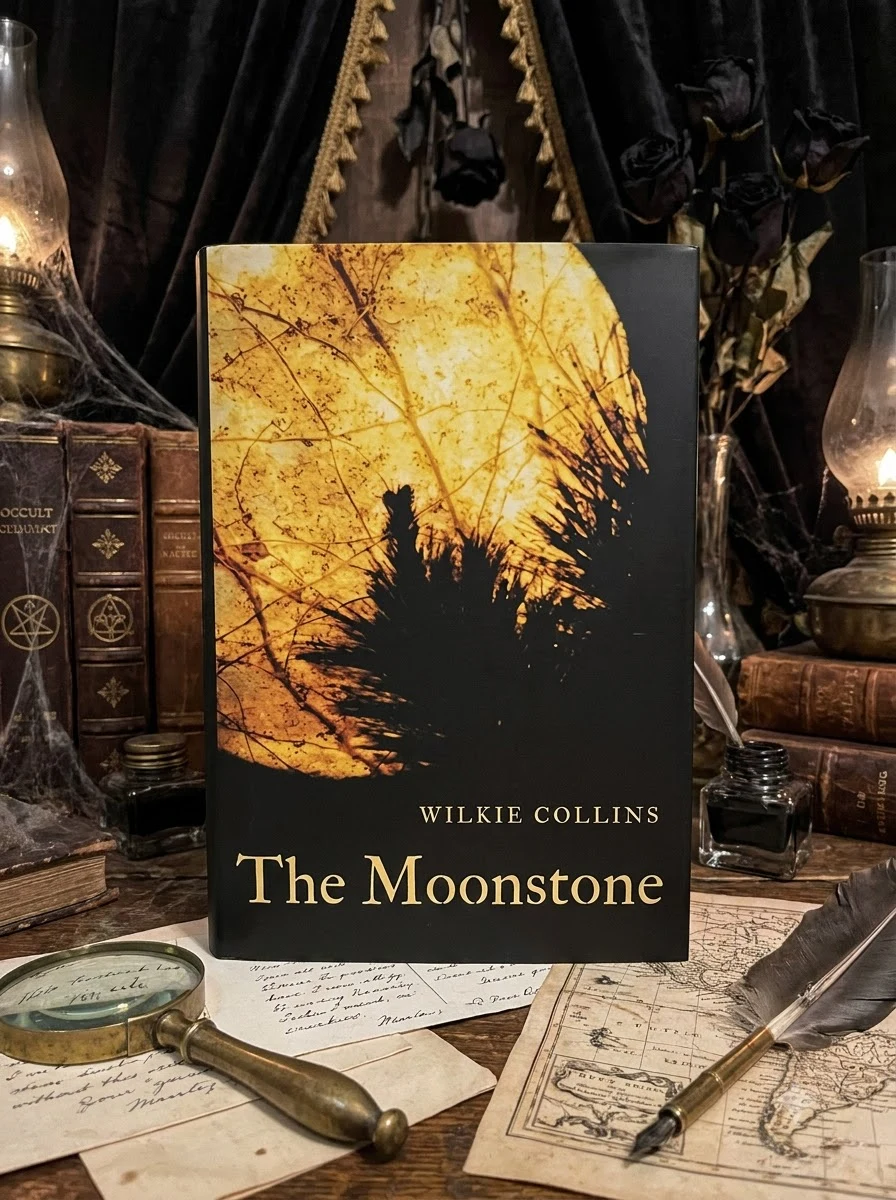
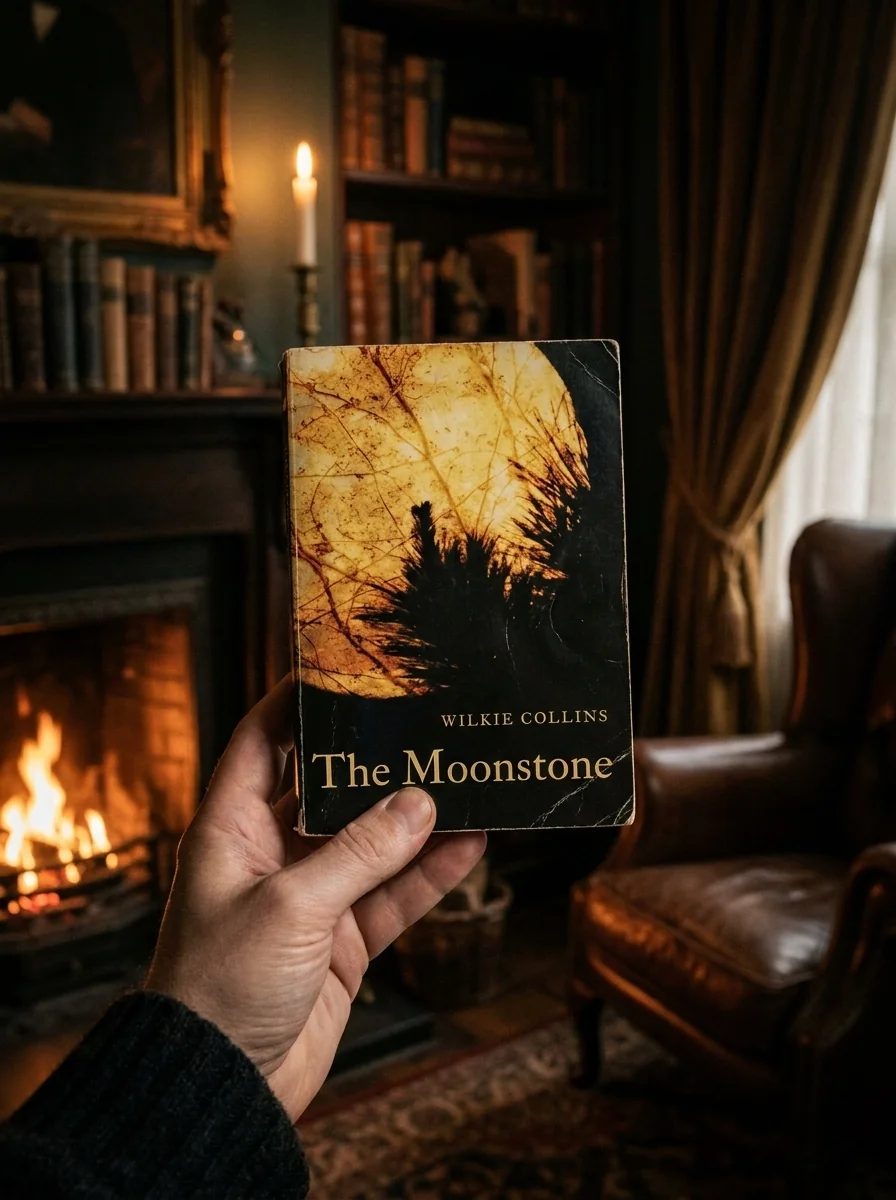
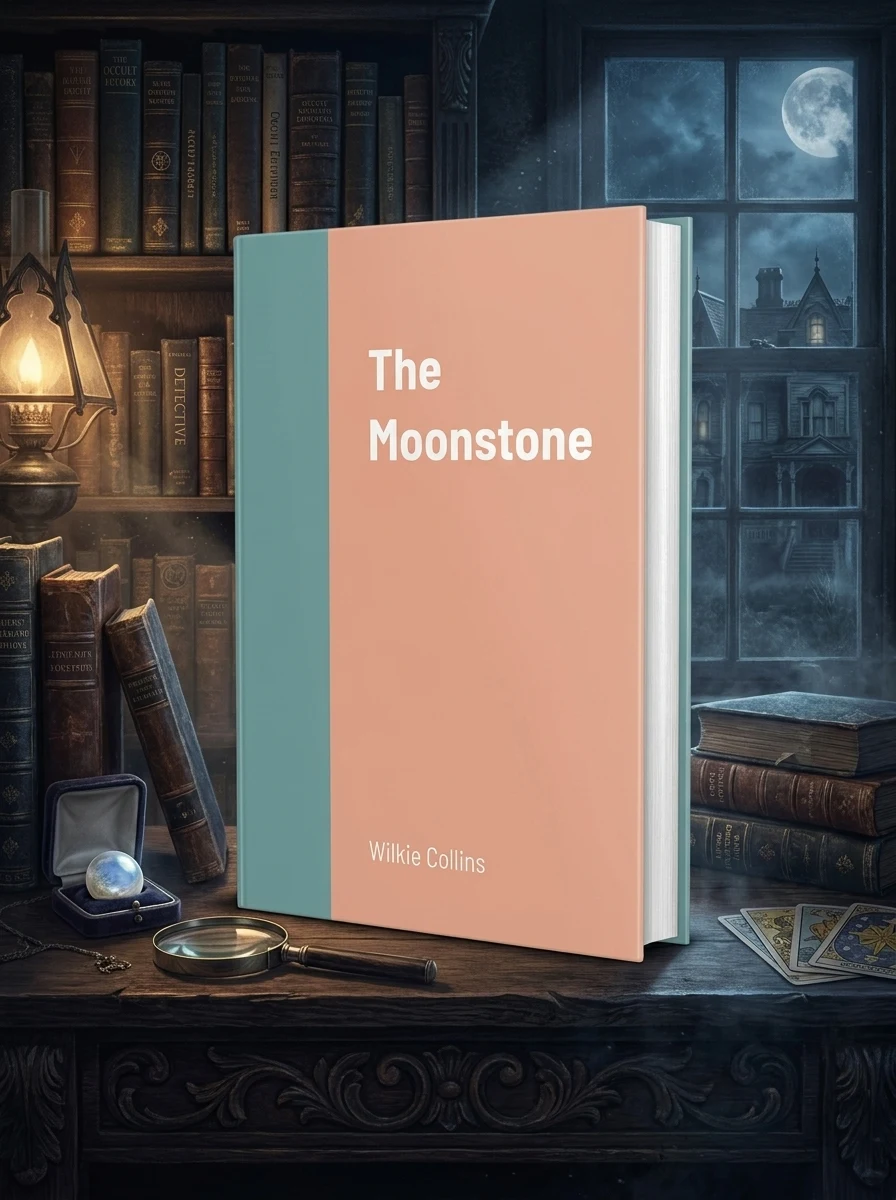
The Moonstone: A 19th-century British epistolary novel considered to be the first detective novel
A classic epistolary detective novel blending gothic dread with psychological mystery.
A valuable yellow diamond goes missing from an English country house. Several people connected to the owner give their own versions of events through written records. These accounts show how greed, superstition, and jealousy affect everyone involved. The investigation moves slowly as each character adds new details or doubts. The mystery deepens rather than resolving quickly. The narrative highlights how fear can distort memory and behavior. Eventually, the truth about the theft emerges through the accumulation of these personal testimonies. The story concludes with a sense of relief but also lingering unease about the past.
This work sits within 19th-century British horror and gothic fiction traditions. It established the private investigator genre by blending crime with mystery. The novel influences modern detective fiction through its innovative use of multiple perspectives. Collins remains a central figure in this historical period of literary development.


📝 Description: The Moonstone: A 19th-century British epistolary novel considered to be the first detective novel
💎 Our verdict on The Moonstone: A 19th-century British epistolary novel considered to be the first detective novel
📖 Why choose it
Why this book is worth reading
Readers who appreciate atmospheric tension and deep character studies will find this book rewarding. It offers a slow-burning examination of human nature, guilt, and the way fear distorts memory. Those interested in the evolution of crime fiction will value its innovative use of multiple testimonies to reveal truth. However, it is not for those seeking quick action or simple resolutions. The narrative rewards patience with a complex web of greed, superstition, and jealousy. It provides a unique glimpse into how ordinary life hides clues and how suspicion grows among characters over time.
⭐ Reader reviews
Reader rating
This novel excels in building psychological dread through its epistolary structure. By using diary entries and letters, Collins creates a layered mystery where truth emerges gradually from conflicting personal accounts. The atmosphere is thick with gothic unease and the corrupting influence of greed. It suits readers who enjoy detailed character analysis and slow-developing plots. Those preferring fast-paced adventures may find it too deliberate. The work remains significant for its role in shaping modern crime stories by focusing on human behavior rather than just the puzzle itself.
📖 Read on the blog
✍️ More books by this author Wilkie Collins


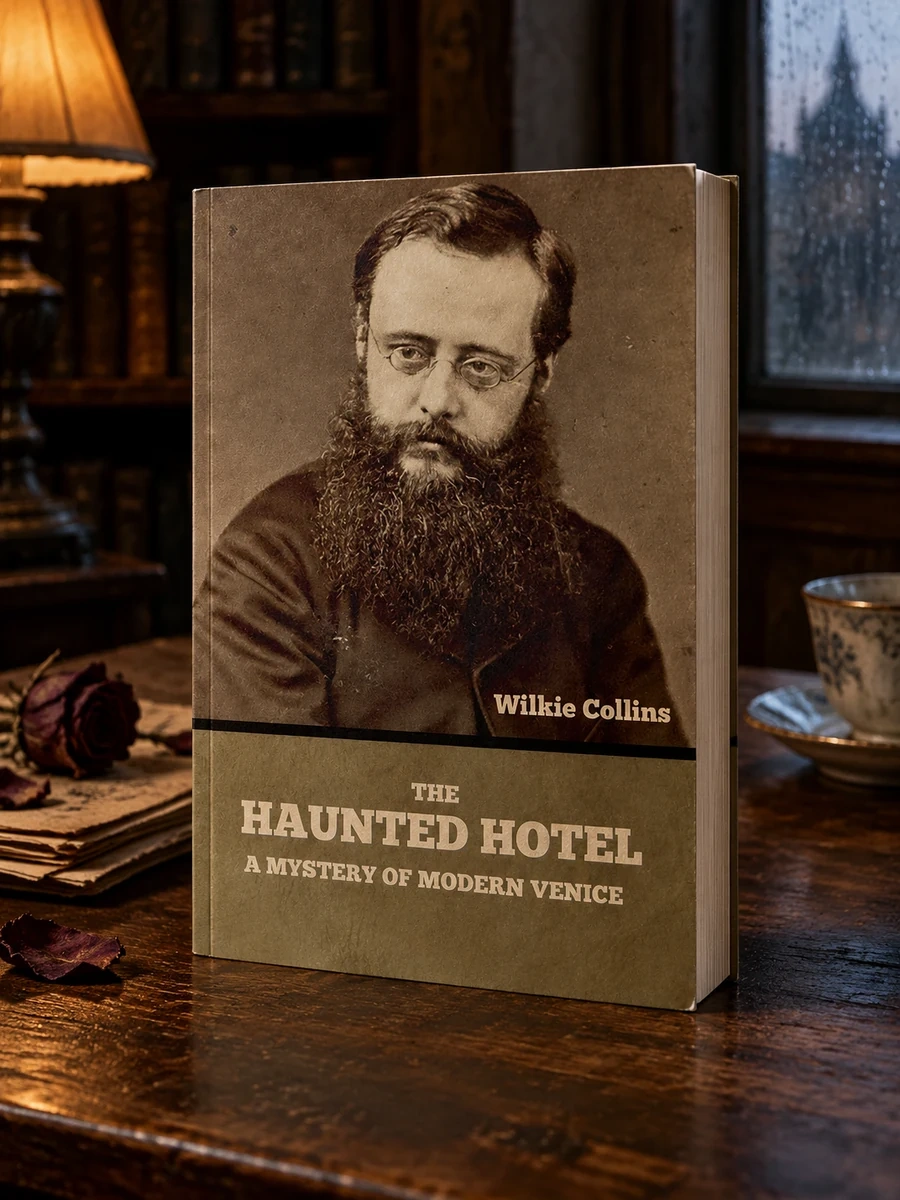
🏛 Books from this publisher Les Prairies Numeriques
You might also like
See more →

Have a question about this item?
Ask about the edition, condition, delivery or anything else — we reply by email or phone, usually within a day.
