The Melting
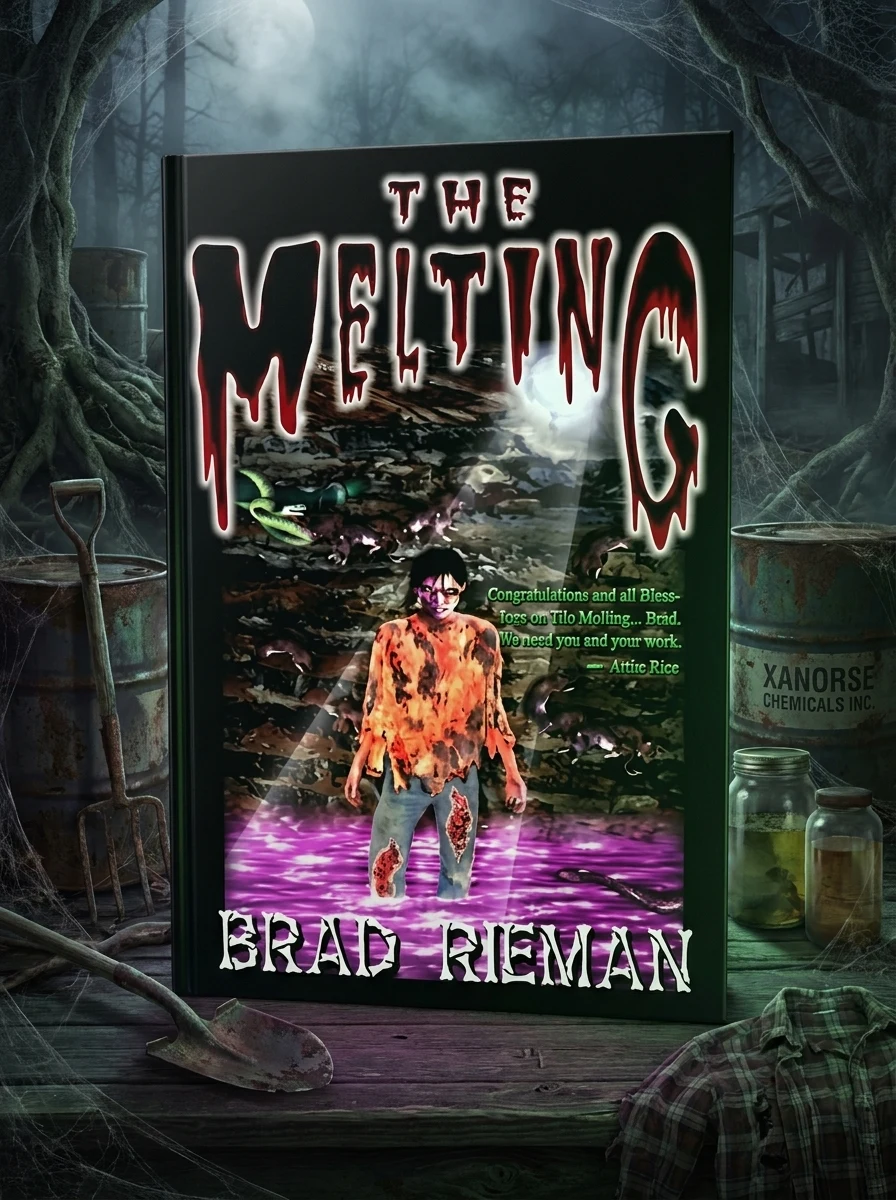
A feud between laborers and locals leads to toxic mutations in rural Kentucky.
Rieman constructs a narrative where industrial expansion destroys a natural habitat, creating a toxic legacy that affects multiple generations. The book examines how the Hagger family interacts with outsiders who bring machinery and chemicals into their territory. This interaction creates a cycle of violence that persists beyond death. The author focuses on the physical transformation of characters exposed to waste, linking environmental damage to bodily horror. The setting shifts from a small building site to a large chemical corporation, illustrating the scale of the threat. Rieman avoids supernatural clichés by grounding the horror in chemical exposure and long-standing grudges. The narrative does not offer easy resolutions but instead shows the lingering effects of past mistakes on present lives.
The book is set in Pleasure View, Kentucky, reflecting American rural anxieties about industrialization and environmental contamination. It draws on Southern Gothic traditions by placing horror within isolated forest communities and generational conflicts.


📝 Description: The Melting
💎 Our verdict on The Melting
📖 Why choose it
Why this book is worth reading
Readers seeking a slow-burn atmospheric terror that grounds its horror in chemical exposure and generational trauma will find this book compelling. It appeals to those who appreciate detailed accounts of toxic waste disasters rather than fast-paced action. The narrative offers a unique perspective on how industrial negligence collides with rural isolation, creating lingering effects on present lives without offering easy resolutions. By avoiding supernatural clichés, it provides a gritty, realistic exploration of environmental damage linked to bodily horror, making it ideal for fans of psychological and cosmic dread rooted in specific geographical settings.
⭐ Reader reviews
Reader rating
Rieman effectively utilizes the Kentucky setting to create tension, tracing a feud from 1936 through the late 1980s. The focus on physical transformation due to chemical exposure offers a fresh take on body horror, avoiding generic supernatural tropes. While the slow pace may deter action seekers, it rewards patience with a deep dive into environmental consequences. The shift from small building sites to large corporations illustrates the escalating threat scale. This work stands out for its commitment to showing how past mistakes haunt current realities, providing a chilling commentary on industrial legacy. It is best suited for readers who enjoy atmospheric dread and complex character interactions over simple scares.