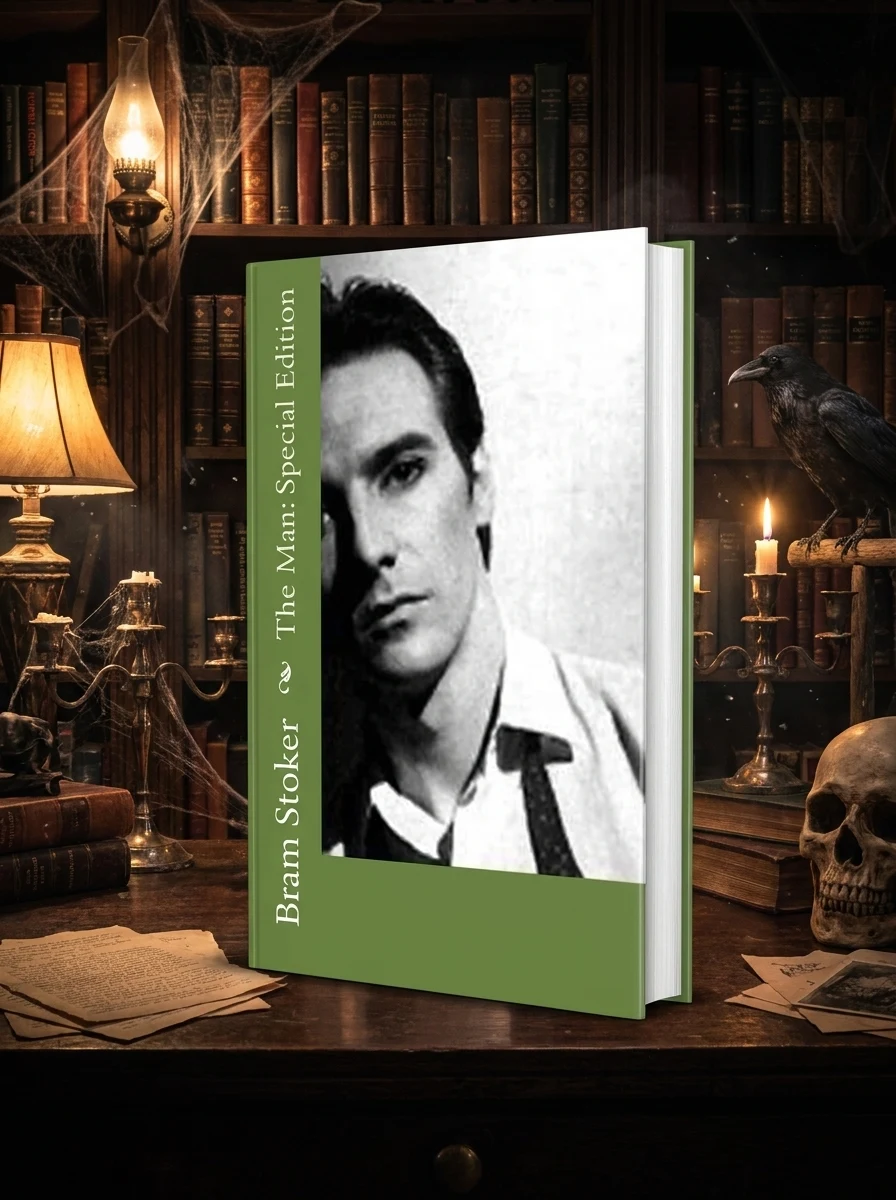

The Man
A quiet scene in an old churchyard described by Bram Stoker.
This edition includes a passage where two children talk through a hawthorn tree. A young couple listens from a tombstone while the surrounding garden blooms. The description highlights the textures of the stone and the colors of the foliage. Stoker uses sensory details to build a mood of tranquility. The text does not contain plot twists or supernatural events in this excerpt. It focuses on the visual and olfactory elements of the setting. The copper beech and cedar frame the scene. The laburnum and lilac add color and scent. This approach allows the reader to feel the presence of the past through the landscape. It demonstrates Stoker’s ability to evoke emotion through detailed observation of nature.
Bram Stoker wrote during the late Victorian era. This text reflects the period’s interest in Gothic settings and the aesthetic appreciation of decay. The churchyard setting connects to traditions of romantic literature that value nature and history.


📝 Description: The Man
💎 Our verdict on The Man
📖 Why choose it
Why this book is worth reading
Readers who appreciate the subtle, creeping dread of atmospheric horror will find value in this text. It offers a respite from high-octane scares, focusing instead on the beauty of decay and the tranquility of old landscapes. Those interested in literary craftsmanship will admire Stoker’s precise use of sensory details to evoke emotion without relying on plot twists or supernatural events. This book is ideal for those who enjoy slow-burn psychological tension and vivid environmental storytelling. It provides a unique glimpse into the author’s descriptive style, highlighting how nature can frame the presence of the past. Fans of Gothic fiction that prioritizes mood and texture over action will discover a profound appreciation for this quiet, reflective piece.
⭐ Reader reviews
Reader rating
This excerpt demonstrates Bram Stoker’s exceptional ability to weave tranquility with underlying melancholy through meticulous observation. The prose is rich with visual and olfactory imagery, from the lichen-tinted stone to the heavy sweetness of lilac and hawthorn. By focusing on stillness rather than action, Stoker creates a haunting sense of history overlapping with the present natural world. The description of the churchyard feels alive yet peaceful, inviting readers to linger in its shadows. While it lacks traditional horror elements like jump scares or monsters, it succeeds brilliantly as a study in mood. It is best suited for connoisseurs of Gothic atmosphere who value lyrical prose and deep environmental immersion over fast-paced narrative drives.