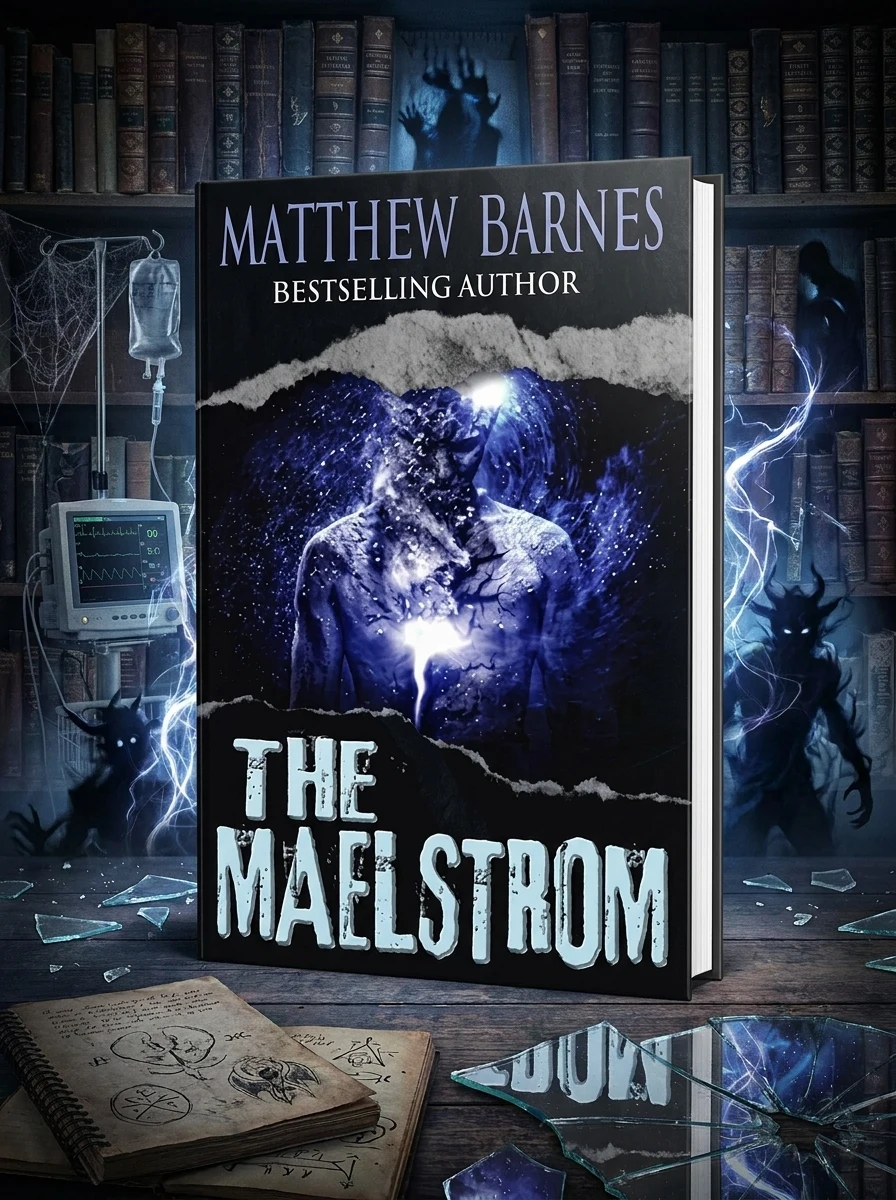
The Maelstrom
A coma survivor confronts demons that may threaten reality itself.
Nick emerges from a five-month coma after a major accident, only to find himself trapped in hellish nightmares. His doctor, Collins, attempts to restore his sanity, but the line between dream and reality begins to dissolve. Nick discovers that the demons haunting him are not just figments of an injured mind. They represent a terrible secret with implications for existence itself. The narrative explores the fragility of human perception when faced with the unknown. It asks whether awareness brings clarity or deeper confusion. Barnes constructs a claustrophobic atmosphere where trust in one's own senses is impossible. The story does not offer easy answers about the nature of evil or trauma.
Published by Cavendor Publishing in 2019, this work sits within the contemporary horror genre. It appeals to American readers interested in supernatural fiction that blends psychological trauma with existential dread. The book reflects modern anxieties about mental health and the unreliability of perception.


📝 Description: The Maelstrom
💎 Our verdict on The Maelstrom
📖 Why choose it
Why this book is worth reading
This book is ideal for readers who appreciate slow-burn psychological tension and ambiguous threats over fast-paced action or clear resolutions. It offers a claustrophobic atmosphere where trust in one's own senses becomes impossible, appealing to those interested in the fragility of human perception when faced with the unknown. The narrative explores how trauma reshapes reality, making it suitable for audiences who enjoy character-driven dread and philosophical inquiries into the nature of evil. It provides a deep dive into the intersection of physical injury and psychological unraveling, rewarding patience with a sense of discovery that is far more dangerous than the initial condition.
⭐ Reader reviews
Reader rating
Barnes constructs a claustrophobic environment where the boundary between mind and world blurs seamlessly. By focusing on the aftermath of physical trauma and subsequent psychological unraveling, the narrative draws effectively on supernatural fiction traditions where internal horror manifests externally. The story excels in building character-driven dread rather than relying solely on external monsters, creating an unsettling experience for those willing to engage with slow-burn tension. It suits readers who enjoy ambiguous threats and philosophical questions about awareness versus confusion. However, it may disappoint those seeking clear resolutions or immediate gratification through plot mechanics. The work is a thoughtful examination of perception and existence.
You might also like
See more →







Have a question about this item?
Ask about the edition, condition, delivery or anything else — we reply by email or phone, usually within a day.
