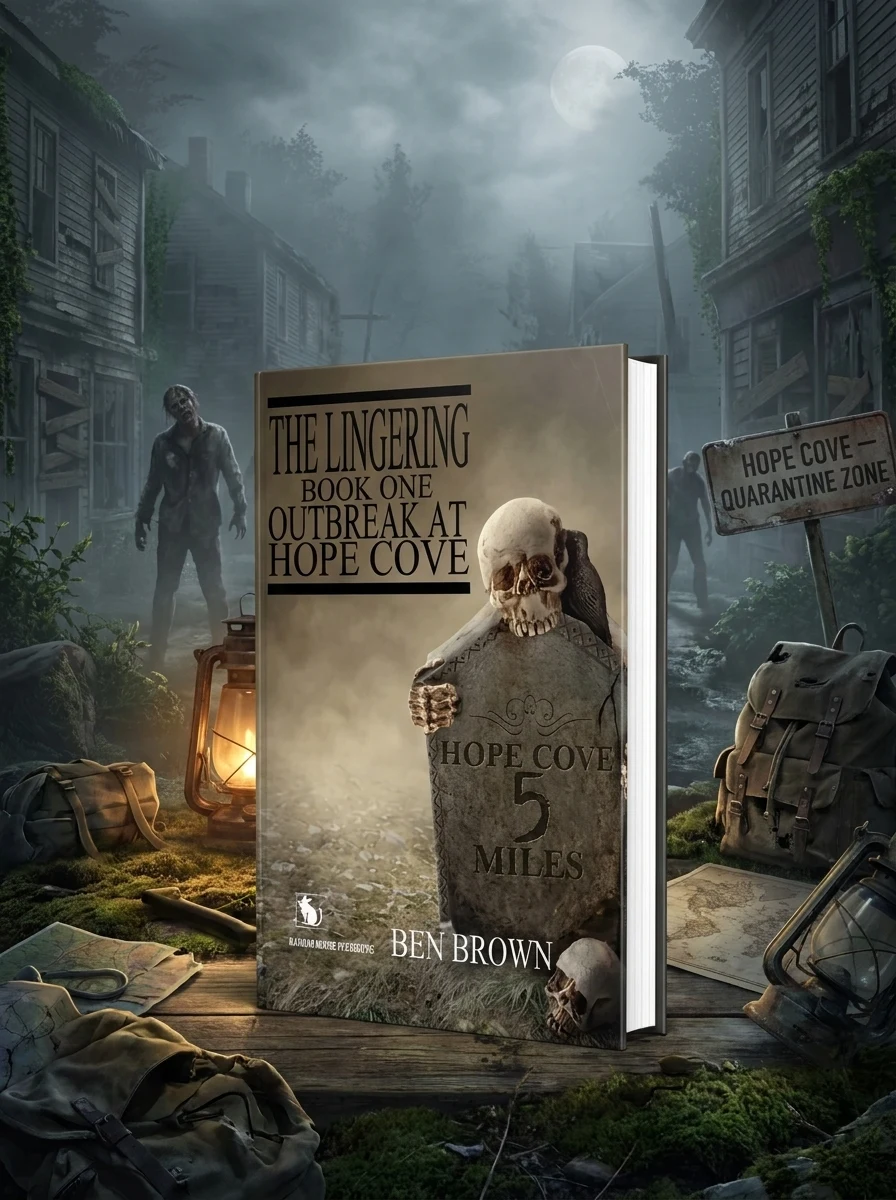
The Lingering Outbreak At Hope Cove
A look at the first victims of a zombie virus in Hope Cove.
Brown investigates the dawn of a terrifying epidemic in Hope Cove. The narrative centers on the initial infected and their desperate attempts to cope with the end of their communities. A small group of survivors fights to reunite with lost relatives, testing their own humanity in the process. The story highlights the struggle to come to terms with sudden loss and the breakdown of society. It does not offer solutions or hope, but rather observes the raw reaction to a spreading plague. The work is grounded in the immediate experience of those touched by the virus first.
Published in 2014 by Createspace Independent Publishing Platform, this work sits within the tradition of American horror fiction focusing on supernatural outbreaks. It draws on the trope of isolated communities facing an unseen threat that rears its ugly head without warning.


📝 Description: The Lingering Outbreak At Hope Cove
💎 Our verdict on The Lingering Outbreak At Hope Cove
📖 Why choose it
Why this book is worth reading
Readers seeking an intimate, unvarnished look at the onset of a zombie epidemic will find value here. The book offers a raw examination of human decency under extreme duress, focusing on the emotional weight of sudden loss rather than technical survival mechanics. It appeals to those who prefer straightforward narratives centered on familial bonds and the desperate struggle to maintain humanity amidst chaos. By avoiding complex lore or hopeful resolutions, it delivers a grounded perspective on the breakdown of social order through the eyes of those directly affected by the initial outbreak.
⭐ Reader reviews
Reader rating
Brown’s narrative excels in its tight focus on the immediate psychological toll of a spreading plague. It successfully captures the disorientation and desperation of the first victims without resorting to elaborate world-building or excessive technical detail. The strength lies in its exploration of how personal connections clash with harsh survival realities, offering a poignant study of societal collapse from within. This approach suits readers who prioritize emotional resonance and character-driven conflict over action-heavy sequences or extensive mythos development. It is a grim but compelling observation of the dawn of an apocalypse.