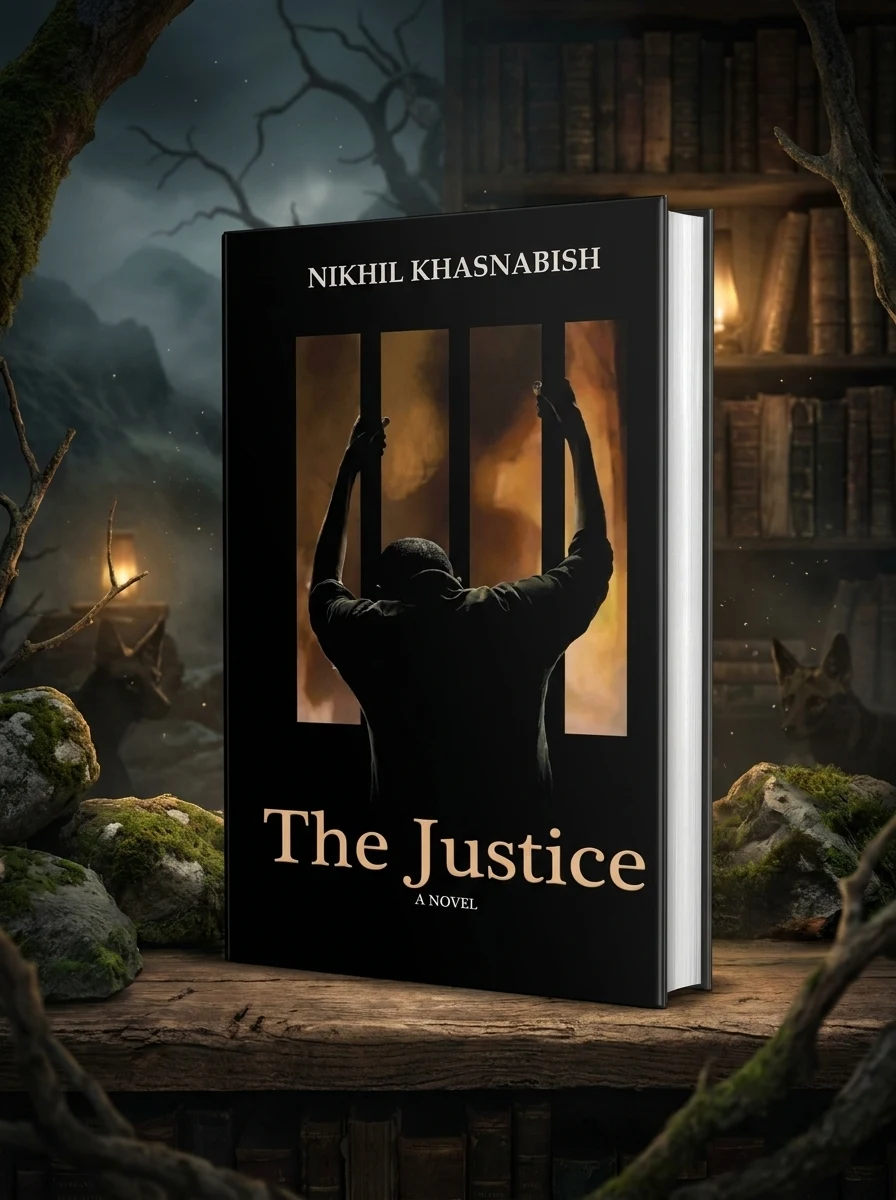
The Justice
A story about a rape survivor choosing solitude after escaping cursed hills.
This work investigates the societal judgment faced by Ime Borah after her assault. The narrative does not focus on the chase or the fight, but on the decision to remain unmarried. Khasnabish examines how trauma reshapes identity and relationships. The text questions the fairness of justice for victims. It asks if society deems survivors unfit for love. The author uses the backdrop of the abode of cursed souls to mirror Ime's internal state. The hills represent a place of danger and exile. Her escape is physical, but her emotional journey continues in isolation. This approach differs from standard revenge plots. Instead, it offers a quiet examination of loss and autonomy. The book does not provide closure for Ime's past but focuses on her present choice. It invites readers to reflect on the cost of survival.
The narrative is set in a region featuring hills called the abode of cursed souls and witches. This setting draws on local folklore regarding witches and cursed places. The story reflects cultural attitudes toward marriage and victimhood in this specific context.


📝 Description: The Justice
💎 Our verdict on The Justice
📖 Why choose it
Why this book is worth reading
Readers who appreciate literary horror that prioritizes psychological depth over visceral gore will find value in this unique narrative. It offers a compelling examination of how societal judgment can be as isolating as physical exile. Those interested in the nuanced portrayal of trauma and autonomy, particularly within South Asian contexts, will engage with its quiet power. The book challenges conventional revenge tropes by focusing on the survivor's choice of solitude. It invites reflection on the true cost of survival and the fairness of justice for victims. By avoiding easy closure, it provides a respectful, grounded perspective on resilience. This work is ideal for those seeking horror that acts as a mirror to real-world social realities and human endurance.
⭐ Reader reviews
Reader rating
Nikhil Khasnabish delivers a poignant exploration of trauma through the lens of Ime Borah’s forced solitude. The novel excels in its subtle use of cursed hills as a metaphor for internal exile, avoiding sensationalism. It effectively critiques societal stigma against rape survivors without offering simplistic resolutions. The tone is contemplative and heavy, focusing on autonomy rather than action. This approach distinguishes it from standard horror fare, making it suitable for readers who prefer atmospheric dread and social commentary. While lacking traditional plot thrills, its strength lies in its emotional resonance and challenge to conventional justice frameworks. It is a significant contribution to psychological horror.
You might also like
See more →







Have a question about this item?
Ask about the edition, condition, delivery or anything else — we reply by email or phone, usually within a day.
