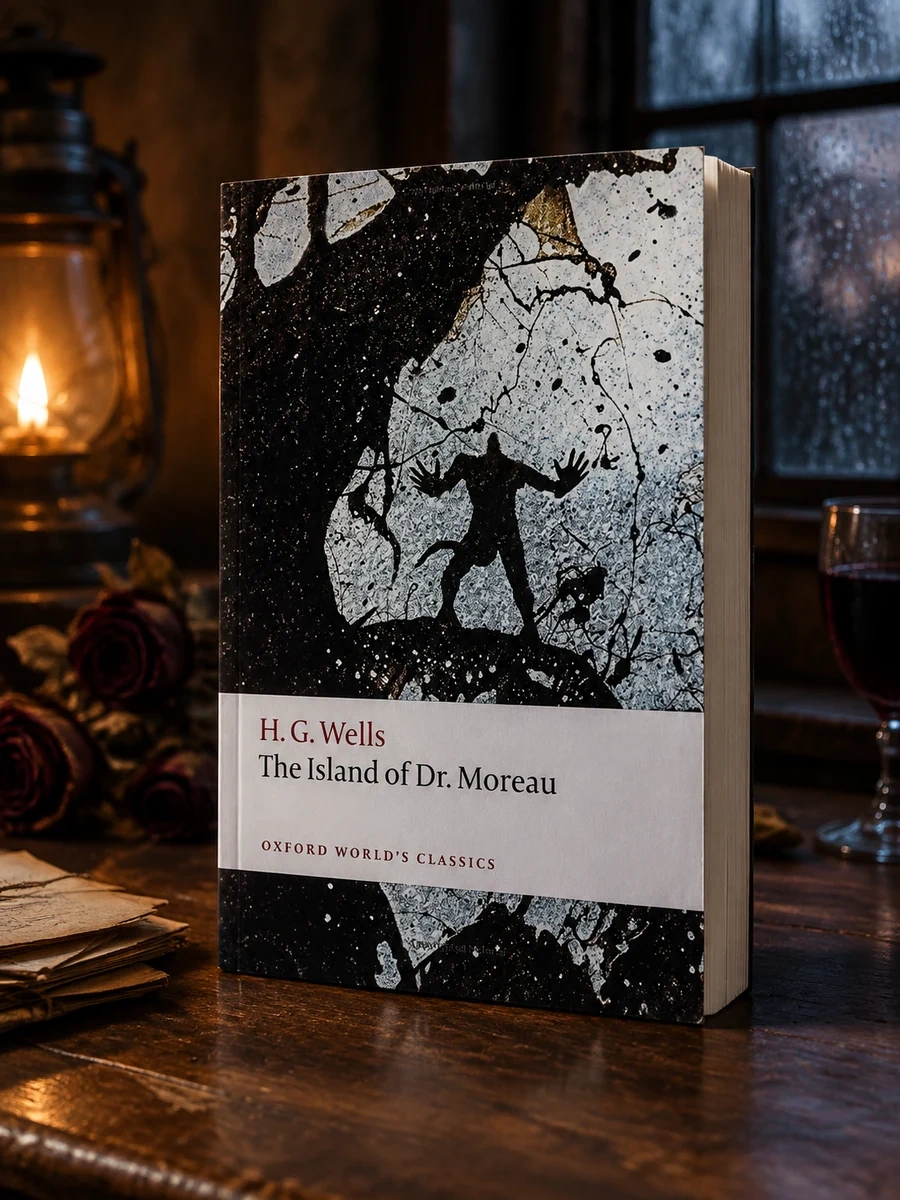
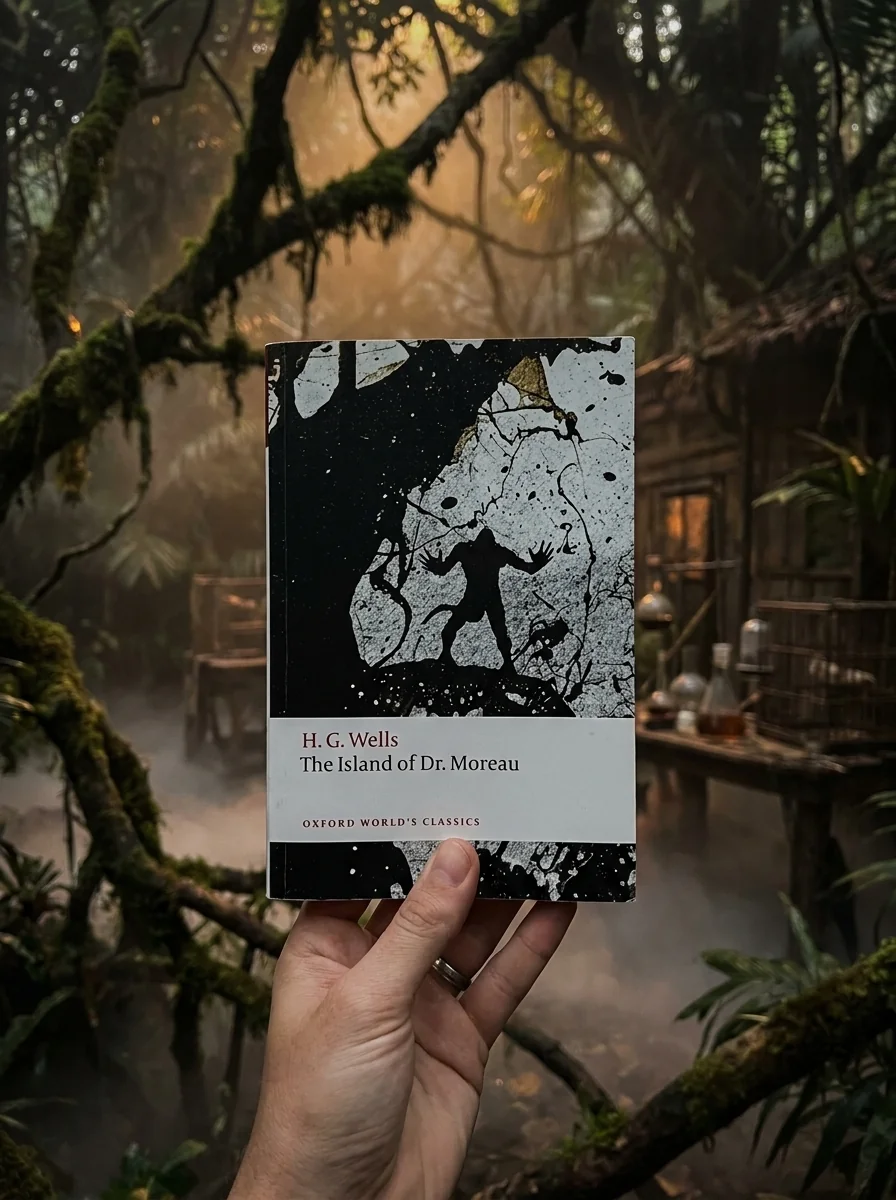

The Island of Doctor Moreau
A shipwrecked man confronts a scientist's grotesque experiments on a remote island.
The narrative centers on Edward Prendick, who finds himself stranded after a maritime disaster. He is taken in by Doctor Moreau, whose reputation precedes him as a notorious figure. Prendick’s initial curiosity turns to horror as he observes the suffering of animals and the existence of hybrid beings. Wells constructs a world where the boundaries between human and beast are violently blurred. The story serves as a vehicle for examining the societal fears surrounding scientific progress during Wells's time. It questions the moral cost of such advancements and their impact on religious beliefs. The text does not shy away from depicting the physical and psychological toll of these experiments.
The work reflects the late nineteenth-century climate of scientific openness and advancement. It engages with anxieties about the ethical nature of discoveries during that period. The introduction connects it to Darwin's Origin of Species and Swift's Gulliver's Travels, highlighting its place in literary and scientific discourse.


📝 Description: The Island of Doctor Moreau
💎 Our verdict on The Island of Doctor Moreau
📖 Why choose it
Why this book is worth reading
This book suits readers interested in gothic horror and philosophical fiction rooted in the late nineteenth century. It appeals to those who enjoy examining the tension between scientific advancement and moral boundaries. The narrative serves as a vehicle for examining societal fears surrounding scientific progress, questioning the moral cost of advancements and their impact on religious beliefs. Readers seeking light entertainment or simple action plots may find the sustained focus on pain and ethical debate too heavy. However, it demands attention to its intellectual underpinnings alongside its shocking imagery. It offers a profound look at the boundaries between human and beast, making it ideal for those who appreciate horror fiction that functions as a story of ideas rather than mere adventure.
⭐ Reader reviews
Reader rating
Wells constructs a world where the boundaries between human and beast are violently blurred through grotesque experiments on a remote island. The text does not shy away from depicting the physical and psychological toll of these procedures, creating an atmosphere saturated with disgust. This edition presents a philosophical engagement with the implications of science for religion, positioning the novel as a story of ideas rather than mere adventure. It is best suited for readers who enjoy gothic horror and literary fiction rooted in the late nineteenth century. Those interested in the tension between scientific advancement and moral boundaries will find this compelling. The book demands attention to its intellectual underpinnings alongside its shocking imagery, offering a heavy but rewarding exploration of ethical anxieties about discovery.
📖 Read on the blog
📖 From the series “Oxford World's Classics”







✍️ More books by this author H G Wells





🏛 Books from this publisher Oxford University Press





You might also like
See more →

Have a question about this item?
Ask about the edition, condition, delivery or anything else — we reply by email or phone, usually within a day.
