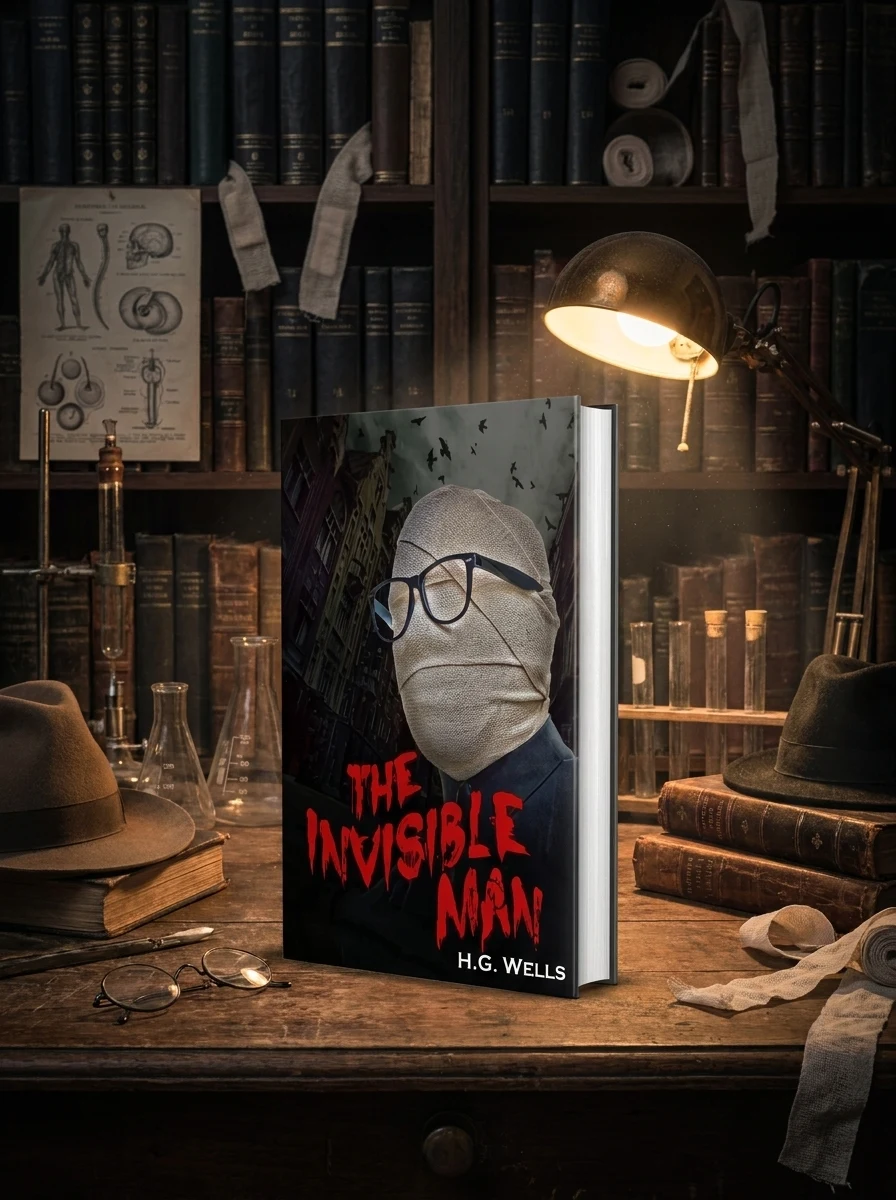
The Invisible Man: A Grotesque Romance
A graphic adaptation of H.G. Wells's 1897 invisible scientist story.
Akira Graphics adapts the classic tale of Griffin, who becomes invisible through optical science but loses his humanity. The graphic novel format visualizes the third-person narrative of Wells’s original work. It focuses on the scientific process and the resulting grotesque romance. The adaptation stays close to the source material’s plot points. It does not add new characters or subplots. The visual style emphasizes the isolation of the protagonist. This version offers a different experience than reading the text alone. It highlights the physical transformation through art. The story remains faithful to the 1897 publication details.
H. G. Wells published this novella in 1897, originally serializing it in Pearson's Weekly before releasing it as a novel. The story follows his earlier works like The Time Machine and The Island of Doctor Moreau but shifts to a third-person objective viewpoint. This edition by Akira Graphics reinterprets that late Victorian scientific horror for modern visual audiences.


📝 Description: The Invisible Man: A Grotesque Romance
💎 Our verdict on The Invisible Man: A Grotesque Romance
📖 Why choose it
Why this book is worth reading
Readers interested in the intersection of late Victorian literary reinterpretations and visual media will find this volume compelling. It offers a direct translation of the original text, allowing audiences to visualize the physical transformation and isolation of the protagonist through art. Those who appreciate the scientific process behind horror narratives may enjoy seeing Griffin's optical research depicted visually. The book suits fans of classic science fiction adapted into new formats, providing a different experience than reading the text alone without adding new subplots or characters.
⭐ Reader reviews
Reader rating
Akira Graphics delivers a faithful visual translation of Wells’s novella, emphasizing the protagonist's grotesque isolation through its art style. By maintaining the third-person objective point of view, it preserves the source material's tone while highlighting the physical consequences of scientific hubris. The adaptation focuses on the optical research rather than expanding the narrative scope, offering a pure experience for purists. It is best suited for readers seeking classic horror adaptations without new content or commentary. The work effectively reimagines the supernatural premise through visual storytelling, making it an accessible entry point for those unfamiliar with the original text.
📖 Read on the blog
🏛 Books from this publisher Createspace Independent Publishing Platform




You might also like
See more →


Have a question about this item?
Ask about the edition, condition, delivery or anything else — we reply by email or phone, usually within a day.
