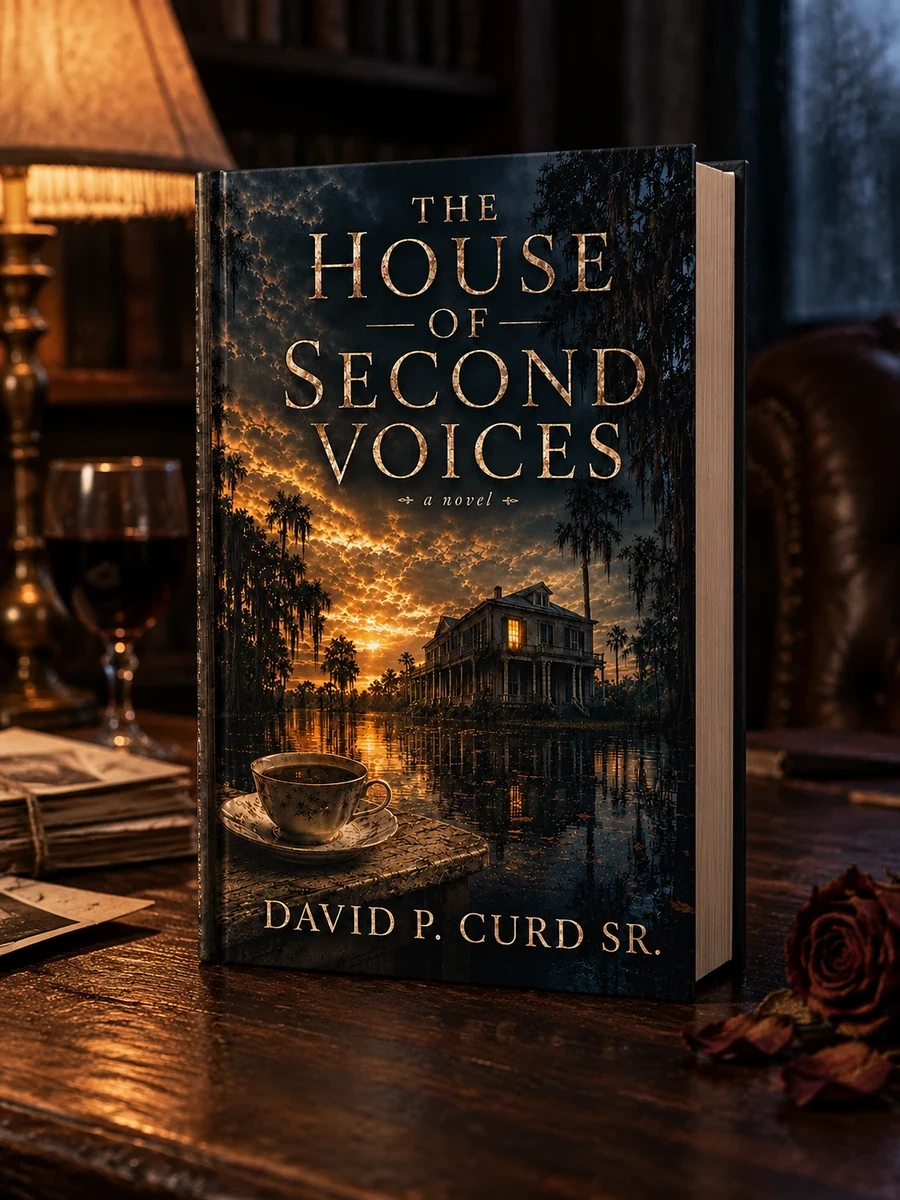
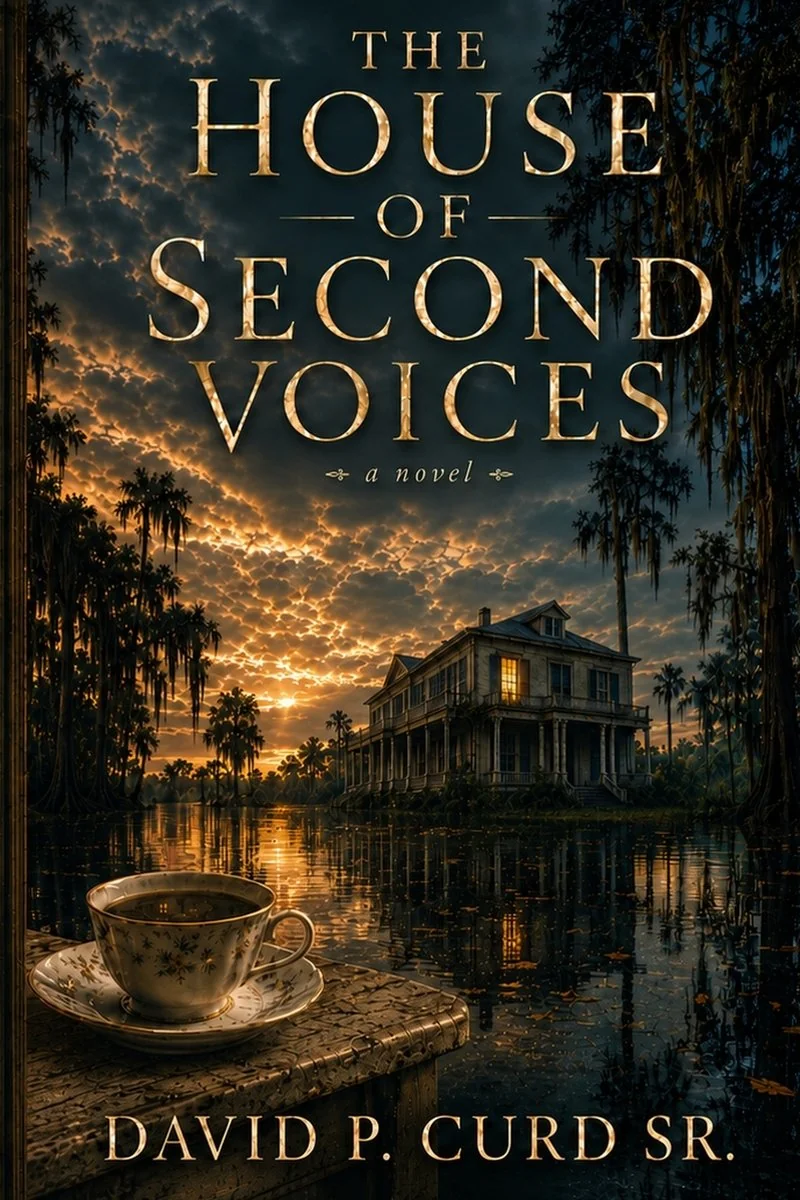
The House of Second Voices
A Southern Gothic novel about a translator whose linguistic skills become a trap in her father's haunted home.
Marie Armand returns to Louisiana to care for Lionel, whose illness steals his speech. She expects duty but finds a house that has been listening. A door moves. A tap runs dry. A word appears without a writer. Lionel speaks something impossible. The house answers. Marie’s gift for language becomes the mechanism of her torment. The entity does not scream. It waits in silence and water. It learns how she thinks. It has waited for someone like her. The narrative explores inherited grief and family silence. David Patrick, Sr Curd presents a story where understanding carries a terrible cost. The house uses Marie’s career against her. She translates atrocities for work, but here she faces the unspeakable in her own home. The horror is not in ghosts but in meaning. The house learns through unfinished sentences. It waits for her to break under the weight of what it says.
This work sits within the Southern Gothic tradition, set in rural Louisiana. It draws on themes of family silence and inherited grief. The narrative focuses on the cost of understanding what was meant to stay unsaid. It uses the setting of a listening house to explore psychological horror rooted in domestic decay.


📝 Description: The House of Second Voices
💎 Our verdict on The House of Second Voices
📖 Why choose it
Why this book is worth reading
Readers seeking atmospheric horror rooted in family dynamics and linguistic dread will find this book compelling. It appeals to those interested in Southern Gothic traditions and psychological tension. Marie’s professional background in translating the worst human acts provides a unique lens for her domestic horror, making the narrative distinct from typical ghost stories. The story relies on subtle unease rather than overt scares, offering a slow-burn experience for those who appreciate nuanced character studies. Those who enjoy exploring the cost of understanding what was meant to stay unsaid will engage deeply with Marie’s torment. This is not for readers seeking fast-paced action or clear supernatural explanations. Instead, it offers a meditation on meaning and memory, where the house attacks through silence and water. It is ideal for fans of literary horror that prioritizes emotional weight and intellectual unease over jump scares.
⭐ Reader reviews
Reader rating
The novel excels in crafting a pervasive sense of dread through linguistic traps rather than physical threats. Marie’s expertise in translating atrocities becomes her undoing as the house learns her thoughts. The author effectively uses Southern Gothic elements to amplify feelings of isolation and inherited trauma. Water and silence serve as potent symbols of the entity’s presence. The pacing is deliberate, favoring psychological tension over rapid plot progression. This approach rewards patient readers who enjoy slow-burn horror. The exploration of family silence adds depth to the supernatural elements. However, those preferring immediate action may find the narrative too restrained. The book succeeds in making language itself feel dangerous and invasive. It is a thoughtful contribution to psychological horror that lingers in the mind long after reading.
📖 Read on the blog
✍️ More books by this author David Patrick, Sr Curd







🏛 Books from this publisher Independently Published






You might also like
See more →



Have a question about this item?
Ask about the edition, condition, delivery or anything else — we reply by email or phone, usually within a day.
