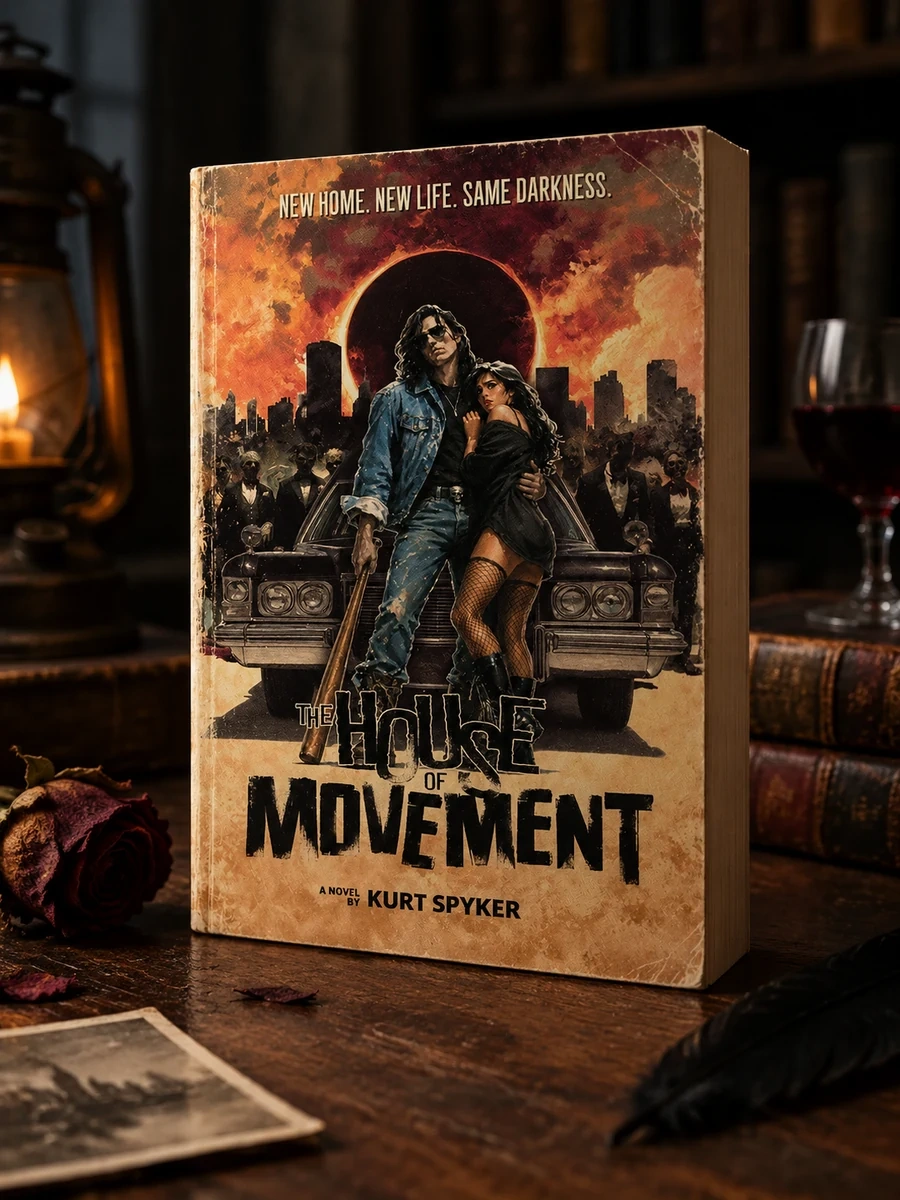
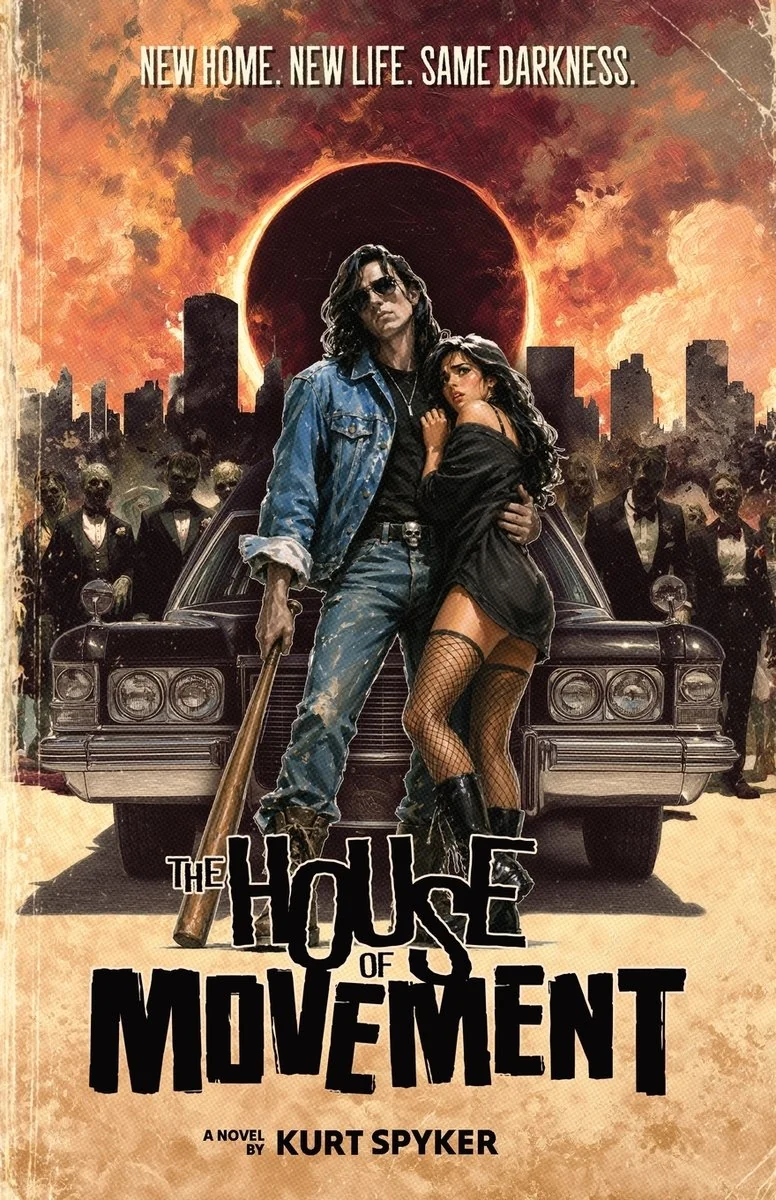
The House of Movement
A man flees his past only to become trapped in a decaying building where people disappear.
Dain Veznik moves to Harrow Lake to escape history. He chooses a dilapidated apartment complex for solitude. The structure crumbles around him as neighbors vanish one by one. A shadowy force emerges from the decay, targeting those inside. Dain initially observes from the outside, believing he is safe. The narrative tracks his inevitable pull toward the center of the darkness. Spyker crafts this tale through careful attention to setting and mood. The horror stems from entrapment and loss rather than gore. The story examines how past trauma can make one vulnerable to new dangers. The apartment block becomes a prison for both body and mind.
The narrative is set in Harrow Lake, USA. It engages with the tradition of gothic fiction through its focus on crumbling architecture and psychological terror. The work aligns with contemporary supernatural horror that emphasizes atmosphere over spectacle.


📝 Description: The House of Movement
💎 Our verdict on The House of Movement
📖 Why choose it
Why this book is worth reading
Readers who appreciate slow-burn psychological horror and atmospheric tension will find this book compelling. It offers a deep dive into the erosion of safety within a decaying environment, appealing to those who prefer character-driven fear over gore. The narrative rewards patience with subtle dread and a haunting exploration of how past trauma leaves one vulnerable to new dangers. Those seeking fast-paced action or clear resolutions may find it too restrained, but fans of gothic isolation and the psychological impact of entrapment will gain a profound sense of unease. The apartment block serves as a mirror for Dain’s mental state, making this essential for enthusiasts of subtle, mood-focused storytelling that prioritizes internal threat.
⭐ Reader reviews
Reader rating
Spyker crafts a masterful study in entrapment and loss, using the physical decay of the Harrow Lake apartment complex to mirror the protagonist's crumbling psyche. The horror stems from inevitability rather than shock, creating a pervasive sense of dread that lingers long after reading. The author qualifies as a significant voice in modern horror by eschewing supernatural exposition for grounded psychological terror. While those preferring explicit monster encounters might find it too restrained, fans of atmospheric gothic fiction will appreciate the careful attention to mood. The pacing reflects a slow accumulation of fear, making this an ideal choice for readers who enjoy subtle, character-driven narratives that examine the vulnerability caused by past trauma within a decaying urban landscape.
📖 Read on the blog
✍️ More books by this author Kurt Spyker



🏛 Books from this publisher Spykerhard
You might also like
See more →




Have a question about this item?
Ask about the edition, condition, delivery or anything else — we reply by email or phone, usually within a day.
