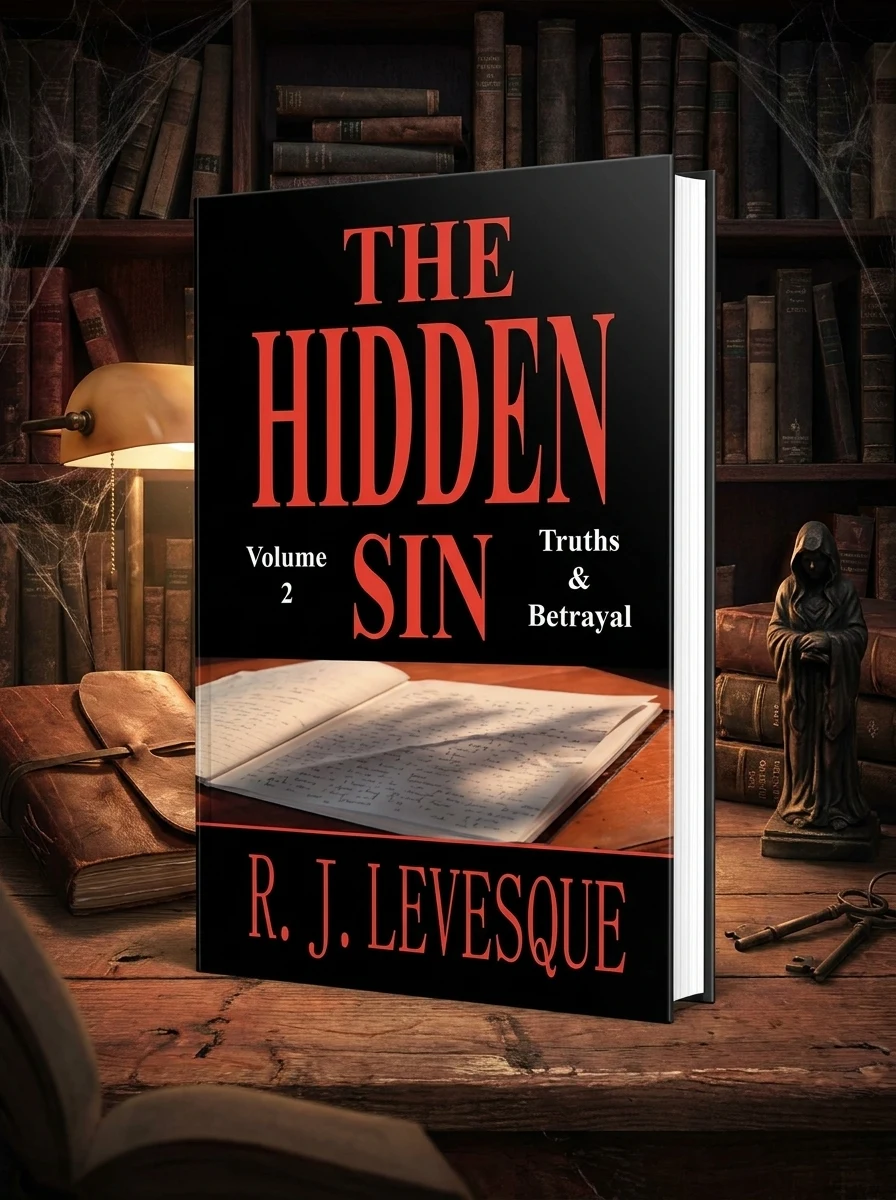

The Hidden Sin V2: Truths & Betrayal
Volume two continues the horror series focusing on abducted victims and a sin-feeding entity.
Levesque examines the aftermath of abductions in Greensburg through a supernatural lens. The narrative tracks the fate of four specific individuals taken by a shadowy predator. One victim has died while another remains injured. The antagonist exists within the shadows of ordinary people, feeding on their sins. This approach creates a sense of pervasive dread rather than isolated scares. The work fits into the broader context of American horror fiction published in the early 2010s. It appeals to fans of gothic and supernatural genres who appreciate stories about moral corruption. The book does not offer easy answers or safe havens for its characters.
Published in December 2011 by Rikky J. Levesque, this work sits within the early twenty-first century wave of independent horror publishing. It contributes to the ongoing tradition of American supernatural fiction that examines moral failings through a lens of dread and shadow.


📝 Description: The Hidden Sin V2: Truths & Betrayal
💎 Our verdict on The Hidden Sin V2: Truths & Betrayal
📖 Why choose it
Why this book is worth reading
Readers seeking immersive atmospheric horror will find this volume compelling. It appeals to those who enjoy narratives where guilt acts as a tangible threat. The story offers no safe havens, creating pervasive dread through the exploration of hidden sins. Fans of gothic and supernatural genres appreciate the focus on moral corruption rather than isolated scares. This book suits individuals interested in the psychological aftermath of abduction. It provides a grim world where secrets function as dangerous weapons. Those who prefer dark fiction with unresolved tensions will value its commitment to exposing human weakness against an unseen, sin-feeding entity.
⭐ Reader reviews
Reader rating
Levesque constructs a tale rooted in supernatural horror traditions, effectively blending gothic elements with psychological tension. The narrative tracks the fate of abducted victims while exploring themes of hidden guilt and predatory evil. By positioning the antagonist within the shadows of ordinary people, the author creates a sense of pervasive dread rather than relying on jump scares. This approach suits readers who appreciate dark fiction involving moral corruption. The work does not offer easy answers or clear resolutions, maintaining a grim tone throughout. It advances the overarching plot through the struggle against an unseen force that exploits human weakness. Fans of atmospheric horror will find this installment rewarding for its consistent exploration of sin and betrayal.