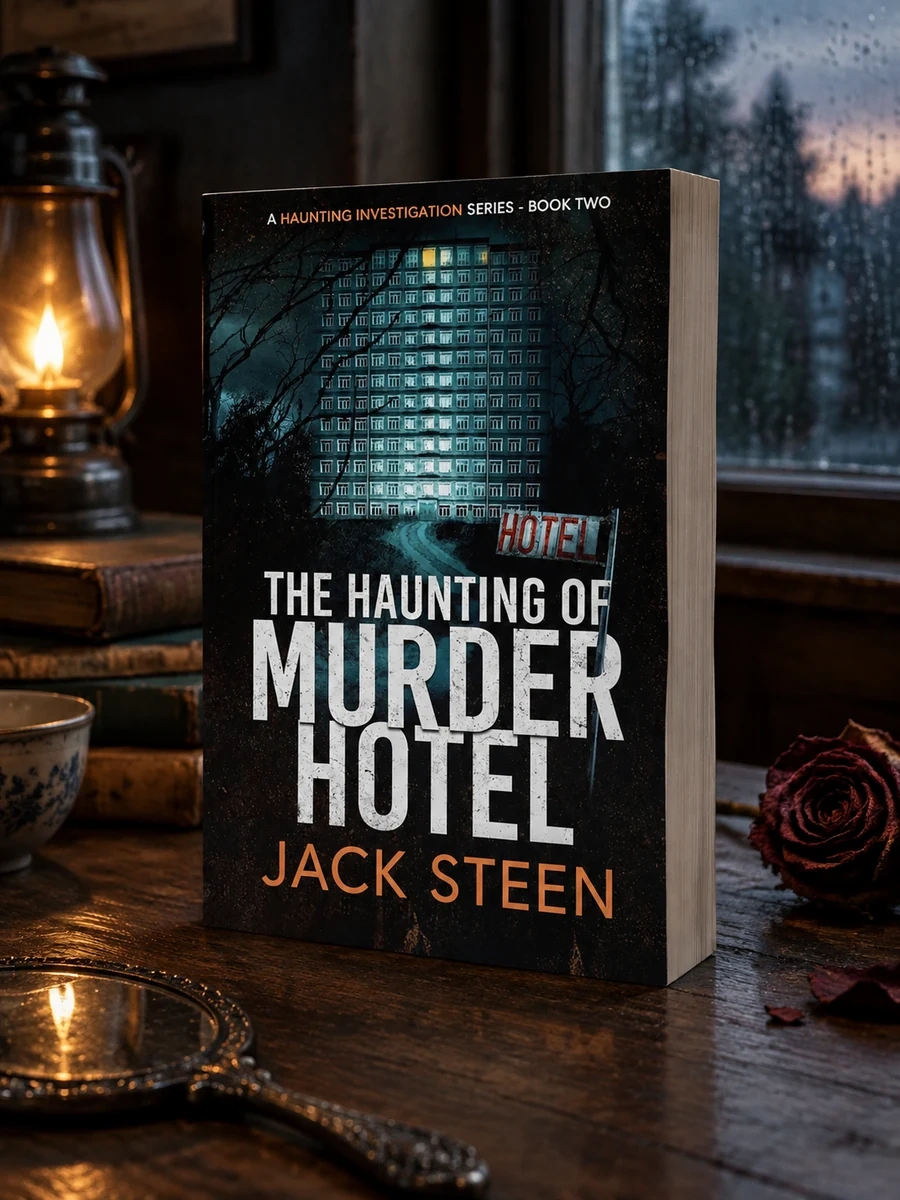
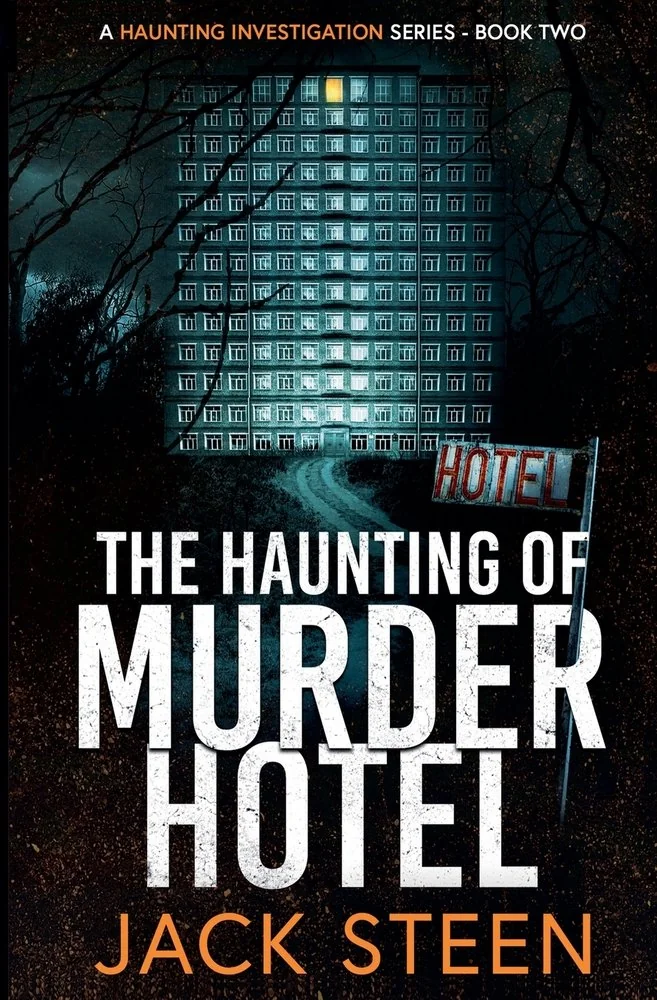
The Haunting of Murder Hotel
A parapsychologist investigates a haunted hotel linked to a prisoner's confession.
This novel centers on a team led by a skeptical researcher visiting the Brantley Hotel. Brad, currently in prison, insists the location is haunted despite his conviction for murdering his wife. The narrator joins Riley and Gabriel to test these claims. She expects to debunk the story but faces undeniable supernatural attacks. Ghosts assault her in private spaces and during a communication ritual. The narrative reveals that numerous spirits inhabit the site alongside unresolved deaths. Steen uses this setup to explore the boundary between mental illness and genuine haunting. The plot progresses through specific incidents rather than general exploration.
Published in late 2024 by Steena Holmes, this work engages with American horror traditions involving haunted hotels and asylums. It reflects contemporary interests in parapsychology and the legal system's handling of insanity pleas.


📝 Description: The Haunting of Murder Hotel
💎 Our verdict on The Haunting of Murder Hotel
📖 Why choose it
Why this book is worth reading
Readers who enjoy the intersection of psychological doubt and supernatural terror will find significant value in this narrative. The book appeals to those fascinated by the skepticism-versus-belief dynamic, offering a structured investigation rather than vague atmospheric dread. It is ideal for fans of ghost stories that challenge the protagonist's rationality through direct, undeniable encounters. Those interested in how criminal guilt intersects with apparitional experiences will appreciate the thematic depth. However, readers seeking purely academic analysis of parapsychology might find the focus on personal terror less relevant. The escalating nature of the attacks provides a compelling reason to continue, satisfying those who prefer plot-driven horror over slow-burn mystery.
⭐ Reader reviews
Reader rating
Steen effectively utilizes the haunted hotel trope to explore the fragile line between mental illness and genuine haunting. The narrative structure, built upon specific incidents rather than general exploration, creates a steady escalation of tension. The protagonist’s shift from skepticism to terror is well-motivated by undeniable supernatural attacks in private spaces. This approach suits readers who prefer concrete evidence of horror over ambiguous dread. While the premise draws on familiar traditions, the focus on the investigator's personal confrontation with the unknown adds necessary weight. It serves as a strong entry point for fans of psychological horror who enjoy seeing rationality dismantled by forces it cannot explain. The work avoids mere academic detachment, grounding its themes in visceral experience.