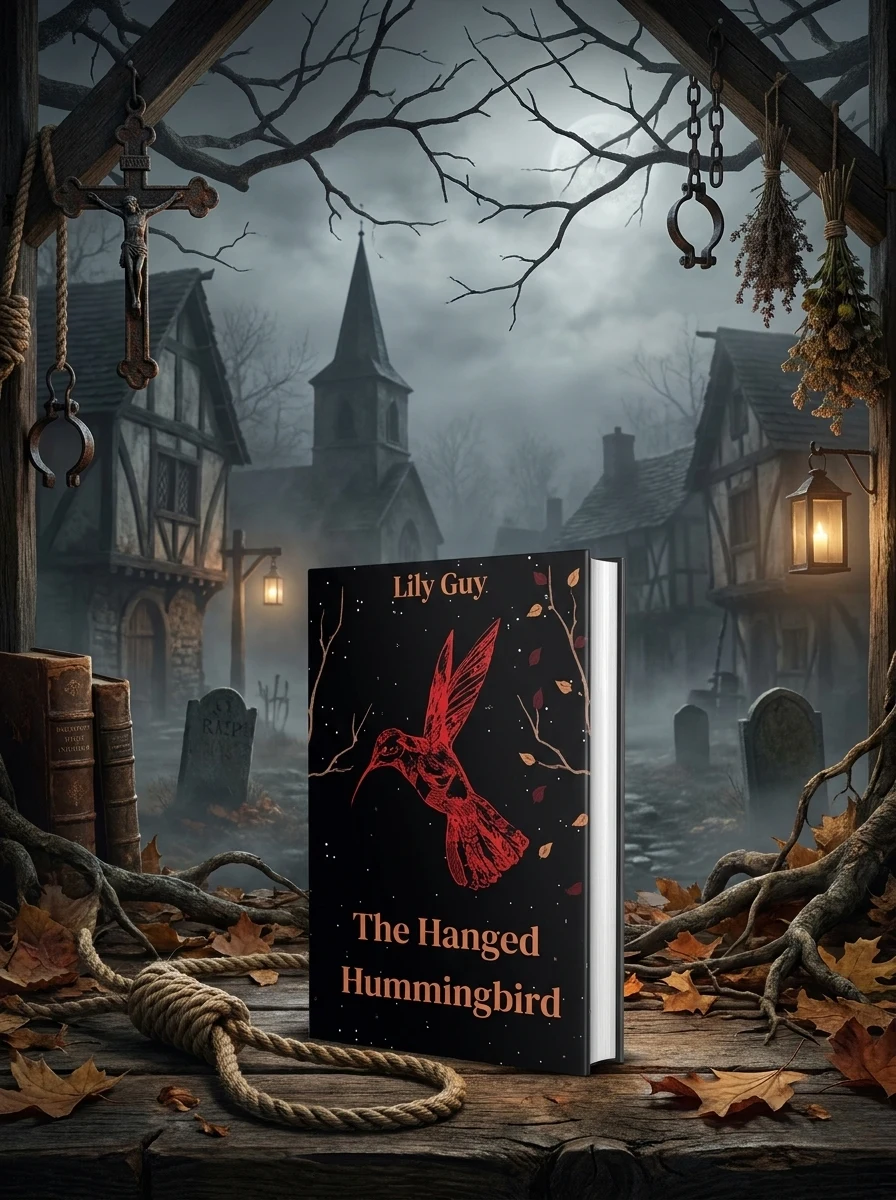
The Hanged Hummingbird
A historical horror novel about faith and persecution in 1600s England.
Guy’s narrative follows Edith in a deceptive English village during the 1600s. She relies on her religious beliefs for protection against the surrounding hostility. The community hides deep hatred behind a pleasant exterior. Witchcraft accusations are common and deadly in this period. Edith’s faith fails to shield her from the reality of her situation. The story highlights the danger of standing out in a conformist society. Guy uses this historical backdrop to explore themes of fear and control. The text examines how religious fervor can justify violence. Readers experience the tension of living under constant suspicion. The narrative does not offer easy resolutions or safe havens. It presents a stark view of 17th-century social dynamics. The author’s approach is direct and unflinching in its depiction of danger. This work appeals to fans of gothic fiction and historical horror. It avoids modern tropes to maintain its period authenticity. Guy creates a sense of dread through the contrast between appearance and reality.
The story is set in an English village during the 1600s. This period saw deep hatred sweeping across the country regarding witchcraft. The narrative draws on traditions of gothic and supernatural fiction to explore these historical fears.


📝 Description: The Hanged Hummingbird
💎 Our verdict on The Hanged Hummingbird
📖 Why choose it
Why this book is worth reading
Readers who appreciate unflinching explorations of psychological dread and historical brutality will find this work compelling. It appeals to those interested in gothic fiction where societal conformity masks deep-seated hatred and violence. The book offers a stark examination of how religious fervor can justify cruelty, making it suitable for fans of dark fantasy and horror who seek period authenticity over modern tropes. Those drawn to narratives about isolation, persecution, and the failure of faith as a protective shield will gain insight into the terrifying social dynamics of the past. It provides a tense, atmospheric experience that challenges perceptions of safety and community in hostile environments.
⭐ Reader reviews
Reader rating
Guy delivers a direct and unflinching narrative that effectively utilizes the contrast between a pleasant village exterior and hidden horrors to generate dread. The work succeeds in examining how religious conviction can mask violent truths, creating a palpable sense of tension through the constant threat of witchcraft accusations. It avoids easy resolutions, offering instead a stark view of 17th-century social dynamics where standing out is dangerous. This approach suits readers who prefer historical horror and gothic traditions over contemporary settings or lighthearted tales. The author’s commitment to period authenticity enhances the chilling atmosphere, making it an ideal choice for those interested in the psychological weight of living under suspicion and the brutal realities of communal persecution.
You might also like
See more →







Have a question about this item?
Ask about the edition, condition, delivery or anything else — we reply by email or phone, usually within a day.
