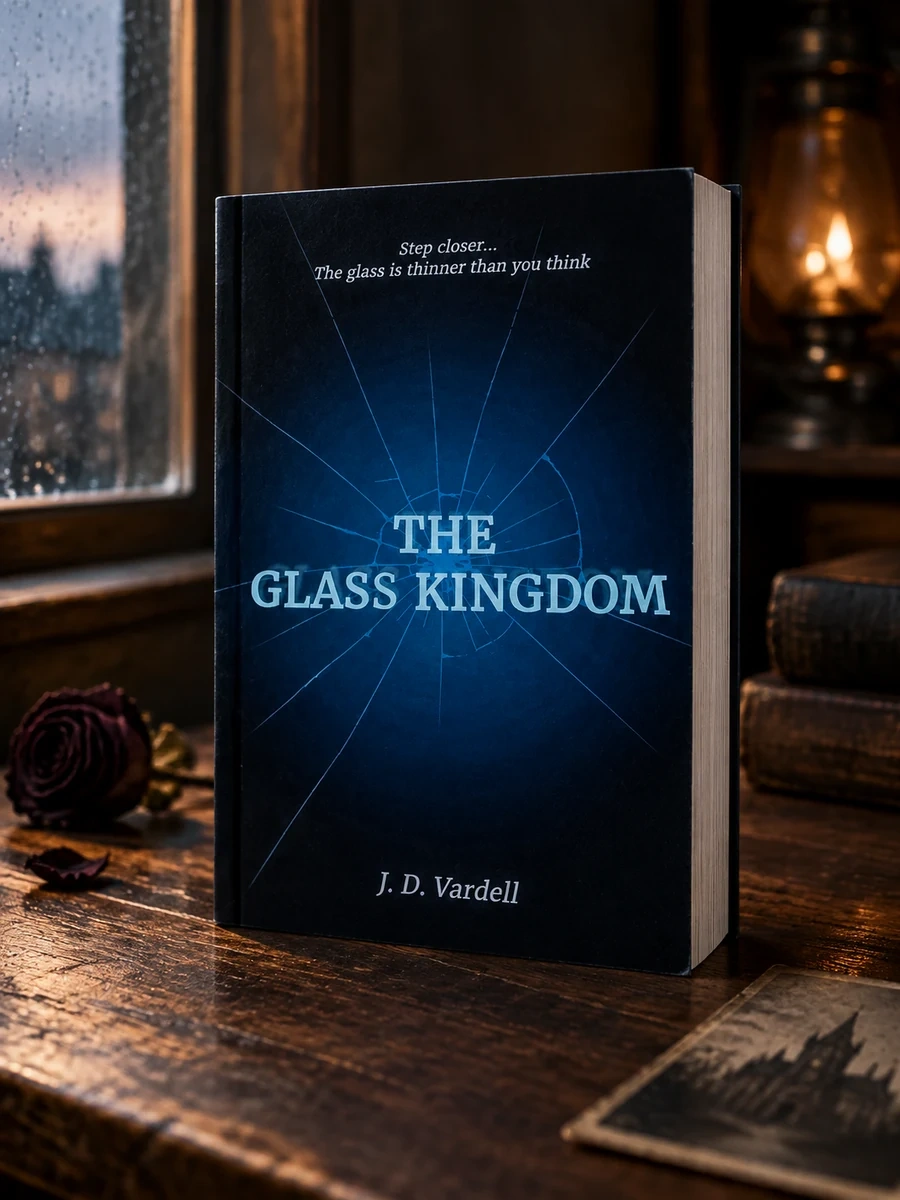
The Glass Kingdom
A young art historian inherits a haunted Venetian palazzo from a distant relative.
Beth Jones expects dust and silence when she arrives at her inherited palazzo. She finds a voice instead, speaking from behind glass. This figure sees her in ways no living person does. The narrative follows her obsession with the mirror as reality warps around her. Vardell uses the setting to explore isolation and the weight of history. The story avoids traditional horror tropes like jump scares or gore. It focuses on psychological tension and atmospheric dread. Beth’s professional background allows for detailed descriptions of the palazzo’s decay. The relationship between the protagonist and the entity is central to the plot. Their connection defies physical laws, creating a unique dynamic. The ending remains ambiguous, leaving interpretation open to the reader.
The story is set in Venice, Italy, drawing on its history of abandoned palazzos and artistic heritage. It engages with gothic fiction traditions through themes of isolation and supernatural entrapment. The narrative reflects on the persistence of memory within historic architecture.


📝 Description: The Glass Kingdom
💎 Our verdict on The Glass Kingdom
📖 Why choose it
Why this book is worth reading
Readers who appreciate slow-burn psychological horror and atmospheric dread will find this book compelling. It offers a unique exploration of grief, loneliness, and identity through the lens of an art historian inheriting a decaying Venetian palazzo. The narrative avoids traditional jump scares or gore, focusing instead on the uncanny relationship between Beth Jones and a trapped figure behind glass. Those interested in how isolation manifests supernaturally and how history weighs upon the present will gain from its ambiguous, thought-provoking conclusion. It is ideal for those who enjoy detailed descriptions of decay and architectural history intertwined with supernatural elements.
⭐ Reader reviews
Reader rating
Vardell crafts a tense, atmospheric narrative where the palazzo’s decay mirrors Beth Jones's internal state. The book excels in building claustrophobia through silence and the uncanny presence behind glass. Its strength lies in the psychological tension and the blurred line between reality and illusion. However, readers seeking fast-paced action or clear resolutions may feel frustrated by the ambiguous ending. It is best suited for fans of gothic fiction who value mood over plot mechanics. The professional perspective adds depth to the descriptions of the setting, making the supernatural elements feel grounded yet terrifying.
📖 Read on the blog
🏛 Books from this publisher Bod - Books on Demand





You might also like
See more →


Have a question about this item?
Ask about the edition, condition, delivery or anything else — we reply by email or phone, usually within a day.
