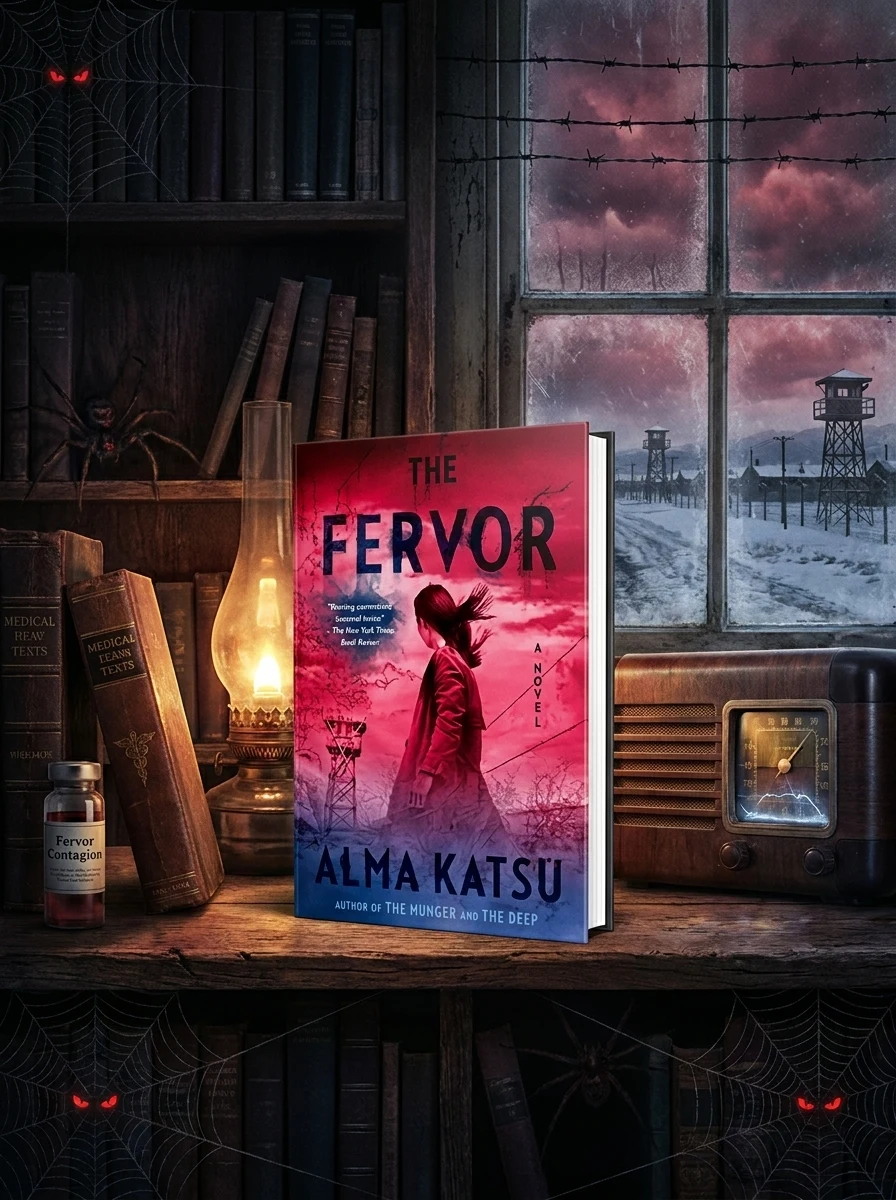

The Fervor
A 1944 internment camp story where a fever turns captives into monsters.
Katsu constructs a tale centered on Meiko Briggs, who navigates an Idaho internment camp while a deadly fervor transforms others into aggressors. The narrative highlights the threat of demonic spiders and the escalating violence from doctors who seize control. Meiko must locate her escaped daughter, Aiko, while uncovering the otherworldly roots of the disease. The story examines how fear leads to dehumanization, asking who gets to remain human when survival is at stake. It blends historical settings with supernatural horror elements to create a tense atmosphere.
Set in 1944 during World War II, the book explores the American internment experience. It draws on historical fears of contagion and the demonization of specific groups. The narrative reflects mid-twentieth century anxieties about identity and control within confined spaces.


📝 Description: The Fervor
💎 Our verdict on The Fervor
📖 Why choose it
Why this book is worth reading
Readers seeking a tense blend of historical fiction and supernatural horror will find this book compelling. It offers a unique perspective on the Japanese American internment experience through a genre lens, examining how fear leads to dehumanization. The narrative is ideal for those who enjoy psychological tension and atmospheric dread over light entertainment. By focusing on the terrifying transformation of ordinary people into threats, it provides a chilling exploration of survival and identity. Fans of literary historical horror will appreciate the intense atmosphere and the way the story asks who remains human when survival is at stake, making it a potent choice for audiences drawn to dark fantasy and true crime-adjacent themes.
⭐ Reader reviews
Reader rating
Alma Katsu delivers a gripping tale where a mysterious fever transforms captives into aggressive monsters driven by barbarity. The integration of nearly invisible demonic spiders adds a visceral layer to the escalating violence, particularly as doctors seize control with increasing brutality. The narrative effectively examines the danger of demonization, asking who gets to remain human when survival is at stake. While the focus on intense psychological tension may not suit those seeking light entertainment, it appeals strongly to readers of historical horror and supernatural fiction. The story’s power lies in its examination of societal collapse and the specific experiences of internees amidst otherworldly threats.
📖 Read on the blog
✍️ More books by this author Alma Katsu







🏛 Books from this publisher G.P. Putnam's Sons




You might also like
See more →




Have a question about this item?
Ask about the edition, condition, delivery or anything else — we reply by email or phone, usually within a day.
