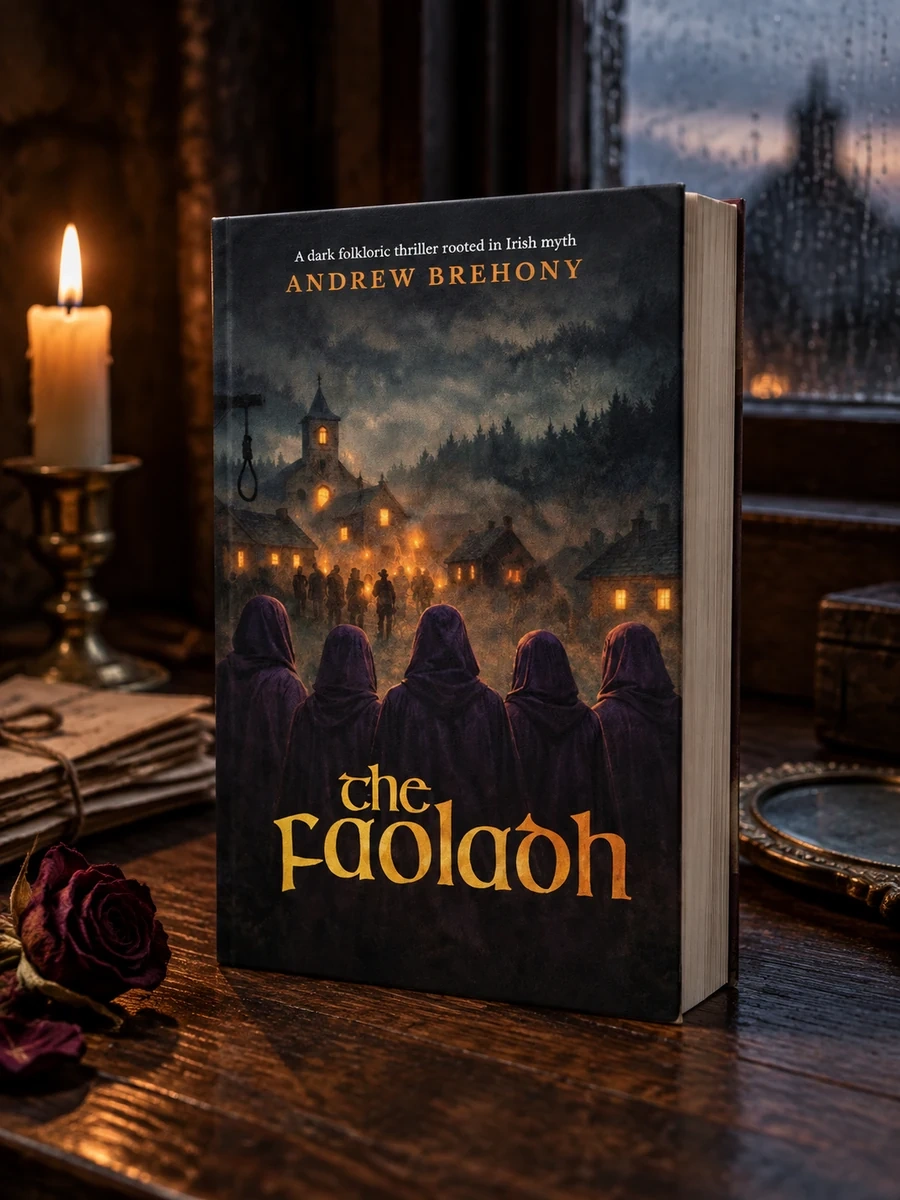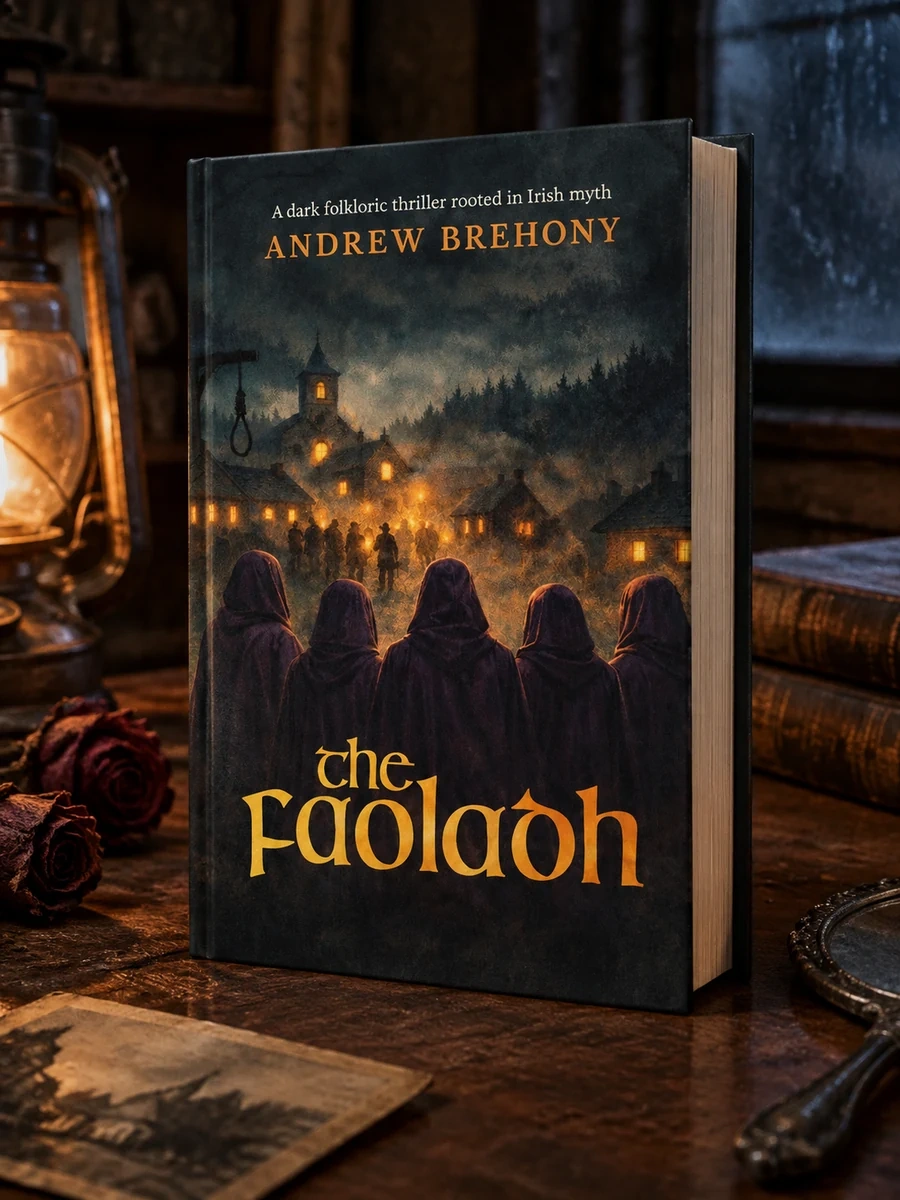
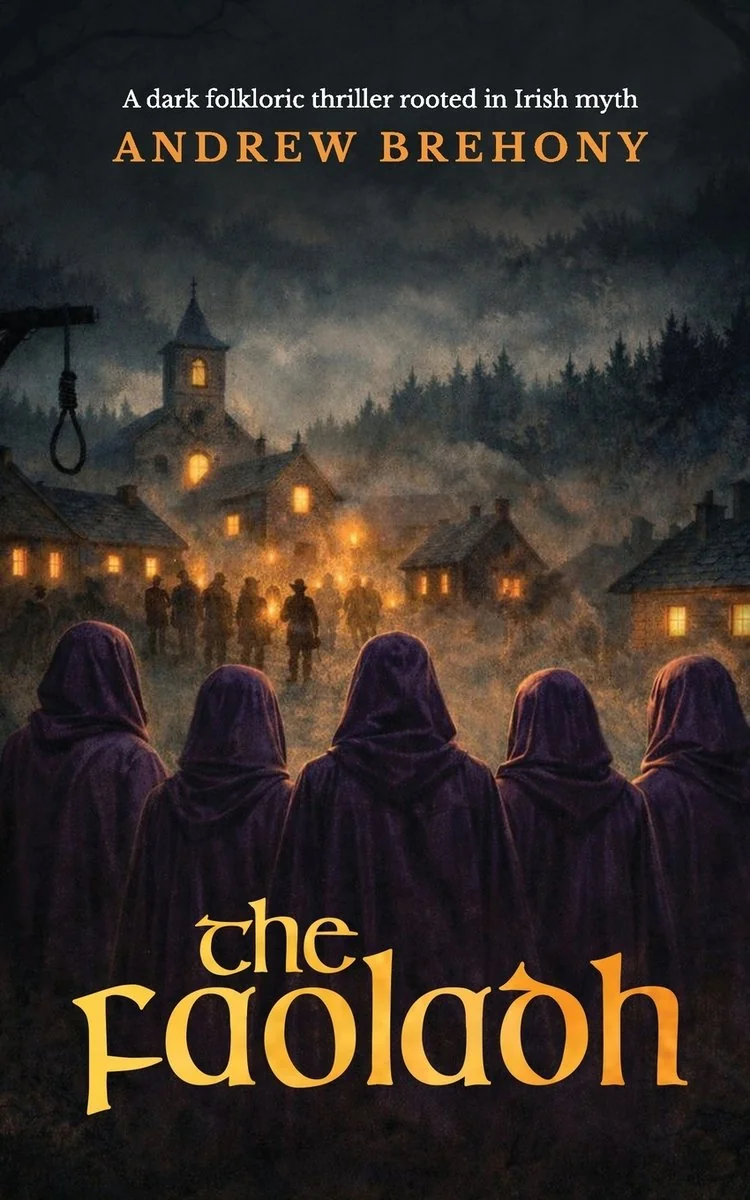
The Faoladh
A group trapped in a village where daily votes determine survival against a nightly killer.
The novel explores the breakdown of social contracts when individuals are forced to participate in their own oppression. Brehony uses the setting of Ballymoss to demonstrate how quickly trust dissolves when people believe they must justify their actions to survive. The narrative does not rely on complex lore but focuses on the immediate psychological impact of enforced conformity. Readers will witness how ordinary people become complicit in violence when given a system that validates their fears. The story emphasizes the fragility of relationships when tested by an unyielding and incomprehensible authority structure.
The text is rooted in the tradition of psychological folk horror, a genre that examines rural isolation and ancient customs. It draws on the mechanics of the parlour game Werewolf to structure its narrative tension. The work reflects contemporary anxieties about community enforcement and the erosion of personal autonomy within closed social groups.


📝 Description: The Faoladh
💎 Our verdict on The Faoladh
📖 Why choose it
Why this book is worth reading
Readers who enjoy psychological thrillers that blend supernatural elements with social commentary on mob mentality and isolation will find this novel compelling. It offers a stark examination of how paranoia fractures community bonds under arbitrary authority, making it ideal for those interested in the fragility of human relationships when tested by unyielding structures. Those who prefer horror driven by human behavior rather than external monsters alone will appreciate the nuanced exploration of trust dissolving under oppression. The book appeals to fans of stories where ordinary people become complicit in violence due to fear, providing a tense, character-driven experience that questions whether survival requires obedience or resistance.
⭐ Reader reviews
Reader rating
Andrew Brehony delivers a tense examination of social contract breakdown through the lens of folk horror. By trapping characters in Ballymoss and enforcing daily votes for survival, he effectively demonstrates how quickly trust erodes under pressure. The narrative avoids complex lore, focusing instead on immediate psychological impacts and the transformation of intimacy into leverage. This approach creates a claustrophobic atmosphere where silence becomes dangerous and accusations serve as weapons. It suits readers who appreciate slow-burn dread over jump scares. While it lacks traditional moral resolutions, the strength lies in its realistic portrayal of how fear validates violence. The work is a sharp critique of conformity, offering insight into the human capacity for complicity when faced with incomprehensible authority.