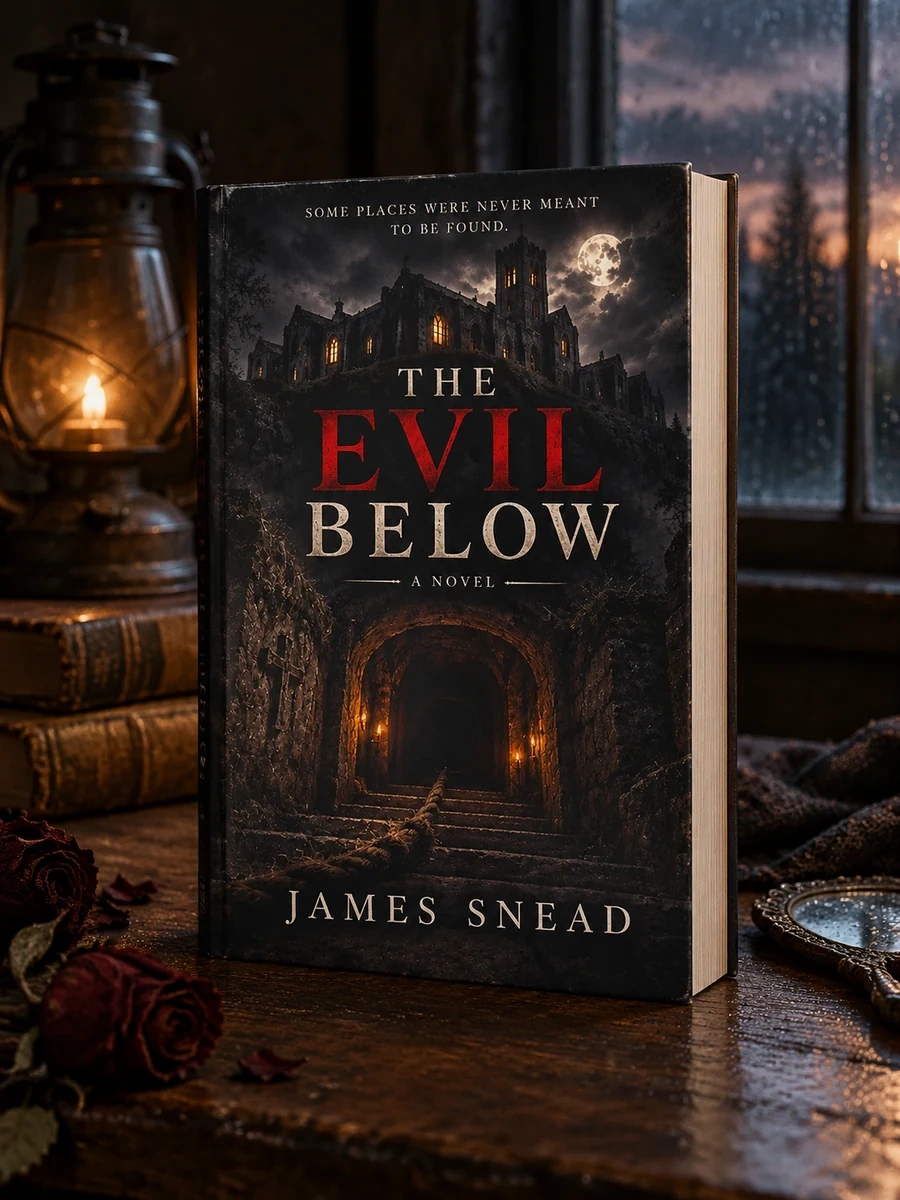
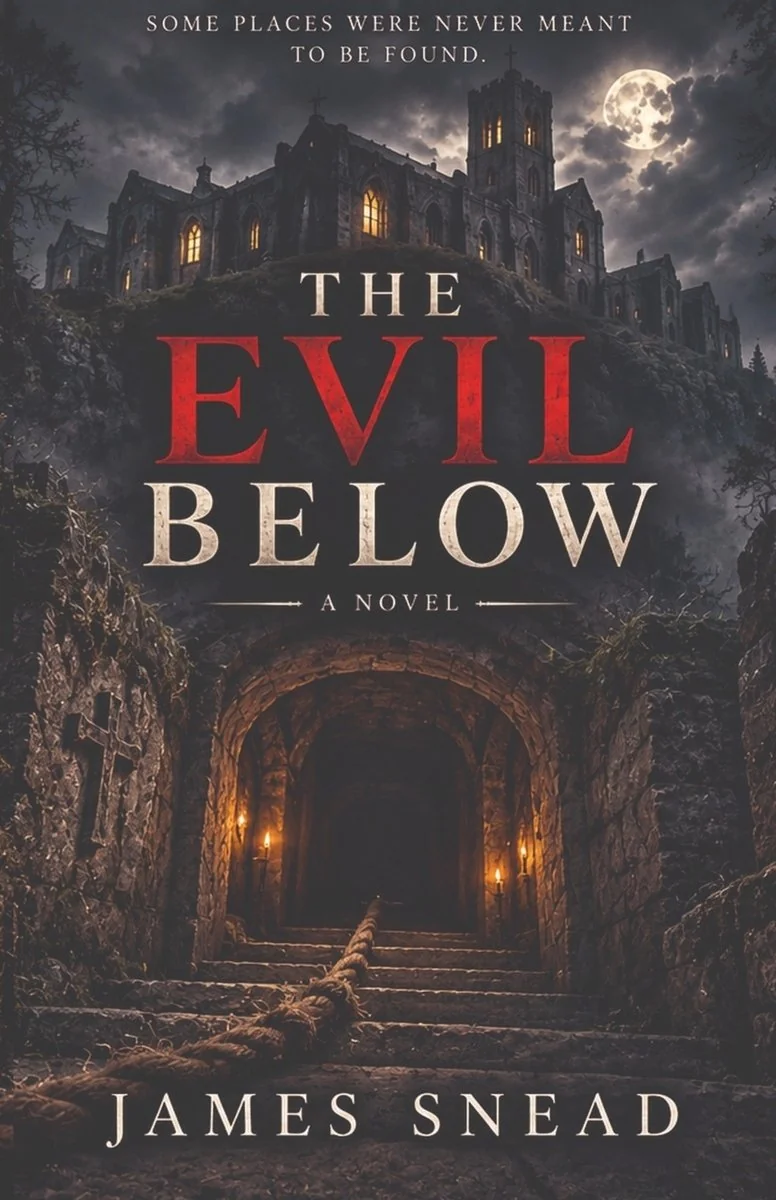
The Evil Below
A monk uncovers a hidden entity in an abbey that learns from human observation.
The narrative follows Brother Gabriel Hale as he investigates the true reason for St. Bartholomew's Abbey construction. He discovers that centuries of prayer and service mask a ritualistic containment of a subterranean presence. This entity mimics voices and exploits grief, requiring the monks to follow obscure rules they barely remember. Gabriel must decipher the abbey's history to protect his fellow brothers while avoiding actions that empower the thing below. The plot relies on atmospheric dread rather than gore, focusing on the psychological toll of isolation and the burden of secret knowledge.
The story is set within the context of an isolated abbey community that has survived plague, war, famine, and fire. It draws on the tradition of monastic life, emphasizing prayer, service, and the preservation of ancient texts. The narrative reflects on how such communities maintain their identity through strict rituals and the suppression of uncomfortable truths about their origins.


📝 Description: The Evil Below
💎 Our verdict on The Evil Below
📖 Why choose it
Why this book is worth reading
Readers who appreciate atmospheric horror and gothic fiction will find deep satisfaction in this narrative, which prioritizes psychological tension over visceral gore. The book offers a compelling exploration of isolation, faith, and the burden of forbidden knowledge, appealing to those who enjoy slow-burn plots driven by internal struggle rather than external action. It is ideal for individuals fascinated by the intersection of religious duty and cosmic dread, as well as those who appreciate stories where memory and tradition mask terrifying truths. By focusing on the psychological toll of secrecy and mimicry, the text provides a haunting examination of human vulnerability against an incomprehensible presence.
⭐ Reader reviews
Reader rating
James Snead crafts a masterfully tense atmosphere in The Evil Below, relying on subtle dread rather than shock value to unsettle the reader. The narrative excels in depicting the psychological erosion caused by isolation and the weight of unbroken traditions. By centering on Brother Gabriel’s internal struggle against an entity that learns through observation, Snead creates a claustrophobic environment where every act of understanding becomes a potential danger. This approach suits readers who enjoy gothic fiction with a focus on ancient secrets and religious duty. However, those seeking fast-paced action or clear resolutions may find the slow burn unsettling. The book is a strong recommendation for fans of psychological horror who value mood and thematic depth over plot resolution.
You might also like
See more →







Have a question about this item?
Ask about the edition, condition, delivery or anything else — we reply by email or phone, usually within a day.
