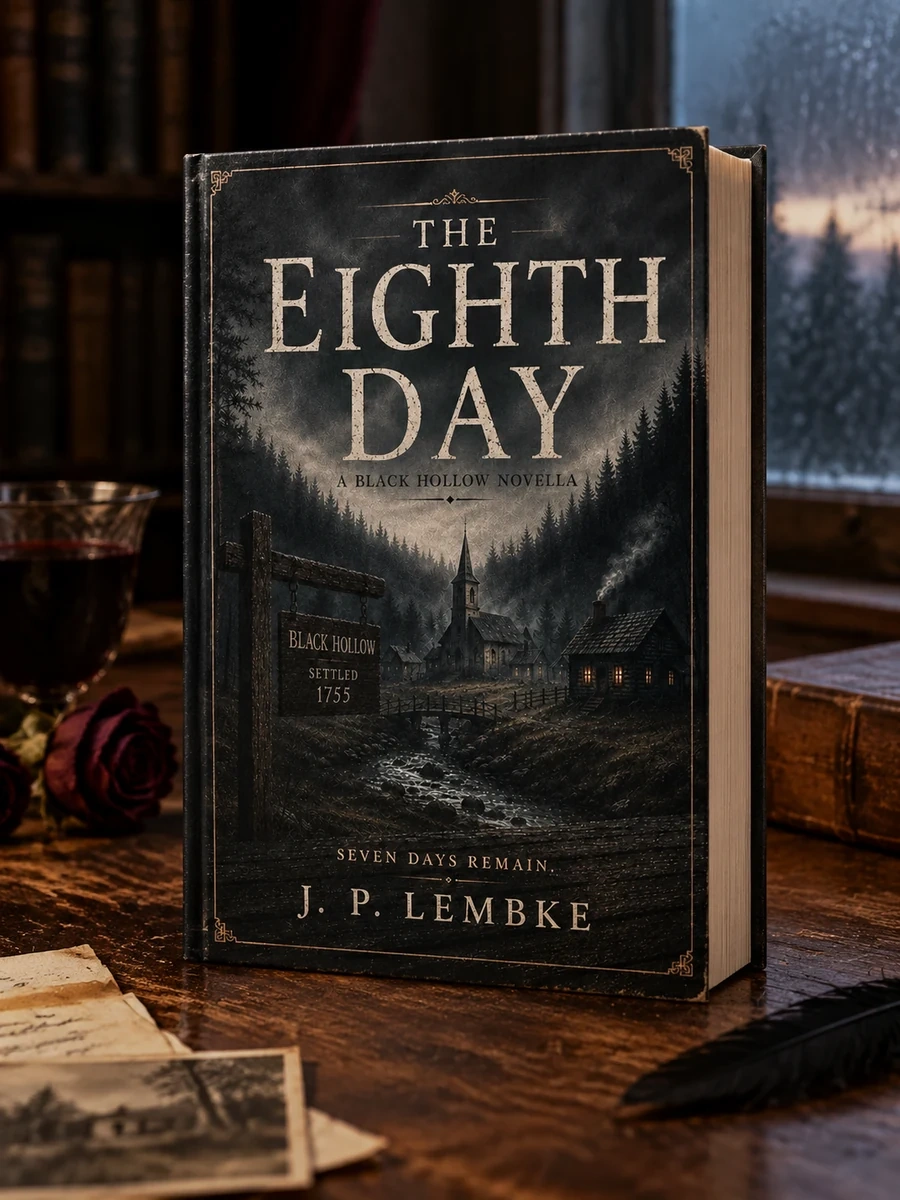
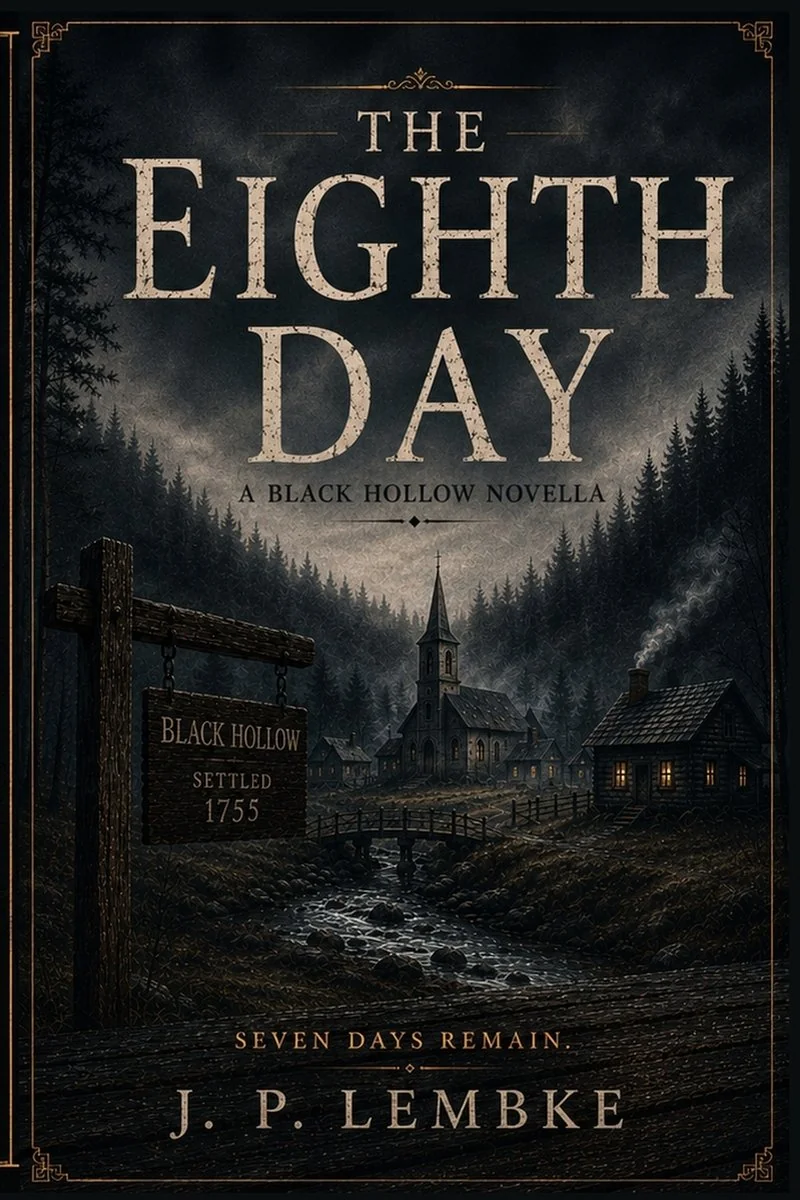
The Eighth Day: A Black Hollow Novella
A surveyor faces reality failing in a frontier town during 1787.
Jay P. Lembke writes this novella about surveyor Oliver Hales entering Black Hollow in 1787. The settlement prepares for the Eighth Day while records disappear and maps become impossible. Memory shifts create uncertainty for everyone present. The story examines how people cope when their understanding of the world dissolves. It draws on historical frontier settings to ground its supernatural elements. The tone remains chilling and serious throughout. Readers interested in atmospheric horror and historical fiction will find this work compelling. Those preferring explicit gore or rapid plot progression might prefer other titles. The novella offers a focused look at psychological unraveling within a specific time period.
The story is set in 1787, placing it firmly in the late eighteenth century. Black Hollow represents a frontier settlement typical of American historical expansion periods. The narrative draws on the tension between established order and the chaotic unknown inherent in frontier life.


📝 Description: The Eighth Day: A Black Hollow Novella
💎 Our verdict on The Eighth Day: A Black Hollow Novella
📖 Why choose it
Why this book is worth reading
Readers seeking atmospheric horror and historical fiction with supernatural undertones will find this work compelling. It offers a focused look at psychological unraveling within a specific time period, appealing to those who appreciate slow-burn dread over rapid plot progression. The novella format allows for a concentrated exploration of unsettling concepts without unnecessary digression. Fans of gothic fiction will find the setting and mood consistent with genre traditions. Those preferring explicit gore might prefer other titles.
⭐ Reader reviews
Reader rating
Lembke constructs a chilling atmosphere where the past becomes unstable, grounding supernatural elements in historical frontier life. The narrative does not rely on jump scares but rather on the creeping realization that the world is fundamentally broken. Oliver Hales serves as the lens for this collapse of certainty. The text focuses on the psychological impact of the unknown on individuals within a structured society. While it may not appeal to those seeking fast-paced action or modern horror tropes, it suits readers who appreciate slow-burn psychological dread and historical fiction with supernatural undertones. This approach aligns with classic horror traditions that emphasize the erosion of logical order.
You might also like
See more →







Have a question about this item?
Ask about the edition, condition, delivery or anything else — we reply by email or phone, usually within a day.
