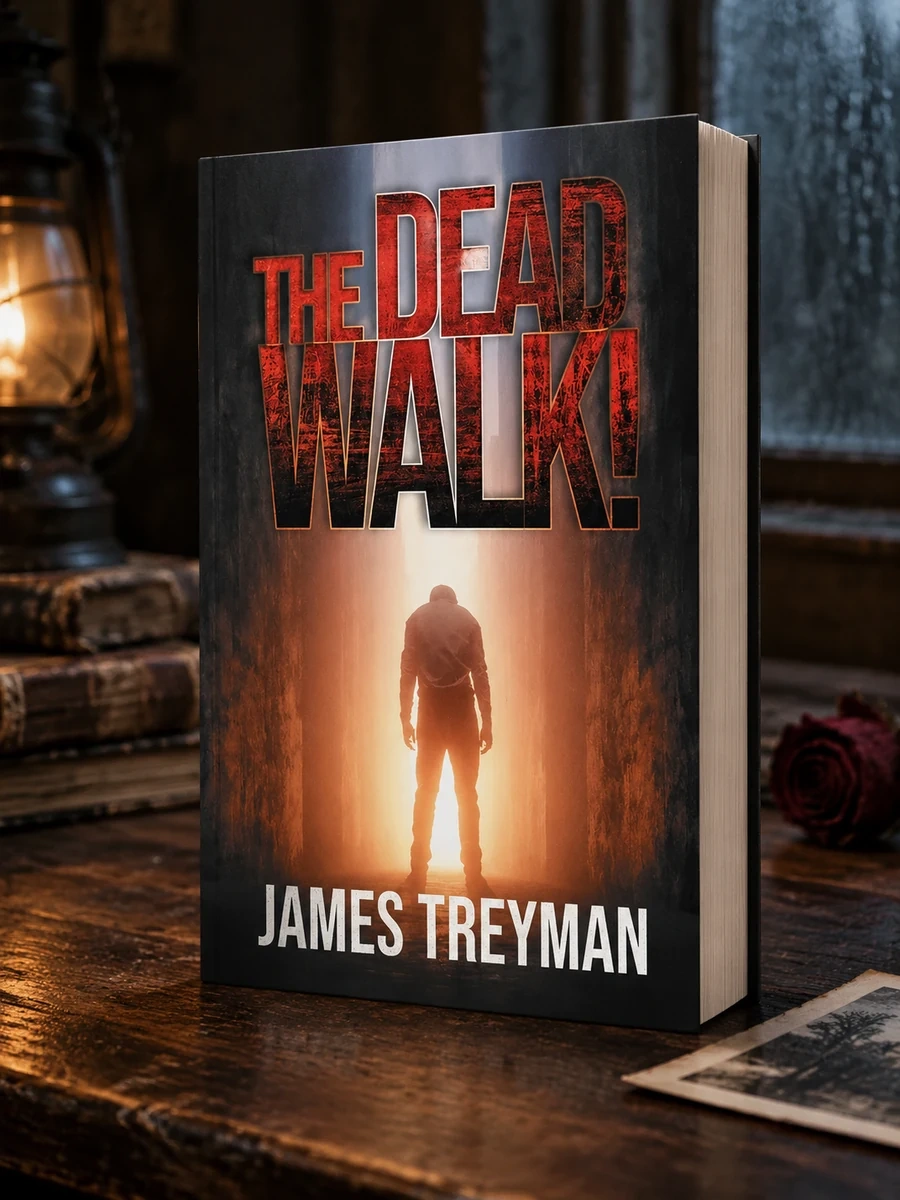
The Dead Walk!
A CDC employee races to stop a zombie outbreak caused by a leaked virus.
The narrative centers on Robert Babcock, a Native American CDC worker who must guide survivors to Atlanta. He aims to finish an antidote for the Mutated Rabies Strain Virus fused with Necrotizing Fasciitis. The story explores the collapse of government security and the biological horror of the dead feeding on the living. Treyman uses medical terminology to ground the supernatural elements in scientific plausibility. The plot tracks the group’s movement from the initial containment failure to their final stand at the CDC facility.
This work sits within the modern zombie apocalypse tradition, blending medical thriller elements with gothic horror. It reflects contemporary anxieties about government security and biological warfare. The setting relies on real institutions like the CDC in Atlanta to ground the fictional catastrophe.


📝 Description: The Dead Walk!
💎 Our verdict on The Dead Walk!
📖 Why choose it
Why this book is worth reading
Readers who appreciate the intersection of virology and horror will find this narrative compelling, as it grounds the zombie trope in technical medical terminology rather than mysticism. Those interested in stories about institutional failure and the breakdown of government security during a biological catastrophe will engage with the plot’s focus on systemic collapse. The book is ideal for audiences who prefer scientific explanations for undead phenomena and enjoy tense survival stories where protagonists must navigate both physical threats and ethical dilemmas. It offers a rigorous look at how human error can trigger global disaster, appealing to fans of logical, cause-and-effect horror narratives.
⭐ Reader reviews
Reader rating
Treyman delivers a tense survival story that effectively merges medical precision with classic horror tropes. By utilizing his virology background, he creates a believable framework for the Mutated Rabies Strain Virus, grounding the supernatural elements in scientific plausibility. The narrative structure, tracking the journey from containment failure to final stand, maintains high stakes without resorting to romanticizing the apocalypse. While it lacks pure fantasy elements and offers no non-violent resolutions, its strength lies in its technical detail and exploration of biological horror. It suits readers seeking a logical, institution-focused approach to the zombie genre.
📖 Read on the blog
🏛 Books from this publisher Litprime Solutions


You might also like
See more →
Have a question about this item?
Ask about the edition, condition, delivery or anything else — we reply by email or phone, usually within a day.
