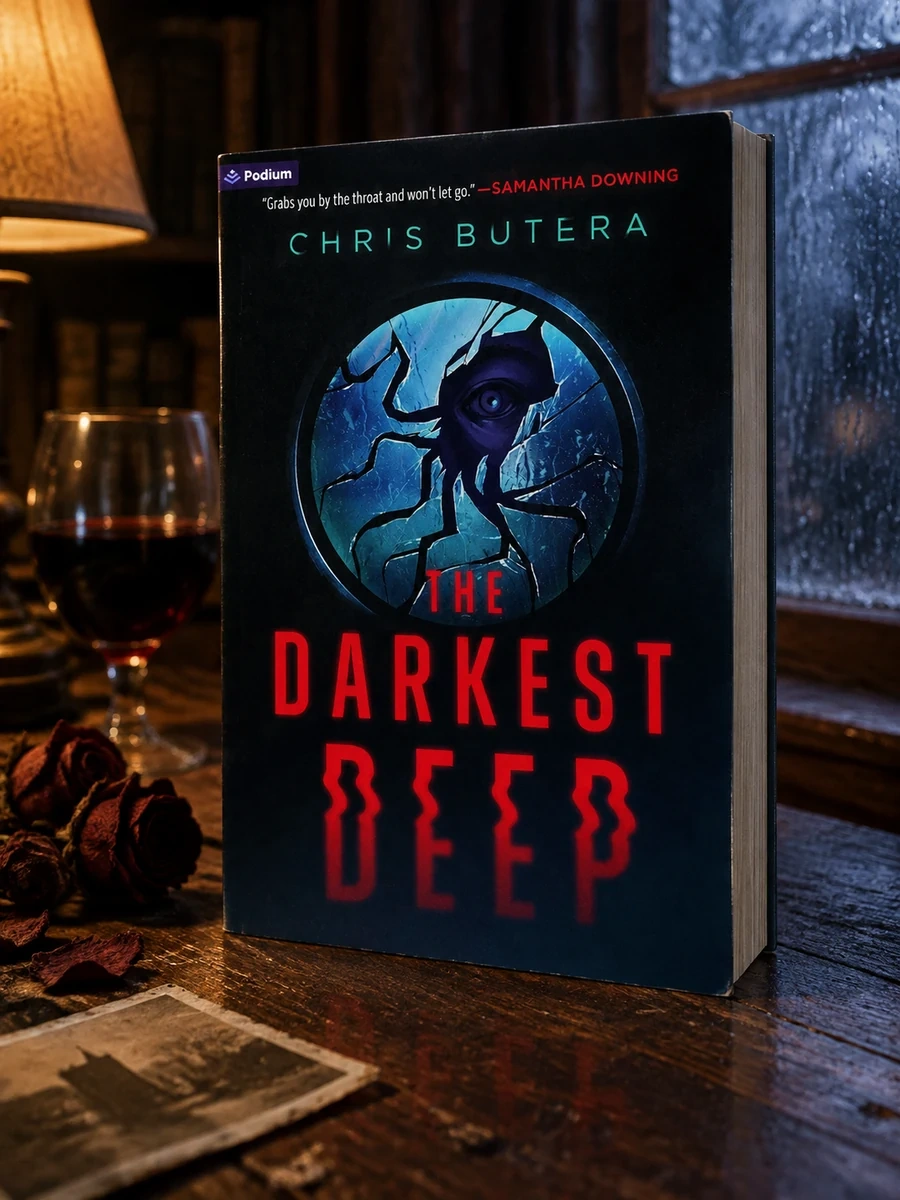
The Darkest Deep
A scavenger trapped in a submerged tunnel fights for air and sanity against a hidden hunter.
This narrative examines the psychological unraveling of a man isolated in a failed engineering project. The plot centers on the physical limitations of oxygen supply and the mental toll of confinement. Butera constructs a scenario where the protagonist must balance logical problem-solving with the erosion of his own mind. The tension arises from the dual threat of suffocation and an unknown pursuer within the rusting infrastructure. This approach highlights the fragility of human perception when stripped of social context and light. The story does not rely on supernatural elements but rather on the terror of isolation and the breakdown of rational thought under duress.
The book engages with modern anxieties regarding technological hubris and infrastructure failure. It references the Transatlantic Train Tunnel, a project meant to link New York and London that ended in bankruptcy and lawsuits. This setting reflects contemporary interests in abandoned industrial spaces and the consequences of grand ambitions gone wrong.


📝 Description: The Darkest Deep
💎 Our verdict on The Darkest Deep
📖 Why choose it
Why this book is worth reading
Readers who crave intense, isolated thrillers will find immense value in this narrative. The book offers a gripping examination of psychological unraveling within a confined setting, appealing to those who enjoy survival stories where the environment itself acts as a primary antagonist. It is ideal for audiences fascinated by the erosion of sanity under extreme duress, particularly when balanced against logical problem-solving. Fans of dark fantasy and psychological horror will appreciate the focus on internal demons alongside physical threats. However, it may not suit those seeking expansive world-building or historical fiction, as the scope remains tightly focused on immediate survival in the deep.
⭐ Reader reviews
Reader rating
Butera constructs a tense scenario where the protagonist faces dual threats: suffocation and an unknown pursuer within rusting infrastructure. The narrative effectively highlights the breakdown of rational thought under duress, making the environment a formidable antagonist. This approach suits readers who enjoy psychological horror that relies on isolation rather than supernatural spectacle. The story examines the mental toll of confinement with precision, forcing the character to balance logic against eroding sanity. It is a compelling entry for fans of claustrophobic fiction who appreciate the fragility of human perception when stripped of light and social context.
📖 Read on the blog
🏛 Books from this publisher Podium Publishing




You might also like
See more →


Have a question about this item?
Ask about the edition, condition, delivery or anything else — we reply by email or phone, usually within a day.
