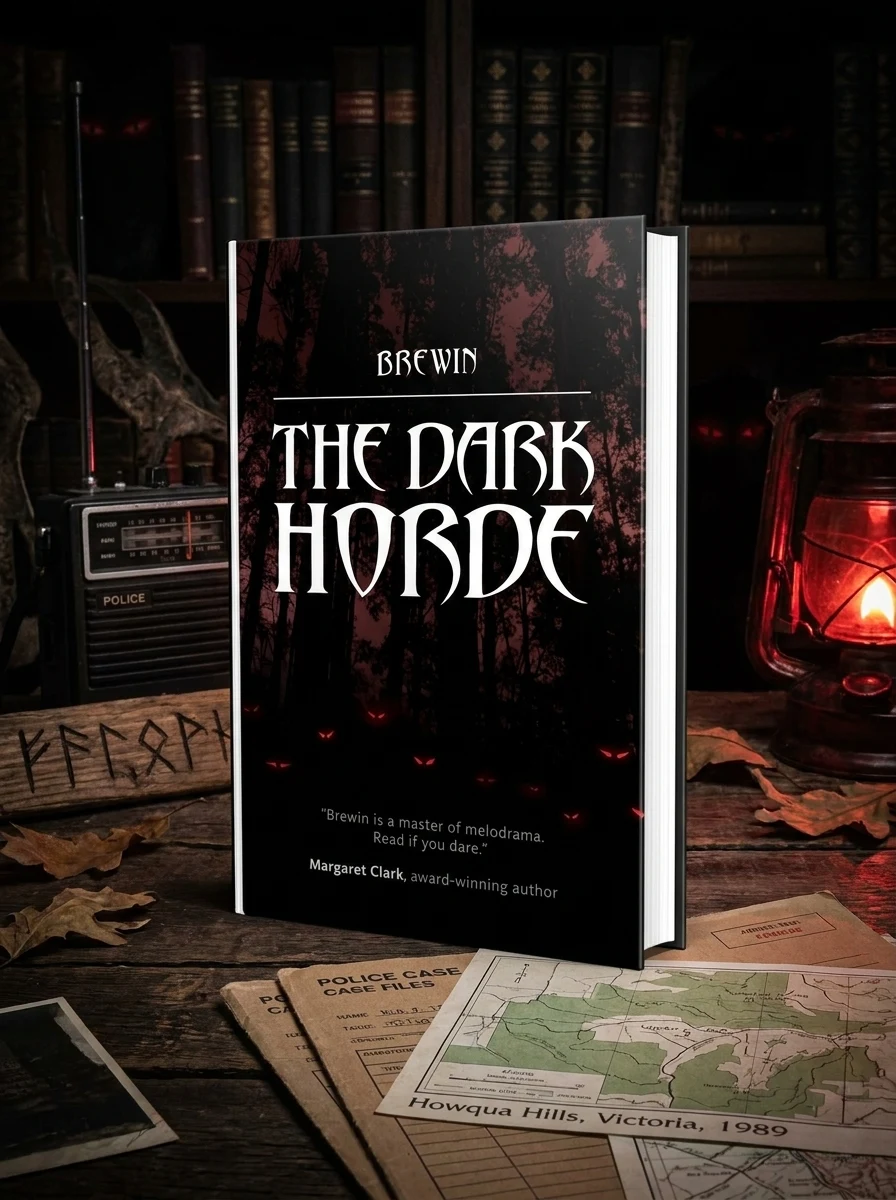
The Dark Horde
A police chief battles an ancient evil in 1989 rural Australia.
The narrative follows Brian Derwent as he attempts to maintain order in Howqua Hills while his personal world collapses. The setting is a specific time and place where the mundane clashes with the monstrous. Derwent faces challenges that standard policing cannot resolve, forcing him to confront forces that are neither stoppable nor comprehensible. Brewin writes with a focus on the psychological toll of such an investigation. The story does not offer easy answers or clear victories against the dark horde. It remains grounded in the reality of police work even as the supernatural encroaches. Readers interested in the genre will find a consistent tone throughout the pages.
The book is set in rural Victoria, Australia, during 1989. It draws on the tradition of Australian gothic fiction and police procedurals. The narrative reflects the isolation of country towns when facing unexplained phenomena. Published by Ignis, it sits within the broader context of late twentieth-century horror literature.


📝 Description: The Dark Horde
💎 Our verdict on The Dark Horde
📖 Why choose it
Why this book is worth reading
Readers who appreciate the visceral tension between bureaucratic procedure and supernatural chaos will find this narrative compelling. It offers a grounded perspective on cosmic horror, focusing on the psychological erosion of a protagonist forced to face the incomprehensible within the confines of standard policing protocols. The book suits those who prefer atmospheric dread over jump scares, providing a consistent tone that explores the limits of human understanding when confronted by ancient, unstoppable evils. It is ideal for fans of dark fiction who enjoy seeing mundane realities clash with paranormal threats without offering easy resolutions or clear victories.
⭐ Reader reviews
Reader rating
Brewin effectively constructs an atmosphere of suffocating dread by anchoring the supernatural in the rigid framework of police work. The narrative succeeds in depicting the psychological toll on Chief Brian Derwent, making the horror feel personal and inevitable rather than abstract. By refusing to provide easy answers or clear victories, the text maintains a relentless sense of doom that aligns with its cosmic themes. This approach appeals strongly to readers who value procedural realism blended with occult elements. The consistent tone ensures that the encroachment of the monstrous feels earned and terrifying, making it a solid choice for enthusiasts of atmospheric horror who dislike conventional happy endings or lighthearted fare.
You might also like
See more →







Have a question about this item?
Ask about the edition, condition, delivery or anything else — we reply by email or phone, usually within a day.
