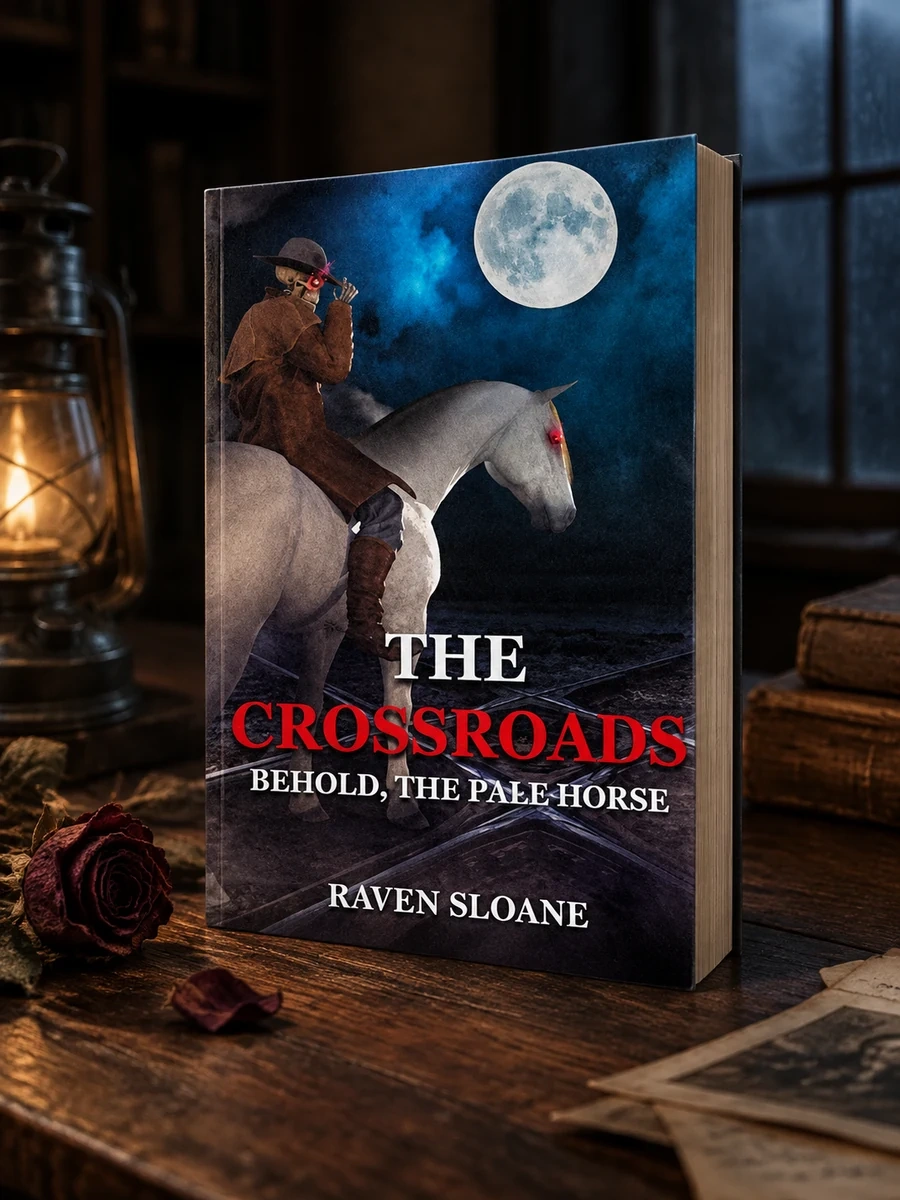

The Crossroads: Behold, The Pale Horse
Thirteen dark short stories exploring choice, fate, and supernatural judgment.
The anthology centers on the moment of decision where souls are judged by internal voices. Sloane uses the imagery of a devil and an angel to represent conflicting desires. The text contrasts the ease of clear choices with the difficulty of decisions made in darkness. It asks readers to weigh the cost of their actions against the uncertainty of destiny. The stories do not offer easy answers but instead present scenarios where damnation is a possibility for all. This structure encourages reflection on personal responsibility and the unseen forces that guide human behavior.
Published independently in 2019, this work sits within the contemporary horror genre. It draws on gothic fiction traditions regarding the soul and damnation. The anthology format allows for varied explorations of supernatural themes. It targets American readers interested in speculative fiction that challenges moral boundaries.


📝 Description: The Crossroads: Behold, The Pale Horse
💎 Our verdict on The Crossroads: Behold, The Pale Horse
📖 Why choose it
Why this book is worth reading
Readers who appreciate atmospheric tension over explicit gore will find value in this anthology's exploration of choice and fate. Sloane’s work appeals to those interested in the psychological weight of decision-making, offering thirteen vignettes that challenge moral certainty without providing easy answers. It is ideal for enthusiasts of supernatural judgment themes who enjoy reflecting on personal responsibility and the unseen forces guiding behavior. The collection serves as a meditation on agency, making it suitable for readers seeking short-form narratives that provoke thought about ethical dilemmas rather than those desiring action-heavy plots or clear resolutions.
⭐ Reader reviews
Reader rating
Sloane delivers a compelling anthology that leverages gothic traditions to examine the soul's judgment within life itself. By depicting internal conflicts through angelic and demonic whispers, the text effectively highlights the difficulty of decisions made in darkness versus clarity. The stories probe the concept of damnation, challenging readers to weigh the cost of their actions against destiny's uncertainty. This approach creates a sense of pervasive dread rooted in psychological realism rather than physical horror. It is best suited for fans of philosophical horror who enjoy meditative, short-form narratives that question whether individuals lead their fate or allow it to lead them.